Best Power Meters for Generators: Compare Top Options for Safe, Efficient Power Monitoring
When running a generator, monitoring electrical parameters helps protect equipment, optimize fuel use, and prevent overloads. The following power meters are selected for American generators, RVs, and backup setups. Each product below offers real-time readings for voltage, current, power, and more, with features designed to keep you informed and safe during outages or outdoor use.
Summary of Selected Products:
- MECHEER Upgraded Watt Meter Power Meter Plug Home Electrical Usage Monitor (Backlit, 7 Modes)
- MORNING GROUP AC Current Voltage Amperage Power Energy Panel Meter (Split Core CT)
- NXQWLL 30A AC Power Meter (L5-30P to L5-30R, 40-300VAC)
- MECHEER Upgraded Watt Meter Plug Home Energy Monitor (Backlit, 7 Modes, With Cord)
- NXQWLL 20A AC Power Meter (NEMA 5-15P to NEMA 5-20R, 0-240VAC)
MECHEER Upgraded Watt Meter Power Meter Plug With Backlight

The MECHEER energy monitor provides a multi-function readout that tracks power (W), energy (kWh), voltage (V), frequency (Hz), current (A), power factor (PF), estimated cost per kWh, and total cost. It supports eight display modes, including a dedicated electricity usage mode and a cumulative cost mode. A backlit display improves readability in dim environments, and an overload warning activates if the load exceeds 1800W, flashing to alert users to reduce demand.
MORNING GROUP Digital Power Meter With Split Core CT

This panel meter reads voltage, current, active power, energy, frequency, and power factor simultaneously, aided by a split current transformer for easy installation. It includes an overload alarm with backlight that flashes when a preset limit is exceeded and stores the last data automatically after a power interruption, helping maintain continuity in readings and analysis during outages or disconnects.
NXQWLL 30A AC Power Meter For Generators

Designed for generator monitoring, this 30A AC power meter covers a broad range: voltage 40-300VAC, current up to 30A, power up to 9000W, and frequency 45-65Hz with a PF range of 0.00-1.00. It includes a ground fault protection-oriented configuration for outdoor or RV scenarios, enabling stable power delivery and reliable monitoring of connected equipment.
MECHEER Upgraded Watt Power Meter With Backlight And Cord
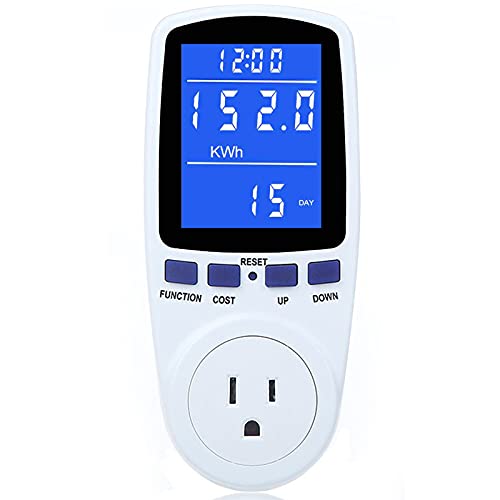
This MECHEER model expands on the standard watt meter with seven display modes, allowing monitoring of power (W), energy (kWh), voltage, current, Hz, PF, cost, and min/max values, plus cumulative use time. The larger 2.36-inch display adds a backlit, high-contrast readout with 180-degree viewing angles. A configurable backlight duration keeps the screen readable in dark environments and reduces glare during daylight observations.
NXQWLL 20A AC Power Meter For Outlets And Generators

This compact 20A monitor tracks voltage (0-240VAC), current (0-50A), power (0-9000W), frequency, PF, and energy usage (0-99999kWh). It is suitable for smaller generator setups and outdoor installations, with protective sockets designed for outdoor conditions and a focus on real-time data to maintain safe operation and efficient power use in camping, RV, or emergency backup contexts.
Buying Guide: Key Purchase Considerations For Generator Power Meters
- Voltage and current range: Match the device to your generator’s output. For hobbyist or portable generators, 0-50A ranges are common, while larger setups may require 30A or higher with broader voltage support (40-300VAC).
- Display and readability: A bright, backlit display with clear digits and wide viewing angles makes readings accessible in bright daylight or at night. Some models offer adjustable backlight time for convenience.
- Display modes and data tracked: Look for meters that report voltage, current, power, energy, frequency, power factor, and cost. More modes help with quick at-a-glance assessments during operation.
- Overload and safety features: Overload warnings help prevent damage to appliances and generators. Some meters include automatic alarms and load thresholds to encourage safe usage patterns.
- Installability: Split-core current transformers (CTs) simplify installation for fixed setups; clamp-on meters are often easier for DIY, portable generator connections.
- Data retention: Automatic data storage or memory during outages is valuable for post-event analysis and verifying generator performance over time.
- Durability and materials: ABS housings and fireproof, impact-resistant designs improve longevity in outdoor or workshop environments.
- Compatibility with outlets: Ensure the meter’s sockets are compatible with your generator’s outlet configuration (NEMA types, frequency, and plug types).
- Portability vs. panel mounting: Some meters are compact for portability, while others are designed to mount in control panels or power distribution centers.
- Cost and warranty: Compare features against price and check for manufacturer warranties or customer support availability, especially for outdoor or critical-use deployments.