Best Power Jacks for RV: Top Electric Tongue Jacks for Easier Camp Setup
Finding the right power jack for your RV can save time, reduce strain, and improve stability at the campsite. This guide compares five popular electric tongue jacks designed for A-frame trailers, travel trailers, and campers. Each option covers different lift capacities, weather resistance, and convenient features like built-in LED lighting and remote control compatibility. Use the buying guide at the end to compare key factors such as load capacity, lifting range, wiring, and durability across models.
| Product | Brand | Lift Range | Max Load |
|---|---|---|---|
| Lippert Power Tongue Jack Electric Trailer | Lippert Components | 18″ stroke | 3,500 lbs |
| POLESTAR Electric Trailer Jack | POLESTAR | 9″–27″ | 5,000 lbs |
| Kohree Electric Trailer Jack 5000lbs | Kohree | 9.8″–31.7″ | 5,000 lbs |
| SEALIGHT 7500LB Electric Trailer Jack | SEALIGHT | 9.84″–33.85″ | 7,500 lbs |
| VEVOR Electric Trailer Jack 5000 lbs | VEVOR | 10″–33.8″ | 5,000 lbs |
Each model offers distinct advantages, from higher weight ratings to weather resistance and smart features. The table above highlights the essentials to help you compare at a glance as you read the detailed sections that follow.
Lippert Power Tongue Jack Electric Trailer
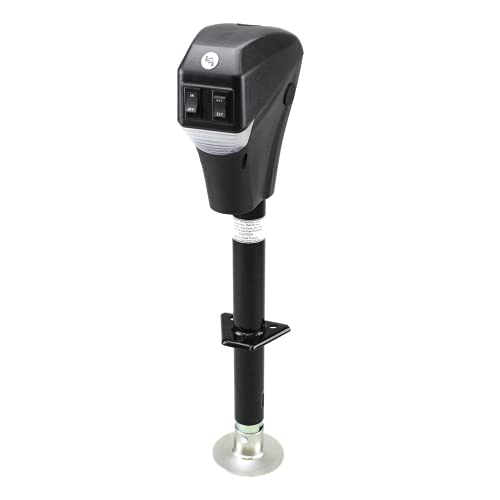
Lippert Components’ power tongue jack is designed for quick, tool-free operation with a simple push-button lift and lower mechanism. The unit has an 18-inch stroke and a 3,500-pound rating, which covers many standard A-frame trailers. The package includes the necessary mounting hardware and pins for straightforward installation, reducing setup time at the campsite. A notable feature is the integrated lighting, with four LED lights that illuminate the ball and coupler for safe night use. An emergency manual crank override provides a backup option if power is unavailable. The rugged, textured casing adds durability for outdoor use.
Key benefits include speed of operation, reduced manual cranking, and night visibility. Potential considerations include ensuring compatibility with your trailer’s frame and confirming that the retracted and extended lengths fit your hitch geometry. The jack’s weight and mounting footprint should be verified against your trailer’s tongue design to avoid clearance or interference issues.
POLESTAR Electric Trailer Jack
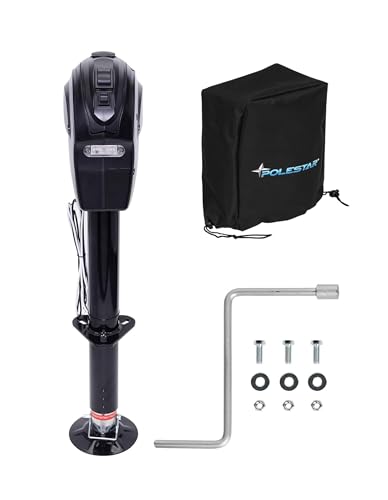
The POLESTAR model delivers substantial lifting power with a 5,000-pound rating and a lift range of roughly 9″ to 27″. Designed for heavy-duty use, it features a robust ball screw mechanism aimed at smoother, faster operation with less friction. The unit is weather-resistant and includes a waterproof protective cover and LED lighting for low-light operation. A built-in circuit breaker enhances protection against electrical faults, while the rugged build seeks to withstand challenging outdoor conditions. This jack is suitable for larger trailers or heavy-duty camping setups where stability and reliability are priorities.
Pros include strong lifting capability, resistance to the elements, and a design geared toward long-term reliability. Potential drawbacks could include a higher install complexity or longer top-out height requirements for certain trailer geometries. It’s important to verify mounting holes and frame compatibility with your specific tongue design, especially if you’re replacing an older jack or upgrading from a lighter model.
Kohree Electric Trailer Jack 5000lbs

Kohree’s 5,000-pound electric trailer jack pairs a high load rating with a weather-resistant design and practical safety features. It includes a waterproof cover and LED lighting for nighttime visibility. The motor provides ample torque for lifting heavy trailers and stabilizing at the campsite. A built-in circuit breaker adds protection against amperage surges, automatically disconnecting if needed and reconnecting after a short wait. The unit is designed for relatively quick operation and reduces manual effort during setup and leveling tasks.
Strengths include strong load capacity, built-in safety features, and protective weather accessories. Considerations involve ensuring proper wiring compatibility with your RV’s electrical system and confirming clearances for the jack’s extended height relative to the trailer tongue. As with other jacks, verify mounting pattern compatibility with your current hardware or plan for new mounting hardware if upgrading from an older model.
SEALIGHT 7500LB Electric Trailer Jack

SEALIGHT’s 7,500-pound electric tongue jack targets heavier trailers and provides a broad lift range from about 9.84 to 33.85 inches. It includes a wireless remote control with a range of up to 30 meters for convenient operation from a distance. The system supports remote or manual operation if necessary, offering flexibility during setup or in adverse weather. A manual crank is present as a backup, ensuring you can raise or lower the tongue even without power. The product emphasizes versatility and adaptability for various trailer configurations.
Highlights include a large lifting range, remote control flexibility, and dual operation modes. Potential downsides might be the higher price point associated with premium range and remote control features. Installation considerations include ensuring your hitch geometry accommodates the jack’s extended height and that the wiring harness is compatible with your trailer’s electrical system. This model is well-suited for users prioritizing range and remote convenience.
VEVOR Electric Trailer Jack 5000 lbs

VEVOR’s 5,000-pound jack offers a robust steel frame with a galvanized coating for rust resistance, designed to withstand outdoor conditions. It features a broad lift range of roughly 10″ to 33.8″ and is compatible with a range of trailer heights. The design emphasizes durability and flexibility, making it suitable for different travel setups and weather environments. It comes with a 12V wiring configuration and weatherproof jack cover to protect electrical components. The dual protection against corrosion and moisture is a practical feature for long-term RV use.
Advantages include a sturdy build, wide lift range, and corrosion resistance. Considerations include verifying the jack’s wiring compatibility with your vehicle’s electrical system and ensuring your trailer’s tongue can accommodate the mounting footprint. Like other options, confirm the mounting hole pattern and the possibility of upgrading nearby components if you replace an older stabilizer or jack.
Buying Guide: Key Purchase Considerations
- Load rating vs. trailer weight: Choose a jack with a higher rating than your fully loaded trailer to account for dynamic loads and tongue weight.
- Lift range and mounting footprint: Ensure the jack can reach the required height and fit within the tongue space without interference.
- Power and wiring: Verify 12V DC compatibility, wiring length, and whether your trailer’s power system can support continuous operation without overheating.
- Remote control vs. manual backup: A remote control adds convenience, but check for a reliable manual crank override as a backup option.
- Durability and weather protection: Look for galvanized or powder-coated steel, weatherproof covers, and LED lighting for night use.
- Installation complexity: Some models include all mounting hardware, while others may require additional brackets or drilling. Consider professional installation if needed.
- Safety features: Circuit breakers, overload protection, and anti-slip footing help prevent damage and accidents on uneven ground.
- Warranty and support: A solid warranty and accessible customer support can save time when maintenance or replacement parts are needed.
In practice, higher-capacity models such as the 5,000 to 7,500-pound class provide more versatility for larger travel trailers or campers, but they may be heavier and require stronger mounting. For most mid-sized RVs, a 3,500 to 5,000-pound jack balances lifting capability with installation ease. When comparing, consider not only lift height but also how often you’ll use the remote feature, how much you value built-in lighting, and how well the unit copes with your typical camping environments (dust, rain, or snow).