Best Portable Solar Power Chargers for Off-Grid Power and on-the-Go Charging
For travelers, campers, and anyone who spends time away from outlets, portable solar power chargers offer a reliable way to keep devices powered. This guide reviews five prominent options, highlighting solar charging capability, battery capacity, built-in cables, and fast-charging features. Each product is evaluated for versatility across outdoor adventures and everyday use, with practical comparisons to help you choose the right fit.
| Product | Brand | Capacity | Key Charging Features | Solar Panel Count |
|---|---|---|---|---|
| SOARAISE Solar Charger Power Bank | SOARAISE | 48000mAh | PD QC 3.0, built-in cables, wireless charging | 4 |
| Solar Power Bank (BLASOUL) | BLASOUL | 49800mAh | 22.5W PD/USB-C, 15W wireless charging | 4 |
| BLAVOR Solar Power Bank 10,000mAh | BLAVOR | 10000mAh | USB-C input/output, 20W fast charging, wireless option | 0 |
| Solar Power Bank 45800mAh (SolarTred) | SolarTred | 45800mAh | 4 panels, 15W fast charging, multiple cables | 4 |
| Kepswin Solar Charger Power Bank | Kepswin | 49800mAh | PD/USB-C, 3 built-in cables, 5-device charging | 3 |
SOARAISE Solar Charger Power Bank
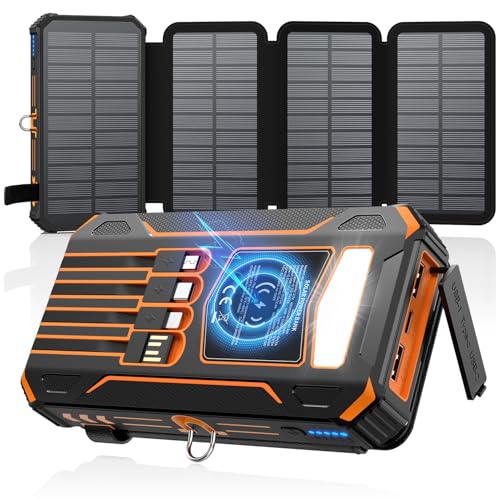
The SOARAISE model features upgraded high-efficiency 4 solar panels, enabling direct solar charging even in outdoor environments. Its massive 48000mAh lithium-polymer battery supports extended adventures and delivers up to 80% more charging cycles compared to standard batteries. The device includes 3 ports (2 USB-A outputs, 1 USB-C input/output) plus 4 built-in cables (USB-C, iOS, USB-A, Micro) and a wireless charging pad, supporting simultaneous charging of multiple devices.
BLASOUL Solar Power Bank, 49800mAh
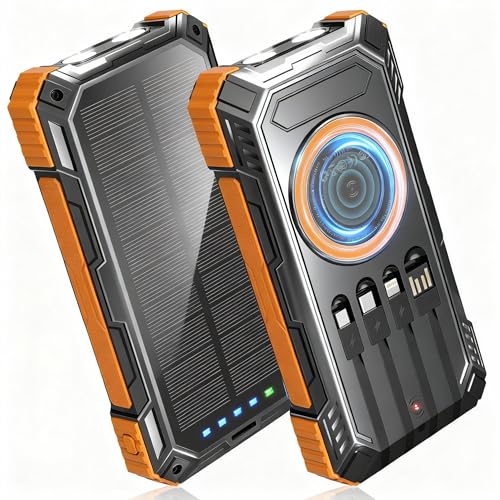
BLASOUL combines 22.5W PD 3.0/ QC 3.0 fast charging with 15W wireless charging. Its 49800mAh capacity supports multiple full charges for phones and tablets. The battery pack includes intelligent protection—temperature control, overvoltage, overcurrent, and short-circuit protection—plus a design that supports charging via adapter or solar energy. Four built-in cables (in/out) enhance portability and reduce cable clutter while keeping charging options flexible for a range of devices.
BLAVOR Solar Power Bank 10,000mAh

BLAVOR emphasizes long-standing outdoor performance with a 10,000mAh battery and robust reliability. The device supports USB-C input/output and Qi wireless charging, enabling three devices to charge simultaneously with multiple output/input options. Its battery design aims for safety and extended cycle life, targeting everyday carry and short trips where compact size and dependable charging are critical.
Solar Power Bank 45800mAh with 4 Panels (SolarTred)
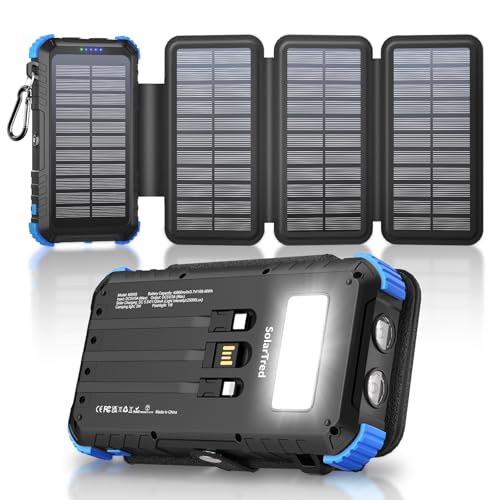
SolarTred offers a robust 45800mAh capacity with four built-in cables and three USB ports, plus dual inputs for flexible recharging. Four integrated solar panels capture sunlight more efficiently than single-panel models, enabling outdoor recharging and survival-ready performance. The device supports multi-device charging and includes flashlight functionality for camping and emergencies.
Kepswin Solar Charger Power Bank
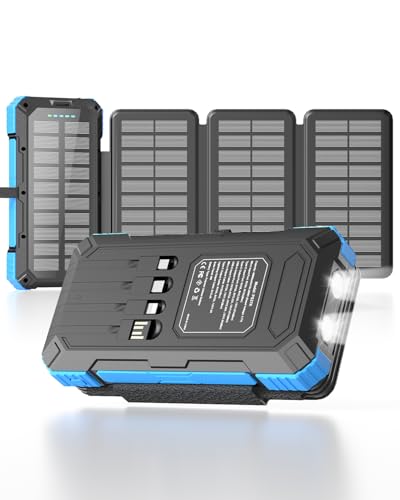
Kepswin’s 49800mAh solar charger emphasizes built-in six cables and three USB ports, enabling charging of up to five devices concurrently. The built-in four-panel solar array improves charging efficiency on sunny days, and the device offers UL, CE, FCC, RoHS, and UN38.3 certifications for safety. The package emphasizes outdoor readiness for camping and expeditions with reliable solar recharging and multiple input/output options.
Buying Guide: Key Purchase Considerations
- Battery capacity vs. weight: Higher capacity means more charges but heavier units. Consider your typical use case and carry comfort.
- Solar panel configuration: More panels generally improve solar recharging speed; note panel quality and the rate at which sunlight translates to usable power.
- Output options: Look for PD 3.0/QC 3.0 support for fast charging, USB-C and USB-A ports, and wireless charging if you want cable-free charging.
- Built-in cables: Some models include built-in cables for convenience, reducing the need to carry extra cords. Verify compatibility with your devices.
- Safety features: Temperature protection, short-circuit protection, overvoltage, and overcurrent protections are essential for battery longevity and device safety.
- Charging methods: Solar charging is useful off-grid; however, having a USB-C or USB-A input for wall or car charging provides flexibility during travel.
- Durability and weather resistance: For outdoor use, look for rugged housing, IP rating, and robust latching mechanisms to withstand outdoor conditions.
When evaluating options, weigh the balance between capacity, charging speed, cable versatility, and solar efficiency. For extended outdoor trips, higher-capacity units with multiple cables and solid safety protections are preferable. For casual daily use, more compact models with wireless charging can be advantageous.