Best Portable Power Outlet Batteries for Home and Travel
Answering the demand for compact, reliable power on the go, these portable power outlets deliver clean, safe AC/DC outputs in compact forms. Best for campers, travelers, and emergency prep, each unit targets different needs—from airline-friendly watt-hours to higher-capacity options for laptops and home devices. The top picks below help you compare capacities, output ports, and charging options at a glance. A quick buyer table follows to summarize core specs for quick decisions.
| Product | Battery | AC Output | Best For |
|---|---|---|---|
| MARBERO Portable Power Station 88Wh | 88Wh Li-ion | AC 120W peak | Lightweight, outdoor trips, compact devices |
| Tenlike Portable Power Station 99.9Wh | 99.9Wh Li-ion | AC 80W, 120W max | Travel, everyday accessories, laptops |
| DARAN Portable Power Station 89.6Wh | LiFePO4 89.6Wh | AC 100W | Longer cycle life, modest loads |
| SinKeu 88.8Wh Portable Power Bank | 88.8Wh | AC 110V/65W | Travel with multiple USB and AC outlets |
| EnginStar 296Wh Portable Power Station | 296Wh Li-ion | AC 300W peak | Powerful backup, camping, CPAP, multiple ports |
MARBERO Portable Power Station 88Wh
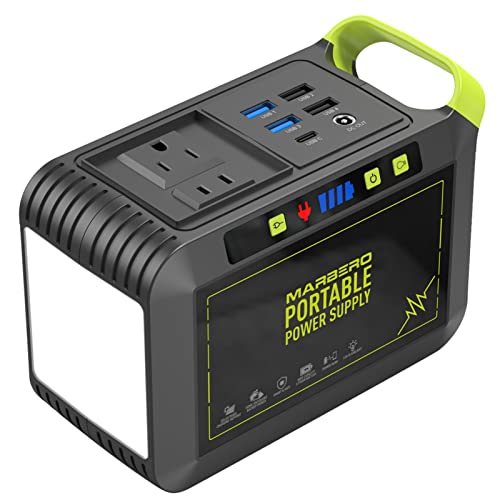
Best for ultralight setups and quick outdoor charging. MARBERO combines eight output ports with a compact 6.5 x 4.6 x 3.1 inch form, weighing about 3.2 pounds. The built-in BMS enhances safety, and USB-C PD allows fast charging for phones, tablets, and laptops. It supports efficient charging from MARBERO’s solar panels for outdoor use. The unit is ideal for RVs, small homes, or emergency kits where space and weight matter.
- Best for: backpackers, RVs, and small-cabin use where portability is paramount.
- Why selected: compact footprint, multiple outputs, reliable safety features.
- Caution: 88Wh limits high-wattage appliances for extended use.
Tenlike Portable Power Station

Best for travel-heavy lifestyles and mixed-device charging. The Tenlike unit offers 99.9Wh capacity, several ports (including two USB-C PD 60W), and an AC output of up to 120W. It’s designed to power phones, tablets, drones, and light appliances. Suitable for road trips, camping, and business travel segments that require reliable USB-C PD fast charging and essential AC power without carrying a larger generator.
- Best for: travelers and multi-device households needing versatile ports.
- Why selected: strong balance of capacity and port variety.
- Caution: 99.9Wh airline limit may constrain longer trips without recharging options.
DARAN Portable Power Station 89.6Wh

Best for durable daily use and higher stability. The DARAN unit uses LiFePO4 chemistry for longer cycle life and safety. It provides two AC outlets, multiple USB ports, and DC outputs, with an LED display for power status. It suits users needing a reliable, low-heat, long-life option for laptops, cameras, and small home devices, especially in backcountry settings or during outages.
- Best for: long-term lifecycles and frequent recharges.
- Why selected: LiFePO4 chemistry improves safety and longevity.
- Caution: heavier than some ultralight options; check carrying capacity for frequent travel.
SinKeu 88.8Wh Portable Power Bank

Best for budget-conscious buyers who still need AC power on the go. SinKeu provides 88.8Wh with a 110V/65W AC outlet and multiple USB ports. It’s strong for everyday devices and short trips, and includes monitoring via an OLED display. It’s a solid choice when you want an affordable balance of ports and portability, though the AC output is capped at 65W for sustained loads.
- Best for: light-duty travel and quick recharging of small devices.
- Why selected: accessible price, multiple outputs, compact design.
- Caution: limited high-wattage capability for larger appliances.
EnginStar Portable Power Station 296Wh

Best for high-demand backup and off-grid use. EnginStar delivers 296Wh and a 300W peak with two 110V pure sine wave outlets and multiple DC/USB ports. It’s designed for CPAP, laptops, cameras, drones, and more. The device includes multiple protections and a robust battery management system for reliable, safe operation in camping, emergencies, and extended outages.
- Best for: surplus power needs and long outages or remote camping.
- Why selected: high capacity, strong output, and versatile port assortment.
- Caution: higher weight and size compared to smaller units.
Buying Guide: Portable Power Outlet Batteries
What capacity should you choose? Capacity is measured in watt-hours (Wh). For light travel and phone charging, 80–100Wh is usually enough. For laptops or CPAP devices, aim for 180–300Wh. Consider airline restrictions: many carriers limit batteries to 100Wh without special approval.
- Port needs: count the AC outlets and the number and type of USB ports you require.
- Output type: pure sine wave inverters are safer for sensitive electronics; modified sine is often adequate for simple devices.
- Recharging options: AC wall, car 12V, and solar compatibility offer flexibility for outdoors.
- Weight and form factor: higher capacity typically means more weight; balance with portability goals.
- Battery chemistry: Li-ion is light and common; LiFePO4 offers longer life and better thermal stability for longer use.
FAQ
- What is the typical run-time for a 88–100Wh unit?
– It varies by device draw; a smartphone may charge multiple times, while a small laptop may run briefly or require recharging mid-use. - Can these power stations be charged via solar panels?
– Yes, many models support solar charging, often with dedicated panels or third-party panels that match input requirements. - Are these safe for CPAP machines?
– Most units support 12V/24V outputs and stable AC inverters; verify CPAP power needs and unit specifications before use. - What’s better for frequent travelers, LiFePO4 or standard Li-ion?
– LiFePO4 offers longer cycle life and better thermal stability, while Li-ion typically provides lighter weight and lower cost. - How many watts can these outlets deliver at once?
– This depends on the model; check peak and continuous watts to ensure compatibility with your devices.