Best Portable Generators Gas and Propane for Home Backup and Outdoor Use
Answering buyers seeking flexible fuel power, these portable generators run on gasoline or propane to suit emergency, camping, or work-site needs. The top picks fit different buyers: homeowners wanting home backup, campers needing quiet operation, and contractors requiring high power with dual-fuel convenience. Below, find five strong options with clear pros and limitations to help you decide what to buy.
| Product | Best For | Fuel Options |
|---|---|---|
| WEN 5,600-Watt DF5600X | Home backup and medium-duty power at the cabin | Gasoline or Propane |
| PowerSmart 3800W | Quiet camping and RV use | Gasoline or Propane |
| DuroStar DS13000MX | Whole-home backup and demanding jobs | Gasoline or Propane |
| Westinghouse 12500W | Heavy-duty backup with transfer switch readiness | Gasoline or Propane |
| Westinghouse 6500W | Mid-range home backup and RV-ready power | Gasoline or Propane |
WEN 5,600-Watt DF5600X

Best for: Home backup by families needing dual-fuel flexibility and CO protection. The DF5600X runs on gasoline with 5600 surge watts (4500 rated) or propane with 5000 surge watts (4050 rated), offering power when the primary fuel is scarce.
- Dual fuel design for gasoline or propane use.
- Electric start for quick, easy powering on of the 224cc engine.
- CO Watchdog Sensor automatically shuts down if carbon monoxide is detected.
Caution/limitation: Dual-fuel performance depends on fuel quality; check fuel availability in your area to avoid running dry during critical use.
PowerSmart 3800 Watt Dual Fuel
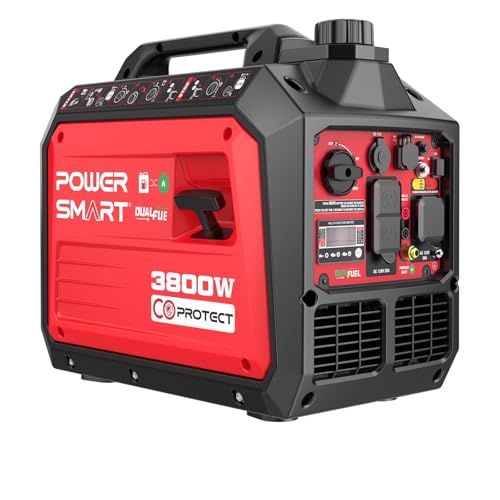
Best for: Quiet camping, RV trips, and residential use where noise and clean power matter. It’s designed for stable power with sensitive electronics in mind.
- Dual-fuel capability: 3800 starting watts / 3300 running (gasoline) and 3500 starting / 3100 running (propane).
- Whisper-quiet operation at about 65 dBA at 23 feet.
- Pure Sine Wave output with less than 3% THD for safe device charging.
Caution/limitation: Lighter-duty output means it’s best for light to moderate loads and essential electronics rather than heavy power tools.
DuroStar DS13000MX 13,000-Watt

Best for: Whole-home power during outages or construction sites requiring high output and dual-fuel flexibility.
- Large dual-fuel capacity delivering up to 13,000 watts (gas) or appropriate propane output.
- Remote electric start for convenient operation from a distance.
- Designed for heavy-duty use with transfer switch readiness and RV-ready capabilities.
Caution/limitation: Higher power means more weight and footprint; plan for transportation and storage accordingly.
Westinghouse 12500 Watt Dual Fuel

Best for: Backup power with transfer switch readiness for larger homes or job sites requiring serious capacity.
- 12500 peak watts and up to 11200 peak watts on propane; includes a remote start fob.
- 6.6-gallon tank with up to 12 hours runtime, depending on load.
- Multiple outlets including 120V and 240V options with rubber-covered safety receptacles.
Caution/limitation: This model is substantial; ensure adequate storage space and proper ventilation when operating.
Westinghouse 6500 Watt Dual Fuel
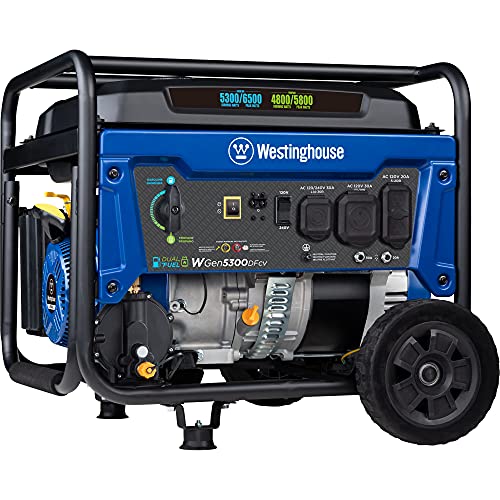
Best for: Mid-range emergency power with versatile fuel options for home backup and RV use.
- Gasoline: 6500 peak / 5300 running watts; Propane: 5800 peak / 4800 running watts.
- 4.7-gallon tank with a removable fuel gauge for planning runtimes.
- Includes transfer switch readiness and multiple 120V and RV outlets; comes with essential accessories.
Caution/limitation: Heavier duty units require careful setup and regular maintenance to ensure reliability during outages.
Westinghouse 2800 Peak Watt Inverter

Best for: Lightweight, portable power for camping and light home backup where low noise matters.
- Gasoline: 2800W peak / 2200W running; Propane: 2520W peak / 1980W running.
- Only 45 pounds with Eco Mode for reduced fuel use and noise.
- RV-ready 30A outlet and a standard 20A outlet for convenient power access.
Caution/limitation: Lower total wattage may limit running larger appliances or tools simultaneously.
Buying Guide
Fuel choice matters. Dual-fuel generators provide versatility in fuel availability and cost, but you should consider running time, engine size, and noise when selecting a unit for specific needs.
- Power needs: Estimate your critical loads (refrigerator, sump pump, lights, a few tools). Choose a generator with enough surge and running watts to cover peak demands.
- Fuel availability: If propane is more accessible or you want longer run times, prioritize dual-fuel models with robust fuel efficiency.
- Noise level: In neighborhoods or campsites, lower decibel levels improve acceptance and comfort. Inverter generators typically offer cleaner power with quieter operation.
- Convenience features: Electric start, remote start, CO sensors, and transfer switch compatibility add ease and safety for routine use.
- Safety: CO sensors and proper ventilation are essential. Use outdoor-rated outlets and follow manufacturer safety guidelines.
- Portability vs. power: Heavier models deliver more watts but require wheels or assistance for movement. Plan storage and transport accordingly.
FAQ
- What does “dual fuel” mean for generators? It means the unit can run on gasoline or propane, giving you flexibility during fuel shortages or price changes.
- Is a CO sensor important on generators? Yes. A CO sensor helps prevent carbon monoxide buildup by shutting down the unit if dangerous levels are detected.
- Can I parallel multiple generators? Some models support parallel operation, allowing you to increase total output with a compatible kit.
- What size generator should I buy for home backup? For essential loads (refrigerator, lights, modem), a unit in the 3000–7000 watt range is common; for whole-home backup, larger dual-fuel units are recommended.
- How long can a generator run on a full tank? Run times depend on load and fuel capacity; check the manufacturer’s runtimes under typical loads to estimate needs.
- Are propane generators as powerful as gasoline ones? Dual-fuel models offer similar peak power with propane, but gasoline often provides higher running watts under heavy load.