Best Portable Car Power Station for on-the-Go Power and Backup
If you need reliable off-grid power for camping, road trips, or emergency home backup, a portable car power station is the answer. This guide highlights five compact, versatile options that balance portability with real-world output. Each pick is best for different scenarios—from quick USB device charging to powering a small fridge or laptop during a blackout. The table below compares key features to help you decide quickly.
| Product | Battery | Output | Best For | Limitations |
|---|---|---|---|---|
| 88Wh | AC, USB, USB-C PD, car DC | Lightweight outdoor trips and quick device charging | Lower overall capacity | |
| 89.6Wh LiFePO4 | AC, USB-C PD, USB-A, DC | Slim, portable, fast charging for phones and laptops | Moderate capacity for extended use | |
| 88Wh | AC, USB-C, USB, DC | Three charging modes and compact travel | Peak load may be limited in longer use | |
| 292Wh LiFePO4 | AC, USB-C PD, USB-A, car port | Off-grid camping and longer outings | Heavier than ultracompacts | |
| 288Wh LiFePO4 | AC, USB-C, USB-A, DC, UPS option | Emergency backup and moderate power needs | Higher price; heavier than ultra-compact units |
MARBERO Portable Power Station 88Wh
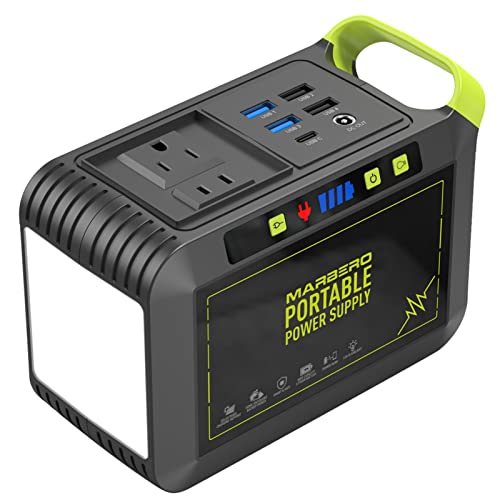
Best for ultralight outdoor use and quick device charging. This MARBERO unit features eight output ports and a compact, lightweight design (about the size of a DSLR) with a built-in BMS for stability. The 88Wh capacity supports USB, USB-C PD, and two AC outlets for small appliances. Includes a car DC charger output to power car fridges and camp devices during emergencies. It is an ideal pick for hikers, campers, and travelers needing pocketable power with fast USB-C charging. Caution: The 88Wh capacity is best for small electronics and shorter backcountry sessions; avoid relying on it for higher-wattage devices for extended periods.
DARAN Portable Power Station 89.6Wh LiFePO4

Best for compact, robust LiFePO4 chemistry with multiport output. The 89.6Wh battery powers up to two AC sockets, USB-C PD, USB-A, and DC ports, with an LED display for status. It supports three charging methods (AC, USB-C PD, car charging) and fast charging to 80% in about 1.5 hours. This unit suits urban campers and daily commuters who want a slim, durable option with reliable fast charging. Limitation: Solar charging is optional and not included, so expect to add a panel if solar is a primary power source.
HOWEASY Portable Power Station 120W

Best for space-saving solutions with three charging modes and strong output. HOWEASY provides 8 ports, including two AC sockets, USB-C, USB-A, and DC ports, with a compact footprint and a hidden carry handle. It is suited for campers who want a lightweight unit that can be recharged while powering devices. Caution: The device’s higher peak loads require careful management of simultaneous high-wattage demands to avoid tripping the inverter.
Jackery Explorer 300

Best for versatile off-grid power with long-term durability. The Explorer 300 delivers 292Wh of LiFePO4 capacity, 300W rated output, and 600W peak surge. It supports two AC outlets, a 100W USB-C PD port, USB-A, and a car port, making it suitable for laptops, drones, cameras, and CPAP setups when paired with solar panels. It’s designed for durability and extended cycles, ideal for multi-day trips and weekend adventures. Limitation: Heavier than compact ultralight models, which may affect portability for some hikers.
BLUETTI Elite 30 V2

Best for emergency backup and moderate power needs. The Elite 30 V2 offers 288Wh with 600W continuous power and 1500W surge, plus a lightweight design for its capacity. It includes UPS functionality and supports solar charging (panel not included). This unit is a solid choice for home backup during outages and for road trips where a steadier power delivery is desired. Limitation: Higher price point and heavier than ultra-compact options.
Buying Guide: Key Considerations For Your Portable Power Station
- Capacity vs. weight: Higher watt-hours provide longer runtimes but increase weight. Choose a battery size that matches your typical usage patterns and backpack/cargo limits.
- Output options: Ensure the unit offers the necessary ports (AC outlets for small appliances, USB-C PD for laptops/phones, car ports for 12V devices).
- Charging methods: Look for multi-input charging (AC, USB-C PD, car) to keep power available in varied scenarios. Solar compatibility adds outdoor flexibility, but check if panels are included or sold separately.
- Lithium chemistry: LiFePO4 offers longer cycle life and better durability in outdoor use compared to some other Li-ion chemistries. Consider this for long-term reliability.
- Portability: Weight, size, and handle design affect travel friendliness. Slim profiles are easier to carry for backpackers; larger units suit car-based trips or home backup.
- Protection and safety: Built-in battery management systems (BMS) and overcurrent/short-circuit protection help prevent damage when devices are connected.
FAQ
- What is the practical capacity I need for camping?
A: For light camping with phones, lights, and a small fan, units around 80–120Wh are often sufficient. For laptops, cameras, or cooling devices, consider 200Wh or more with multiple output options. - Can these power stations run a refrigerator?
A: Some models with higher continuous wattage can power small car fridges briefly, but check the inverter rating and the fridge’s running wattage to ensure compatibility. - Is LiFePO4 better than standard Li-ion for outdoor use?
A: Yes. LiFePO4 chemistry typically provides longer cycle life, better thermal stability, and improved safety for repeated charging cycles in outdoor conditions. - Do I need solar panels to use these devices?
A: Solar panels are optional on many models. They add off-grid convenience, especially for extended trips, but not always included in the package. - How do I determine the best unit for my needs?
A: Start with your top devices and their wattage, estimate daily usage, then pick a unit with sufficient watt-hour capacity and the right mix of ports for those devices.