Best Portable Battery Options for CPAP Users on the Go
For sleep apnea patients who rely on CPAP therapy, having a reliable portable power solution is essential for camping, travel, and power outages. The following guide highlights five top-rated CPAP battery backups, detailing capacity, compatibility, and practical use tips. Each entry includes a direct product link, image, and key features to help you compare quickly and choose confidently.
| Product | Capacity (Wh) | Key Use | Notes |
|---|---|---|---|
| EASYLONGER ES960 CPAP Battery Backup | 297.6 | AirSense/AirCurve/AirMini compatibility for off-grid use | Includes 4 CPAP cables; supports multiple models |
| Renogy 72000mAh 266Wh Power Bank | 266 | CPAP off-grid with 150W max DC output | Includes 2 USB PD ports; 150W max for CPAP |
| ALLWEI Portable Power Station 300W | 280 | CPAP and multiple devices via AC/DC/USB-C | 3 charging methods; 9 ports total |
| EASYLONGER ES400 CPAP Battery | 148 | ResMed DreamStation, AirSense/Curve compatibility | Pass-through charging; lightweight option |
| Portable Outlet PO-160UPSv2 | 159 | CPAP and other devices with UPS capability | Uninterruptible power supply built-in |
EASYLONGER ES960 CPAP Battery Backup Power Supply

The EASYLONGER ES960 offers a high-capacity 297.6Wh CPAP battery backup designed for extended outages or outdoor use. It ships with four CPAP DC cables and supports a range of popular devices, including ResMed S9, AirSense 10/11, AirCurve 10/11, AirMini, and Philips DreamStation models. When humidifier and heated tubing are off, the run time increases, with a typical power-off draw aiding longer sessions.
Key compatibility and features include: a broad array of DC cables, 24V output option, and a recommended configuration for certain third-party CPAP adapters. While it provides strong off-grid performance, note that heated-tube and full humidifier use will reduce run time. This unit is positioned for travelers and campers who need a dependable backup that fits airline restrictions in many cases.
Renogy 72000mAh 266Wh 12V Power Bank

The Renogy CPAP-oriented power bank focuses on a large 266Wh capacity and a pair of USB-C PD ports. It supports simultaneous charging for up to five devices and offers efficient conversion rates. A notable limitation is its 150W maximum output for CPAP use, which means you’ll want to turn off heavy features like humidification or heaters for longer runtimes. The unit is ideal for travelers who need robust general charging as well as backup CPAP power, with a clear emphasis on reliability and safety in off-grid environments.
Important considerations include its airport restrictions (no carry-on a CPAP through airline rules when using CPAP-specific adapters) and the need for a dedicated CPAP adapter to run some devices. The Renogy pack shines as a versatile travel power source with CPAP compatibility as a major plus, especially for users who also rely on laptops and phones while away from home.
ALLWEI Portable Power Station 300W
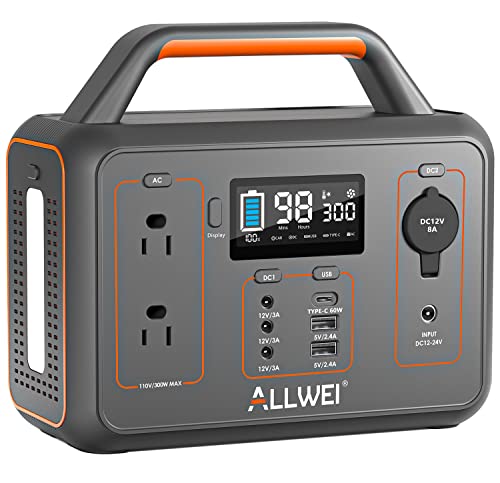
The ALLWEI 300W power station is designed for outdoor power needs with a 280Wh battery and a robust 300W continuous output. It provides multiple recharging methods, including AC wall charging, car charging, and solar panel input via an MPPT controller. With 9 ports (two AC outlets, USB-C PD, USB-A, and car/supply ports), it can power CPAP devices and other gear such as laptops and cameras. This model appeals to campers and adventurers who want a compact, all-in-one power hub for essential devices during outages or off-grid trips.
Strengths include flexible recharging, quiet operation, and a built-in LED SOS light for emergencies. For CPAP use, ensure you select a CPAP model compatible with DC or AC power input and manage heater/humidifier settings to maximize runtime. There is a slight trade-off between overall capacity and weight, but the included portability makes it a strong candidate for users who prioritize an all-in-one solution.
EASYLONGER ES400 CPAP Battery

The ES400 is a lighter option at 148Wh, designed for compatibility with a wide range of CPAP devices including ResMed AirSense/AirCurve, AirMini, and Philips DreamStation series. It ships with four CPAP cables and offers pass-through charging, letting you power and charge simultaneously. This model is well-suited for weekend trips or lighter sleepers who do not require the full capacity of larger packs.
Notable considerations include its portability and straightforward setup, but users should moderate heater and humidifier use to extend run time. The ES400’s balance of capacity and weight makes it a practical choice for skiers, hikers, and travelers who want a compact, reliable CPAP backup with straightforward operation and decent runtime with lighter CPAP configurations.
Portable Outlet PO-160UPSv2 159Wh UPS CPAP Battery

The Portable Outlet PO-160UPSv2 positions itself as an Uninterruptible Power Supply built around CPAP needs and general device compatibility. With 159Wh of capacity and 8–18 hours of backup depending on CPAP type and settings, this unit is designed for reliability in prolonged outages or travel scenarios. The design emphasizes pass-through capability and a compact, rugged chassis suitable for travel, camping, or emergency power planning.
Key advantages include uninterrupted power during potential outages and the ability to power other essential devices, such as laptops or tablets, via the UPS functionality. It’s particularly appealing to users who want a simple, dependable backup that doubles as a UPS for everyday devices in addition to CPAP support.
Buying Guide: Key Purchase Considerations For CPAP Battery Backups
- Capacity and run time: Higher watt-hour ratings generally translate to longer CPAP operation, especially if you disable heater and humidifier functions. Consider your typical nightly power draw and how many nights you need to cover without access to mains power.
- CPAP compatibility: Verify which CPAP models are explicitly supported by each battery pack and whether additional adapters are required. Some units list broad compatibility with popular brands (ResMed, Philips DreamStation, etc.).
- Output options: Look for DC ports tailored for CPAP input, plus USB-C/USB-A ports for charging devices like phones and tablets. If you rely on 24V CPAP inputs, ensure the pack can match your device’s voltage and connector requirements.
- Recharging flexibility: Units offering AC, car 12V, and solar charging provide greater versatility. For camping or RV use, solar compatibility can be a major advantage.
- Weight and portability: Heavier packs deliver more capacity, but are bulkier for travel. Balance weight against your travel method and space constraints in your luggage or vehicle.
- Safety and reliability: Prioritize units with protection features (short-circuit, over-discharge, and temperature monitoring). Check for certifications and warranty coverage for long-term use.
- Humidifier and heater considerations: Running CPAP equipment with humidification or heated tubes increases power draw. Plan to reduce or disable such features to maximize runtime on portable packs.
- Where you’ll use it: If airline travel is common, confirm that the unit’s capacity and any associated cables comply with airline rules and airport policies.
- Warranty and service: A solid warranty and accessible customer support are helpful if you encounter issues on the road or during extended trips.
Overall, the best choice depends on your travel patterns, CPAP model compatibility, and how many nights you need to cover away from home. For frequent campers or travelers who need robust, multi-device charging with CPAP support, larger-capacity units like the ES960 and similar power stations often present the most practical balance of run time and flexibility. For lighter trips, compact packs such as the ES400 or the Portable Outlet UPS option provide reliable backup without adding significant weight.