Best 3 Way Valve Solutions for Plumbing Projects and How to Choose
When balancing water flow across multiple lines in pools, spas, or RV systems, a high-quality 3-way valve is essential. This guide highlights five top choices, explains how they differ, and provides buying considerations to help you select the right model for your setup. Whether you’re replacing an old diverter or upgrading to a more durable material, these valves cover common sizes and configurations to fit many plumbing systems.
| Product | Size | Material | Best For | Notes |
|---|---|---|---|---|
| FibroPool Diverter Valve | 1-1/2″ Slip | ABS | Mid-size pools, spas | Self-locking handle |
| FibroPool Diverter Valve | 2″ Slip | CPVC | Heavy-use systems | Lubeless PTFE seats |
| ATIE 3-Way Diverter | 1-1/2″ Female Threaded | PVC | Pool and spa plumbing | Self-locking handle |
| 3 Way Brass Valve | 1″ NPT | Brass | High-temp/robust setups | T-Port design |
| Pentair/3-Port Compatible | 2″ PVC | Plastic | Pentair systems | High-flow design |
FibroPool 1-1/2-Inch 3-Way Diverter Valve

The FibroPool 1-1/2 inch 3-way diverter valve is designed for typical pool and spa installations that use slip-fit connections. The self-locking handle allows precise flow management by closing up to one port, helping you balance water between multiple lines. Its ABS construction is chosen for resistance to chemicals and outdoor exposure, making it a convenient replacement part for many above-ground and inground systems that use standard 1.5″ slip connections.
FibroPool 2-Inch 3-Way Posi-Close Slip Valve

This model expands to a 2-inch slip port design and uses CPVC construction for enhanced chemical and temperature resistance. It features lubeless PTFE seats, which deliver a secure seal and smooth operation without extra lubrication. The valve is designed to integrate with standard pool and spa plumbing and is suitable for both above-ground and in-ground installations that require robust performance and low maintenance over time.
RecPro RV 1/2-Inch Three Way By-Pass Valve
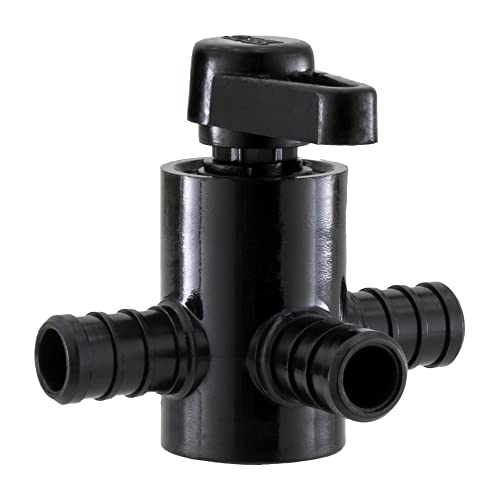
This three-way by-pass valve is tailored for RV water heater systems. It is commonly used when winterizing RVs with two-valve configurations, helping to prevent antifreeze from entering the water heater tank while routing it through the RV’s water lines. While compact, it offers essential flow control for mobile setups and seasonal winterizing tasks.
Three-Way Brass Ball Valve with T-Port

Made from high-quality forged brass, this T-port three-way valve provides solid heat resistance and strong corrosion resistance. It features a non-slip silicone-wrapped rotary handle and a 1″ NPT female T-port. The brass construction makes it well-suited for more demanding environments, including hot water lines and systems requiring durable hardware with straightforward manual control.
Banjo V075SL Polypropylene 3-Way Valve

Banjo’s polypropylene 3-way valve is lightweight and chemical-resistant, designed for side-load installations and full-port flow. Its plastic construction helps reduce weight while maintaining reliable performance in pool chemical systems, saltwater setups, and similar environments where chemical compatibility is important and high flow is beneficial.
ATIE 3-Way Diverter Valve, 1-1/2″ Female Threaded

ATIE’s 3-way diverter valve features self-lubricating, non-corrosive construction with chemical resistance. Its 1.5″ threaded connections and a self-locking handle enable secure positioning and straightforward installation in a wide range of pool and spa plumbing configurations, offering flexibility for seasonal changes or routine maintenance.
Buying Guide: Key Considerations For Choosing A 3-Way Valve
- Size compatibility: Check the port size (1/2″, 1″, 1-1/2″, 2″) and connection type (slip, threaded, CPVC, PVC) to ensure a proper fit with your existing plumbing.
- Material durability: ABS and CPVC offer chemical resistance and durability for pool and spa environments. Brass provides high-temperature tolerance but may require different maintenance when used with certain chemicals.
- Flow design: A T-port (three-way) or cross-style arrangement changes how water is redirected. Consider whether you need to divert, mix, or shut off a single path and how that will impact system pressure.
- Sealing and maintenance: Lubricated seats vs. lubeless PTFE seats affect maintenance needs. Self-locking handles help maintain a chosen position without frequent readjustment.
- Installation environment: Above-ground vs. in-ground systems, saltwater compatibility, and exposure to outdoor elements can influence material choice and corrosion resistance.
- Maintenance accessibility: Look for valves with easy-to-reach seals and accessible ports to simplify cleaning and replacement.
- Compatibility with existing systems: If you’re replacing a specific brand’s valve or a particular port arrangement, verify compatibility with your current valves and seals to prevent leaks or flow restrictions.
- Warranty and support: Consider products backed by reasonable warranties and accessible customer support for long-term reliability and replacement parts.