Best Plugs for Electric Cars and Road-Trip Power Solutions
The rise of electric vehicles has made reliable plugs, adapters, and charging options essential for safe, convenient road trips and home charging. This guide highlights five practical power and charging plugs to keep EVs and devices ready, from home charging stations to compact car inverters. Each option balances safety, portability, and charging speed to support modern electric cars on the road and at home.
| Product | Brand | Type |
|---|---|---|
| ChargePoint HomeFlex | ChargePoint | Home Level 2 EV Charger |
| ALLWEI 300W Car Inverter | ALLWEI | 12V Car Power Inverter |
| FOVAL 200W Car Inverter | FOVAL | 12V Car Power Inverter |
| PiSFAU 150W Car Inverter | PiSFAU | 12V Car Power Inverter |
| YSOLX 200W Car Inverter | YSOLX | 12V Car Power Inverter |
ChargePoint HomeFlex Level 2 EV Charger

ChargePoint HomeFlex presents a flexible Level 2 charging solution with a J1772 plug and a NEMA 14-50 compatibility option for some installations. It is designed for home use, offering smart charging features, reliability, and a broad North American network support. The accompanying mobile app helps manage charging reminders, monitor sessions, and connect to smart home devices, making it a practical choice for daily EV charging and long trips where consistent access to a charging network is desirable.
ALLWEI 300W Car Power Inverter

This ALLWEI inverter combines a car plug outlet with a power converter and charging ports in one compact unit. It features 2 AC outlets, a USB-C port up to 27W, and a USB-A port up to 18W, enabling simultaneous charging of laptops, tablets, phones, and other devices. Aluminum housing provides durability and heat management, while automatic protection and smart cooling help prevent overheating during use on road trips, camping, or daily commutes.
FOVAL 200W Car Power Inverter
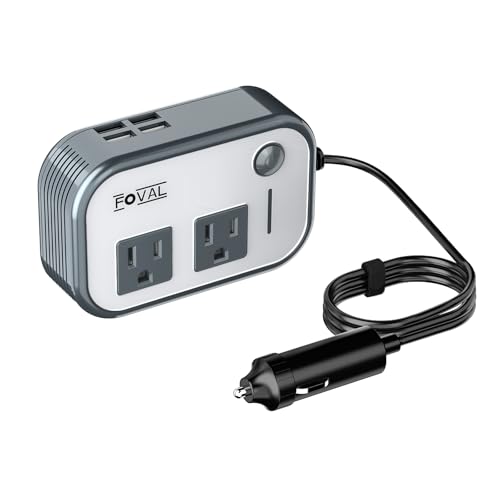
The FOVAL 200W inverter provides two US-standard AC outlets and four USB ports, delivering 180W maximum to devices like laptops, tablets, and other electronics. Its compact travel design is ideal for mobile offices, camping, or daily errands. A built-in cooling system and smart protections address short circuits and overloads, while its travel-friendly footprint makes it easy to store in a glove compartment or trunk.
PiSFAU 150W Car Inverter

PiSFAU’s 150W inverter supports 110V AC outputs and USB charging, making it suitable for a broad range of devices including laptops, tablets, and small appliances. It emphasizes a compact, pocket-sized form factor with double protection features. The unit is designed to be an affordable option for travelers who need a reliable car-powered charger without adding significant bulk.
YSOLX 200W Car Power Inverter

The YSOLX 200W inverter offers two USB ports and two AC outlets, enabling quick charging for devices like laptops, gaming consoles, and mobile devices. Its compact, travel-friendly size reduces space usage in vehicles while delivering practical power for road trips, camping, and mobile offices. Quiet operation and heat management contribute to dependable use during longer drives.
Buying Guide: Key Purchase Considerations And Comparison
- Purpose and fit: For EV owners, a home Level 2 charger like ChargePoint HomeFlex is a dedicated solution for daily charging. Inverters are best for on-the-go electronics and small devices. Choose based on whether you need home EV charging at faster speeds or portable power for devices while traveling.
- Power output and ports: Look for wattage ratings (continuous vs peak), number of AC outlets, and USB ports. A higher continuous rating supports laptops rather than phones alone, while multiple ports support charging several devices at once.
- Safety features: Essential protections include over-voltage, short-circuit, over-temperature, and auto shut-off. Inverters with smart cooling and built-in fuses reduce risk during extended use.
- Portability and size: For road trips or camping, compact designs save space. Weigh the device and consider cord length and outlet reach to accommodate different vehicle layouts.
- Durability and build: Aluminum housings and robust connectors increase lifespan under vehicle conditions. Look for devices with certified components and reliable customer support networks.
- Network integration: If you plan to leverage an EV charging network at home or away, consider chargers with app control, status updates, reminders, and compatibility with your vehicle model.
- Price vs value: While prices vary, focus on the balance of charging speed, safety, warranty, and intended use. A higher upfront cost may be justified by faster home charging or better durability for frequent travel.
- Warranty and support: Check warranty length and access to customer support. A longer warranty often signals confidence in durability and service quality.