Best Plug in Solar Panel Kits for Easy Off-Grid Power
Plug-in solar panel kits offer simple, affordable ways to generate electricity directly from the sun and power a home, RV, or small cabin. This guide highlights five top kits ideal for beginners and intermediate users seeking plug-in capability, simple setup, and practical daily use. The selections emphasize ease of use, portability, and reliable performance for different living situations. The buyers most likely to benefit are homeowners seeking quick solar gains, RV enthusiasts, and campers needing straightforward off-grid power.
Summary of chosen products
| Product | Type | Best For | Main Benefit |
|---|---|---|---|
| 1.8KW PluggedSolar Kit | High-capacity plug-in kit | Utility-ready homes seeking substantial daily output | Large array with grid-tie inverter for islanding protection |
| Plug and Play 800W Kit | Moderate plug-in kit | Small homes and apartments seeking easy setup | Low-friction plug-to-wall operation |
| ECO-WORTHY 200W Kit | Mid-range modular kit | RVs, cabins, off-grid projects | Durable panels with PWM controller for simple charging |
| Renogy 100W Starter Kit | Starter off-grid kit | New users building a basic system | Solid performance with a PWM charger and complete accessories |
| SOLPERK 100W Kit | Compact trickle charge system | Vehicles, boats, trailers needing maintainer power | MPPT controller for efficient 12V charging |
1.8KW PluggedSolar With 1800Watt Crystalline Panels

Best for: Homeowners seeking significant plug-in power and utility-style interconnection. This kit pairs five 360W mono-crystalline panels with a micro grid tie inverter, designed to feed a 110/120V wall outlet. The system supports islanding protection and is suitable for utility interconnection when permitted.
- Estimated daily generation: up to 7.5 kWh in full sun.
- Warranty: 25 years on panels; UL 1741-certified micro grid tie inverter.
- Tax benefits: Federal solar tax credit and potential local rebates.
Caution: Interconnection rules vary by locale; verify utility requirements and permitting before installation.
Plug and Play Solar Panel Power With 800-Watt Panels
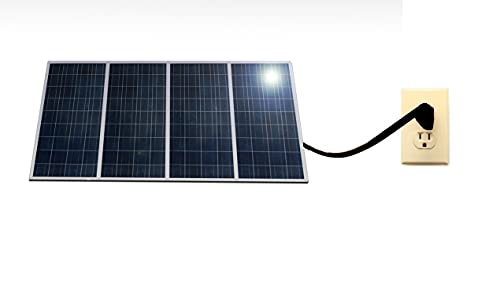
Best for: Small homes or apartments wanting a straightforward, wall-plug solar solution without separate inverters or complex wiring.
- Includes 800W of panels with an 800W inverter for plug-in operation.
- Estimated generation: around 1500 kWh per year under ideal sun.
- Potential savings: typical home bill reductions of 20%–40% depending on usage and climate.
Limitation: Performance is weather-dependent; grid-tie style operation requires proper electrical awareness and local approvals.
ECO-WORTHY 200 Watts 12V Kit With PWM Controller

Best for: RVs, campers, boats, or cabins needing a compact, reliable off-grid charging setup with an easy PWM controller.
- Panel: high-efficiency monocrystalline cells; corrosion-resistant frame.
- Durability: IP65-rated junction box; withstands wind up to 2400 Pa and snow up to 5400 Pa.
- Lifetime: designed for decades of use in varied weather.
Caution: This kit emphasizes charging and power maintenance; may require additional storage or inverter options for full-time off-grid living.
Renogy 100W Starter Kit

Best for: Those new to off-grid solar who want a proven starter kit with a complete setup, including cables and mounting hardware.
- Performance: 22.5% panel efficiency; typical daily output depends on sun exposure.
- Warranty and service: Renogy’s long-term service plan supports panel materials and power output.
- Safety: UL 61730 and CSA certifications for weather resilience.
Limitation: May require additional storage or larger system if daily consumption is high.
SOLPERK 100W Solar Kit With MPPT Controller

Best for: Car, RV, or boat owners needing an efficient 12V charging setup with an MPPT controller for better power harvesting.
- Controller: MPPT delivering up to 30% more power than basic controllers.
- Application: Works well for recreational vehicles and boats with 12V systems.
- Limitation: 100W may be insufficient for larger energy needs without expansion.
Buying Guide: Plug-In Solar Panel Kits
What should I consider before buying?
- Output and needs: Match panel wattage and inverter or controller type to daily energy use and available sun.
- Interconnection: Plug-in designs simplify setup but may require local permits or electrical approvals.
- Portability vs. capacity: Higher wattage kits deliver more power but are less portable and may require more space.
- Weather resilience: Look for durable frames, IP ratings, and wind/snow load specs if usage is outdoors.
- Controller type: PWM controllers are simpler and cheaper; MPPT controllers harvest more power, especially in variable light.
- Expansion: Consider whether you want a modular system that can be expanded later.
Which kit fits which buyer?
- Best for large power needs: High-capacity plug-in kits with grid-tie inverters.
- Best for beginners: Starter or plug-in kits with complete accessories and simple setup.
- Best for mobile use: Compact 100W to 200W kits with rugged construction.
- Best for maintainers and continuity: 12V battery maintainer kits with MPPT controllers.
Installation and safety considerations
- Follow manufacturer instructions precisely; improper interconnection can pose fire or shock risk.
- Verify local electrical codes and utility interconnection requirements before connecting to a home grid.
- Use appropriate wiring gauge and protective equipment; avoid exposure to water on exposed electrical components unless rated.
FAQ
- Q: Do plug-in solar kits require professional installation?
A: Many are designed for simple plug-in operation, but local codes may require professional installation for grid connection. - Q: Can these kits power essential home loads?
A: They can power certain circuits or devices depending on total wattage and inverter capacity. - Q: What maintenance do these kits need?
A: Regular cleaning of panels and inspection of wiring and connections; monitor controller or inverter for alerts. - Q: Are all kits weatherproof?
A: Panels are built for outdoor use; enclosures and controllers may require protection per product specs. - Q: Can I expand a kit later?
A: Many modular kits support expansion; check compatibility with controllers and inverters before purchasing. - Q: What grants or tax credits apply?
A: Federal tax credits are commonly available; local rebates vary by region and utility.