Best Plug and Play Solar Systems for Easy Home Power on the Go
Looking for simple, ready-to-use solar solutions that don’t require complex electrical work? This guide highlights five plug-and-play solar products suitable for quick setup, lightweight off-grid needs, and budget-conscious power users. Each pick targets a specific buyer: beginners wanting immediate sun-to-wall power, off-grid enthusiasts, portability fans, and DIY installers needing reliable connectors. The table below compares key options to help you choose the right kit for your situation.
| Product | Best For | Notes |
|---|---|---|
| Plug and Play Solar Panel Power with 800-Watt Solar Panels and 800-Watt Inverter | Beginner homeowners seeking immediate wall power | Simple sun-to-wall setup; potential annual savings |
| ECO-WORTHY 400W Kit | Small homes, RVs, or boats needing steady off-grid generation | Higher efficiency components and MPPT tech |
| ECO-WORTHY Power Box for Solar Tracker | Garden or outdoor trackers needing independent supply | Tracker-compatible with portable power box |
| Newpowa Solar Branch Connector 2 to 1 Y Cable | DIY installers wiring multiple panels | Easy parallel connections |
| SAE to O Ring Connector 2FT Cable | Motorcycle, RV, or vehicle charging ports | Heavy-duty connectors for mobile use |
Plug and Play Solar Panel Power With 800-Watt Inverter
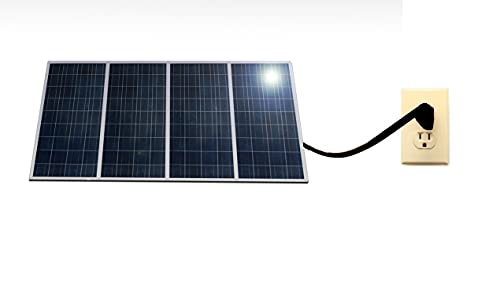
Best for homeowners who want a straightforward sun-to-wall solution. This kit includes an 800-watt solar panel array paired with an 800-watt inverter, designed to plug directly into a standard wall outlet. It is ideal for people seeking quick, minimal-assembly power improvements and potential reductions in monthly electricity usage. The system relies on solar generation to offset a portion of common electrical bills, with estimated annual generation around 1500 kWh and potential savings in the 20–40% range for typical homes.
Who this is for: new solar users, apartment or small-home owners with sunny exposure, and anyone aiming to test solar viability without a full home installation. Caution: performance depends on sun quality and household energy needs; outages or low sunlight can limit output.
ECO-WORTHY 400 Watt Premium Kit

Best for small households or vehicle-independent spaces needing consistent off-grid power. This kit delivers 400 watts using four 100W monocrystalline panels, an MPPT charge controller, Bluetooth monitoring, and mounting hardware. It emphasizes efficiency and resilience, with high panel efficiency (around 21%) and robust construction designed to withstand wind and snow loads. The MPPT controller offers up to 99% tracking efficiency and higher peak conversion, outperforming basic PWM setups.
Who this is for: campers, RV owners, tiny homes, or remote cabins seeking reliable daytime generation and a straightforward upgrade path. Caution: system performance varies with sun and shading; ongoing monitoring is recommended to optimize orientation and angles.
ECO-WORTHY Power Box for Solar Tracker

Best for outdoor trackers needing a ready-to-use independent power source. The Power Box includes a 10W solar panel paired with a 6Ah 12V LiFePO4 battery and BMS protection. It’s designed to integrate with ECO-WORTHY dual- or single-axis solar trackers, providing a self-contained power supply that can operate for several days on a full charge. It’s especially handy for garden installations or outdoor equipment that should keep running without grid access.
Who this is for: outdoor enthusiasts, garden installations, or those deploying solar trackers who want a plug-and-play power option. Caution: capacity is modest; consider application energy demands and tracker overhead to ensure adequate runtime.
Newpowa 2-to-1 Y Cable Adapter Kit

Best for expanding solar setups with parallel panel connections. The Newpowa Y connector lets you connect two solar panels in parallel, increasing available current and simplifying wiring. It’s designed with durable PPO materials and an automatic locking mechanism to ensure a secure connection in a DIY installation. This is a practical choice when you want to scale a small system without complex junctions.
Who this is for: DIY installers wiring multiple panels, limited space installations, or users needing straightforward parallel hookups. Caution: ensure connector compatibility with your specific panel terminals and weather conditions to avoid loosening or corrosion over time.
SAE to O Ring Connector 2FT Cable

Best for mobile charging ports and vehicle-style setups. This 2-foot SAE to O-ring connector uses heavy-duty 10 AWG copper wiring, designed for high-current transfer with minimal voltage drop. It features a flush-mount SAE port for secure, quick installation on vehicles or outdoor equipment. It’s a practical upgrade for MV or RV charging systems where a reliable, rugged connector is required.
Who this is for: riders, mobile power users, or anyone needing a robust quick-connect solution. Caution: verify compatibility with your vehicle’s battery terminals and devices before purchasing to avoid mismatches.
Buying Guide: Plug and Play Solar Systems
- What is plug-and-play solar? Systems designed for immediate setup with minimal electrical work. They usually include panels, controllers, and inverters or connectors that can connect directly to existing power sources or simple outlets.
- Energy needs and sizing Consider daily sun hours and your target usage. A system generating around 1.5–2 kWh per day suits light daytime loads; larger needs require more panels or a bigger storage solution.
- Best use cases Home backup or partial-offset power, RVs and boats, outdoor trackers, and portable charging setups. Choose based on installation location, weather exposure, and portability.
- Key components to compare Panels (monocrystalline vs polycrystalline), controller type (MPPT vs PWM), battery chemistry (LiFePO4 vs lead-acid), and connectors for future expandability.
- Reliability and maintenance Look for IP ratings, weather durability, and ease of maintenance. Modular components (like connectors and adapters) simplify upgrades without rewiring.
- Safety considerations Ensure proper grounding, weatherproof connections, and adherence to local electrical codes. Avoid cobbling together parts from disparate brands without compatibility checks.
FAQ
- What does plug-and-play mean for solar? It refers to solar setups designed for quick assembly and minimal electrical work, often including integrated controllers or simple connectors.
- Can these kits power a full home? Most plug-and-play kits are best for supplemental or backup power, not a full-time replacement for the main grid in larger homes.
- Are MPPT controllers better than PWM? Yes, MPPT controllers generally extract more energy, especially in variable sunlight, by adjusting voltage to maximize power.
- Is LiFePO4 better for portable power boxes? LiFePO4 offers longer cycle life and better thermal stability, making it favorable for outdoor and portable use.
- Do I need professional installation? For simple plug-and-play systems, no specialized electrical work may be required, but always follow manufacturer instructions and local codes for safety.