Best Planetary DC Gear Motors for DIY Projects and Robotics
Looking for reliable planetary DC gear motors for robotics, automation, or DIY projects? This guide highlights five solid choices that balance torque, size, and efficiency. Best for compact robots, CNC-like rigs, or automated devices where space is limited and control is precise. Each option is described with ideal use cases, strengths, and a practical caveat to help you choose confidently.
Summary of selected products
| Product | Brand | Approx. Torque / Power | Shaft / Gearbox |
|---|---|---|---|
| 6-22v 200W DC Planet Gear Motor | DOCYKE | 90 kg·cm torque | 8 mm D-shaft, metal gearbox |
| Maxynos Thor 2830 Plan. Gear Brushless (18V) | Maxynos | 4.1 N·m (41.8 kg·cm) | 28 mm gearbox, 6 mm shaft |
| 6mm Precision Mini Micro Planetary Reduction | Heayzoki | High torsion, 97-98% efficiency (single stage) | 6 mm shaft, 3-stage gearbox |
| 6mm Mini Planetary Gear Motor DC 3V | Garosa | High torque, low RPM | 8 mm shaft, 4-stage gearbox |
| HFUOACD 32GP-31ZY 12V | HFUOACD | 100 kg torque approx. | 8 mm shaft, planetary gearbox |
DOCYKE 6-22v 200W Planet Gear Motor

Best for high-torque mini acts in DIY robots and rotating platforms. The metal gear set and 8 mm output shaft deliver robust performance for small automation tasks. Suitable for applications like rotating tables, door locks, and curtain automation where precision and torque matter. Caution: wiring configuration can alter rotation direction, so plan the wiring accordingly.
Selected for: high torque in a compact metal-gear package; durable for mechanical apps requiring steady torques at modest voltages.
Maxynos Thor 2830 Planetary Gear Brushless (18V)

Best for space-constrained robotics and automation where high power-to-size is essential. The outrunner design with a precision planetary gearbox provides higher torque at low speeds and improved thermal stability with less maintenance. Choose this when you need strong performance in a compact form factor and longer life than typical brushed motors. Caution: performance varies with supply voltage; ensure your controller supports BLDC operation.
Selected for: strong torque in a compact package; efficient, maintenance-friendly brushless design.
Heayzoki 6mm Precision Mini Micro Planetary Reducer

Best for compact projects that need precise reduction with good rigidity. The three-stage gearbox provides stable torque delivery in small form factors, suitable for micro robotics and automation tasks where space is at a premium. Caution: data indicates high efficiency and torsion, but actual torque depends on input voltage and load conditions.
Selected for: excellent small-size torque delivery; robust against vibration or misalignment in tight assemblies.
Garosa 6mm Mini Planetary Gear Motor DC 3V

Best for tiny electronics projects needing strong power from a very small motor. The 4-stage gearbox helps achieve higher torque at low speeds, with a compact footprint suitable for micro-robotics and automated gadgets. Caution: rated voltage is 3V; ensure your power source matches the motor’s operating range.
Selected for: best compact solution when space is critical; suitable for educational kits and small automated devices.
HFUOACD 32GP-31ZY 12V Planetary Gearbox
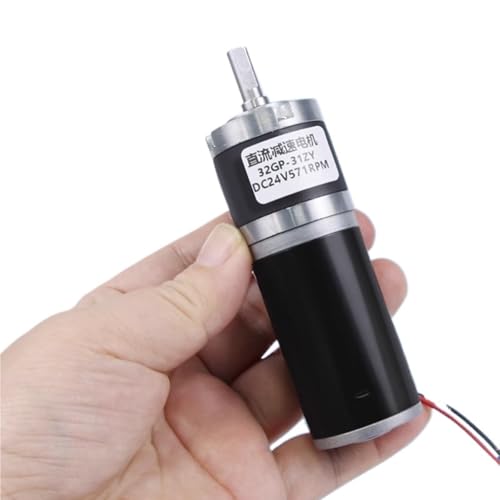
Best for automation systems requiring reliable 12V operation with consistent torque. Planetary gearing provides compact packaging with predictable performance, suitable for industrial automation, robotics, and project hardware that needs repeatable motion. Caution: ensure mounting alignment to maintain efficiency and reduce wear.
Selected for: dependable 12V operation with solid torque delivery in a mid-sized gearbox.
Buying Guide
Key considerations when choosing a planetary DC gear motor:
- Torque and power: Match torque requirements to your load, speed, and duty cycle. Higher torque is beneficial for lifting or moving heavy components at low speeds.
- Voltage and current: Ensure your controller and power supply meet the motor’s voltage range and current draw. BLDC options may require specific drivers.
- Gearbox stages and efficiency: More stages can increase torque but add size and potential backlash. Efficiency affects heat and battery life.
- Shaft size and coupling: Check shaft diameter and mounting options to fit your mechanical design. D-shaft vs. solid shaft impacts coupling choices.
- Physical footprint: Consider length, width, and weight. Smaller motors suit compact robotics; larger ones provide more torque but require sturdier frames.
- Thermal performance: Motors with planetary gearboxes typically handle heat better under load, but continuous high-torque use still requires airflow or heatsinking.
- Control compatibility: Verify compatibility with motor controllers, ESCs, or servo controllers, especially for brushless variants.
- Wiring and rotation direction: Some models allow wiring changes to alter rotation direction; plan wiring during installation.
Frequently Asked Questions
- What is a planetary gear motor best used for?
– Ideal for applications needing high torque in a compact size, such as robotics joints, rotating platforms, and automated doors or curtains. - Are brushless planetary motors better than brushed?
– They generally offer longer life, less maintenance, and better efficiency, but require appropriate drivers and control electronics. - Can I run these motors at different voltages?
– Many are designed for a specific voltage range; exceeding it can damage windings or reduce performance. - How do I choose the right torque?
– Estimate the load, desired speed, and acceleration. Select a motor that provides sufficient torque at your target speed with some headroom. - Is gearing important for precision?
– Yes. Gear ratios tailor speed and torque, improving control for precise positioning and slow-motion tasks. - What maintenance is required?
– Generally minimal for planetary gearboxes, but ensure secure mounting, clean connections, and check for overheating signs during use.