Best PID Temperature Controller Kit for Precision Heating
Choosing a PID temperature controller kit can simplify precise heating tasks across culinary, fermentation, brewing, and DIY projects. The following selections feature reliable SSR options, K-type thermocouples, and compact DIN/Panel mounts suitable for hobbyist to light industrial setups. Each product includes a solid-state relay and thermocouple options to support accurate, stable temperature control. Below is a quick summary of the chosen kits to help you compare at a glance.
| Product | Brand | Key Feature |
|---|---|---|
| Inkbird PID Temperature Controller Kit | Inkbird | 100V-240V AC, 40DA SSR included, alarm output |
| PID Temperature Controller Kit, CGELE | CGELE | AC 100-240V, 40DA SSR, 3-wire sensor support |
| PID Temperature Controller Kit, CNAODUN | cnaodun | 100-240VAC, 40DA SSR, multiple sensor inputs |
| PID Temperature Controller Kit, ReleyWell | ReleyWell | 40A SSR with radiator, K-type probe |
| PID Temperature Controller Kit, Coiliiot | Coiliiot | Dual output: relay and SSR, dual alarms |
Each kit supports essential features such as K-type thermocouple sensors, SSR or relay outputs for external control, and alarms to prevent overheating. When selecting a kit, consider the sensor type, number of outputs, panel size, and whether you need dual alarms or dual outputs for more complex systems. The following sections detail five popular options to help you decide which kit best fits your project.
Inkbird PID Temperature Controller Kit
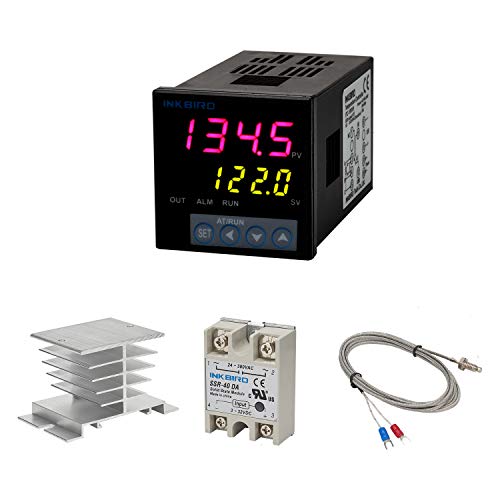
The Inkbird kit features a high voltage AC input (100V to 240V) and includes a 40A SSR for external switching. It comes with a K-type thermocouple and a white heat sink for efficient heat dissipation. An alarm relay output supports resistive loads up to AC250 V, 3 A, enabling audible alerts or separate signaling devices. The device accommodates both 3-wire and 2-wire sensors, broadening compatibility with common thermocouples and copper probes. This combination makes it suitable for home brews, small ovens, and general temperature control tasks where reliable, compact control is needed.
Key considerations include the included SSR and alarm outputs, which can be leveraged to drive a buzzer or other warning devices. The 3-wire sensor support ensures compatibility with widely used thermocouples, enabling stable PID control across varying setups. The packaging’s compact form factor is ideal for enclosure mounting, while the heat sink helps prevent overheating in continuous operation. As with all PID kits, proper wiring and calibration are essential for peak performance.
CGELE PID Temperature Controller Kit
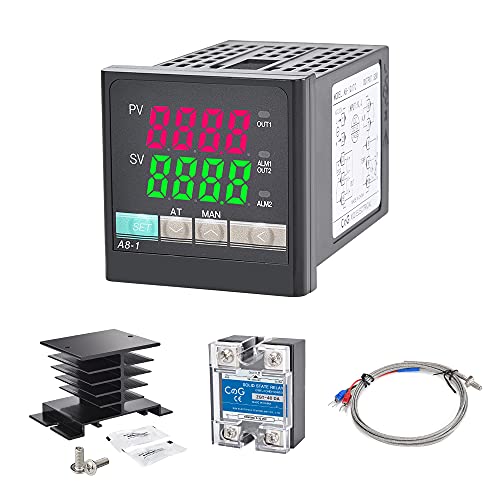
The CGELE kit provides AC 100-240V operation with a 40DA SSR included, plus a K-type thermocouple and a black heat sink. It supports 3-wire or 2-wire sensor configurations and offers a single alarm output (AC220V/DC30V, 3 A resistive, ON/NC). The kit emphasizes sensor flexibility, supporting a broad range of thermocouples (K, E, J, N, W3-25, W5-26) and measurement options like PT100 and Cu50. This makes the CGELE option appealing for users who require versatile sensor compatibility and straightforward alarm signaling in compact enclosures.
Users should verify the exact sensor compatibility for their application and ensure the wiring harness matches the intended input/output configuration. While the unit delivers reliable PID control, calibrating thermocouple types and tuning parameters is crucial for minimizing overshoot and achieving stable temperatures in dynamic processes, such as fermentation or culinary control.
CNAODUN PID Temperature Controller Kit

The CNAODUN kit uses 100-240 VAC power and includes a 40DA SSR for external switching. It supports 3-wire or 2-wire sensor inputs and ships with a K-type thermocouple probe. The package highlights multiple alarm outputs (6,7 ports) with a 3 A resistive load for signaling. This option is well-suited for users who need robust alarm functionality and broad sensor compatibility, including K-type thermocouples and PT100 inputs.
When wiring, ensure proper attention to the relay and alarm configuration to prevent inadvertent activation. The default sensor input is often K-type, but confirm the specific model’s default settings and adjust to match your sensor. For projects requiring multiple alarm signals or more complex relay configurations, CNAODUN provides flexible options, albeit with careful configuration required.
ReleyWell PID Temperature Controller Kit

ReleyWell’s kit features a high-voltage 100-240V input and includes a 40A DIN rail SSR with a radiator, along with a K-type thermocouple. It lists an output configuration of SSR and a 1 m probe, with a 0-400℃ range for the K-type thermocouple. The focus here is on rugged DIN rail integration, making it a strong candidate for enclosure-based control panels in industrial or lab environments. The included radiator helps manage SSR heat, aiding long-term reliability in continuous operation.
Potential trade-offs include slightly larger physical footprint due to DIN rail mounting and radiator. This kit is best for users who need a robust, rail-mounted control solution with straightforward temperature tracking and a dedicated SSR cooling solution to maintain performance under load.
Coiliiot PID Temperature Controller Kit (72mm Panel)

The Coiliiot 72×72mm panel kit offers dual output options (relay and SSR) with dual alarm signals and a K-type thermocouple included via a mounting bracket. The unit supports up to a 5 A resistive load and is designed for compact DIN/ panel installations, matching more demanding forms with a larger display area. SSR not included, so you’ll pair it with an external SSR for SSR control tasks. This setup is suitable for those who want flexible output types and clear dual alarms for critical processes.
For users selecting this kit, verify the SSR compatibility if you plan to use SSR control, and ensure you have a proper enclosure and wiring plan for both alarm outputs. The larger panel size can be easier to read in workshop environments, though it may require a slightly larger mounting space.
Buying Guide
Key purchase considerations for PID temperature controller kits include:
- Power supply range: Most kits operate on 100-240 VAC, enabling worldwide compatibility. Ensure your mains supply matches the unit’s input.
- Output type: Choose SSR-only, relay-only, or dual-output kits based on your load type and switching needs. SSRs are ideal for fast, silent control with low noise; relays handle inductive loads but may have slower response.
- Sensor compatibility: Look for K-type thermocouples and support for 3-wire or 2-wire configurations. PT100 and Cu50 inputs expand versatility for various sensors.
- Alarms and signaling: Dual alarms or single alarm outputs provide fail-safes. Confirm voltage levels and the ability to drive buzzers or external indicators.
- Panel size and enclosure: DIN rail vs. panel-mount units require appropriate mounting space. Consider legibility of the display and accessibility of wiring.
- Calibration and tuning: Proper PID tuning minimizes overshoot and stabilizes temperatures in dynamic processes. Some kits offer self-tuning features; others require manual adjustment.
- Heat management: SSRs can generate heat; choosing kits with radiators or adequate heat sinking improves reliability in continuous operation.
- Documentation and support: Clear manuals and sensor compatibility notes help reduce setup time and errors during installation.
In practice, users should map their application requirements to a kit’s features: sensor type compatibility, number and type of outputs, enclosure size, and the need for dual alarms. For roasting, fermentation, or small-batch industrial tasks, a dual-output kit with a reliable SSR and a compatible K-type thermocouple often offers the best balance of flexibility and reliability. Always follow safe wiring practices and verify that all components are properly rated for the intended voltage and current.