Best PID Controllers for Heating Elements: Precision Temperature Control
Selecting the right PID controller for a heating element can dramatically improve temperature stability, process safety, and energy efficiency. This guide highlights five reliable options commonly used in home brewing, aquarium, and small industrial setups. Each product is evaluated for sensor compatibility, outputs (relay and SSR), alarm features, and ease of use. Readers will find practical comparisons to help choose a model that fits their heating scenarios, whether a simple heater, pump-driven system, or more complex dual-output needs.
| Product | Brand | Key Features | Amazon Link |
|---|---|---|---|
| Inkbird PID Temperature Controller Kit | Inkbird | 100V-240V, SSR output, K-type thermocouple, alarm, 3-wire sensor support | Link |
| Briidea Heating PID Controller | briidea | -40℉ to 302℉ / -40℃ to 150℃, P/S/M modes, pre-wired, brewing-focused | Link |
| CG ELE PID Temperature Controller Kit | CGELE | AC 100-240V, SSR output, K/J/E/other sensors, 40DA SSR included | Link |
| Jaybva PID Temperature Controller | Jaybva | F/C display, dual output (relay + SSR), wide input range, multiple inputs | Link |
| Coiliiot PID Temperature Controller | Coiliiot | Dual output, dual alarms, K-type sensor, compact panel | Link |
Inkbird PID Temperature Controller Kit
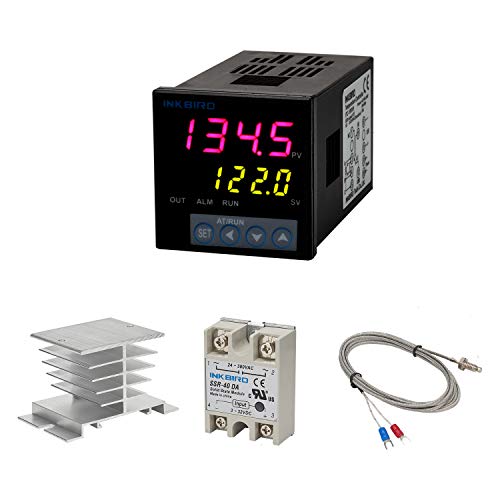
The Inkbird kit offers a high-voltage compatible PID controller with a pre-included SSR (40DA) and a K-type thermocouple. It features an alarm relay output (AC250 V, 3 A resistive load) with ON or NC configuration, enabling simple buzzer alerts or wired buzzers for overheating warnings. Its support for 3-wire sensors ensures compatibility with common thermocouples used in heating systems. The external SSR output makes it straightforward to drive a solid-state relay for precise heater control, simplifying wiring for robust heating setups.
Briidea Heating PID Temperature Controller

The Briidea model emphasizes home brewing applications with three modes (P, S, M) for flexible control. It covers a wide temperature range (-40℉ to 302℉ / -40℃ to 150℃) and features a user-friendly interface designed for beginners and experienced users alike. The controller’s simple plug-and-play design reduces installation complexity, while the alarm function helps maintain safe brewing temperatures. The high-precision PID algorithm enables stable temperature control during malt saccharification and fermentation phases, supporting consistent flavor outcomes.
CG ELE PID Temperature Controller Kit
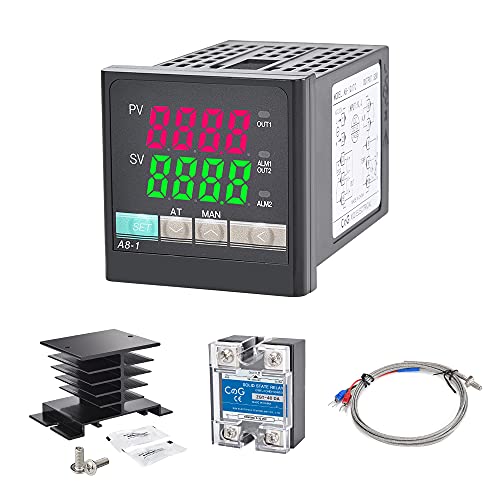
CGELE’s kit is built for versatile sensor compatibility and dependable SSR-driven heating control. It supports three- or two-wire sensors, including common thermocouples (K, E, J, N) and resistance sensors. An included 40DA SSR ensures reliable switching for larger heaters, while the alarm output provides a straightforward method to warn of high- or low-temperature events. The unit is ideal for applications requiring precise temperature tracking in cooking, brewing, or small industrial tasks.
Jaybva PID Temperature Controller

Jaybva’s controller offers universality with Fahrenheit and Celsius display and TC/RTD universal input for K, J, E, Pt100, and other sensors. It provides dual outputs: a relayed output and an SSR control voltage output, enabling flexible control for heaters and SSR-driven devices. The compact 48mm x 48mm footprint suits panel installations in cabinets or equipment racks. It is well-suited for espresso machines, incubators, aquariums, and other equipment requiring simultaneous monitoring and control through two independent outputs.
Coiliiot PID Temperature Controller
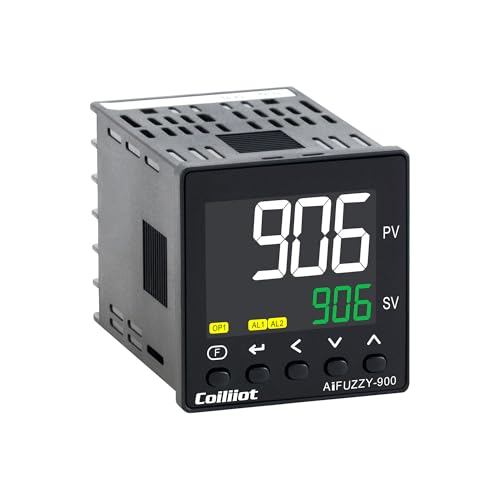
Coiliiot’s model features dual outputs: both relay and SSR, with dual alarms and a K-type thermocouple included. The 48×48 mm panel size keeps installation neat, while the 5 A load capacity on the relay output supports small heaters and devices directly. This option balances versatility with a compact design, suitable for ovens, coffee machines, kilns, and other small processing equipment requiring reliable, multi-output temperature control.
Buying Guide: Key Considerations When Choosing a PID Controller
- Output configuration: Determine whether you need relay, SSR, or both. If you plan to drive a solid-state relay, ensure the controller includes an SSR output option and appropriate wiring.
- Sensor compatibility: Check whether the unit supports K-type thermocouples, RTDs (Pt100), or other sensors you rely on. Three-wire sensors add flexibility in placement and accuracy.
- Temperature range: Choose a model that covers your operating temperatures, including any required low- or high-end limits for brewing, incubating, or heating elements.
- Alarms and safety: Alarm relays help prevent overheating. Verify whether alarms are adjustable (on/off, high/low thresholds) and whether they can integrate with buzzers or external relays.
- Display and interface: Consider whether you need Fahrenheit and Celsius display, the readability of the interface, and ease of programming for beginners vs. advanced users.
- Physical footprint: Panel size (e.g., 48×48 mm) matters for enclosure space. Ensure a snug fit in your control panel or electrical box.
- Pre-wiring and setup: Some models come pre-wired with sensors and mounts, reducing installation time. Plug-and-play designs are beneficial for DIY projects and brewing setups.
- Reliability and support: Look for reputable brands with clear documentation, tutorials, and customer support to address calibration and sensor issues.
- Cost of ownership: While not listing prices, assess total cost including required sensors, SSRs, and potential expansion for dual-output configurations.
When evaluating options, match the device’s outputs, sensor compatibility, and alarm features to your specific heating element application. For home brewing, a model with brewing-centric presets and an independent pump control can simplify operations. For aquarium or small industrial uses, dual outputs and robust alarm configurations enhance safety and precision. Consider starting with a kit that includes a thermocouple and an SSR for immediate setup, and plan for future upgrades if you require more complex control strategies.