Best Photoelectric Smoke and Carbon Monoxide Detectors for Homes
Looking for reliable dual-sensor protection that is easy to install and reduces nuisance alarms? This guide highlights top photoelectric smoke and carbon monoxide detectors, with practical picks for different home needs. Best for quick installs, long battery life, and easy interconnect options, these models help you choose the right device for bedrooms, living areas, or larger homes.
Buyer types addressed:
– Renters or small homes: quick-install, battery-powered options.
– Homes with high cooking activity: models designed to reduce false alarms.
– Households seeking long-term coverage: sealed 10-year battery units.
– Homes needing interconnected protection: hardwired options with battery backup.
– Budget-conscious buyers: multi-pack offerings that provide solid value over time.
| Product | Sensor Type | Power Source | Best For | Notes |
|---|---|---|---|---|
| Kidde 30CUDR (1 Pack) | 2-in-1 smoke & CO | AA batteries | Easy setup, renters, quick replacement | Over 25% faster smoke detection; 85 dB alarm |
| First Alert SMCO100 (1 Pack) | 2-in-1 smoke & CO | Battery-operated | Budget-friendly, simple maintenance | Precision Detection reduces cooking nuisance alarms |
| First Alert SMCO210 (1 Pack) | 2-in-1 smoke & CO | 10-year sealed battery | Low maintenance, long-term use | Slim profile; no battery replacements |
| Kidde 30CUD10 (1 Pack) | 2-in-1 smoke & CO | 10-year battery | No-chirp long-term protection | Over 25% faster smoke detection; 10-year warranty |
| Kidde 4-Pack 30CUDR | 2-in-1 smoke & CO | AA batteries | Whole-home multi-pack value | Same features as single pack in bulk |
Kidde Smoke and Carbon Monoxide Detector, AA Battery Powered with LED Status Lights

Features include 2-in-1 detection for smoke and CO, an 85 dB alarm, and a red LED indicator for visual warnings. It is powered by two AA batteries, enabling simple, wiring-free installation. The model comes with a 10-year limited warranty. Advanced sensing aims to reduce false alarms from everyday cooking or steam while maintaining rapid smoke detection. Best for renters, apartments, or rooms where wiring is impractical.
Best for: quick-install, temporary or rental spaces where wiring is not feasible. Limitation: battery replacements will be needed every year or two, depending on usage, and battery-powered units may require more regular checks than hardwired options.
First Alert Combination Smoke & Carbon Monoxide Alarm, Battery Operated SMCO100

Smart alarm with Precision Detection technology reduces cooking nuisance alarms and provides early warning for fires. It offers reliable 2-in-1 protection and is battery-operated for easy installation. This model suits bedrooms, living rooms, or hallways where quick, dependable smoke and CO alerts are needed without wiring. Caution: performance depends on battery condition and placement away from humidity-rich zones can extend life and accuracy.
First Alert SMCO210, 10-Year Sealed Battery Detector

This model uses a 10-year sealed battery to eliminate battery replacements and low-battery chirps. It delivers 2-in-1 protection with early warning in emergencies and a slim profile that fits tight ceiling spaces. Best for: households seeking minimal maintenance and long-term coverage. Limitation: if the unit fails, replacement requires tracking the end-of-life timeline rather than swapping a battery.
Kidde Smoke and Carbon Monoxide Detector, 10-Year Battery Powered, 30CUD10

12-in-1: 2-in-1 detection with advanced sensing for faster smoke detection and CO monitoring. It features a red LED indicator and a built-in 10-year battery that reduces maintenance and eliminates low-battery chirps. Best for: homes wanting a long-lasting, battery-powered option without frequent replacements. Caution: power relies on the internal battery; regular checks help ensure protection is active.
Kidde Hardwired Smoke & Carbon Monoxide Detector, 10-Year Backup
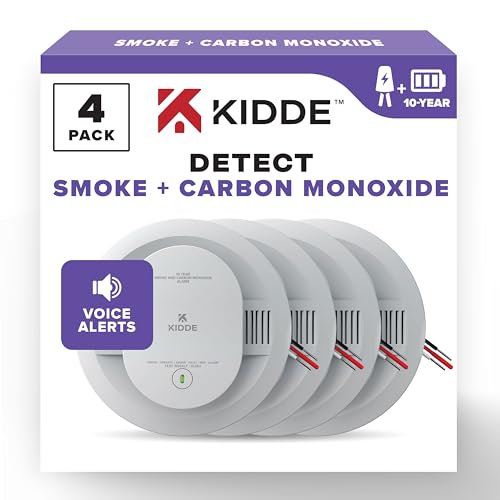
Hardwired with 10-year battery backup, this detector provides constant 120V AC operation with a battery backstop. It supports interlinked alarm behavior and features an LED warning system. Best for: homes with central wiring and desire for fewer battery changes. Limitation: installation requires ceiling wiring; may be overkill for very small spaces or rentals.
First Alert Combination Smoke & Carbon Monoxide Alarm, Battery Operated SMICO100

Offers reliable 2-in-1 protection with End-of-Life warning and Precision Detection to cut down nuisance alarms. Battery-operated for flexibility in placement. Best for: bedrooms or hallways where easy accessibility matters. Caution: battery-dependent performance may require more frequent checks in households with high humidity or rapid temperature changes.
First Alert Interconnect Hardwire Detector SMICO100-AC

Interconnect capability lets all compatible alarms sound together. It includes Quick Connect Plug for easier installation without rewiring. Best for: larger homes or multi-room protection where coordinated warnings are essential. Limitation: interconnectability depends on existing system compatibility and wiring standards.
Buying Guide
- Power source: Choose battery-powered for quick installs or hardwired with backup for ongoing protection without frequent battery changes.
- Sensor technology: Look for 2-in-1 smoke and CO detection with smart sensing to minimize false alarms caused by cooking or steam.
- Battery life and maintenance: Sealed 10-year batteries reduce maintenance but require eventual replacement after many years; standard AA or AAA batteries allow easier replacement.
- Interconnection: For multi-room protection, select interconnect-capable models that trigger alarms across all connected units.
- Warranty and reliability: A longer warranty signals confidence in the device’s durability and performance over time.
- Placement considerations: Mount detectors in sleeping areas, living rooms, and near kitchens—but away from humid bathrooms or vents that could trigger false alarms.
Frequently Asked Questions
- What is the difference between photoelectric and ionization detectors?
Photoelectric detectors respond faster to smoky, smoldering fires and are generally less prone to nuisance alarms from cooking than ionization detectors.
- Do I need both smoke and CO detectors?
Yes, a 2-in-1 device provides protection against both smoke and carbon monoxide, simplifying installation and reducing the number of devices needed.
- How long do 10-year detectors last?
10-year detectors are designed to operate for a decade on a sealed battery, after which replacement is recommended.
- Should detectors be interconnected?
Interconnected detectors alert you throughout the home if one unit detects smoke or CO, improving early warning across rooms.
- Where should detectors be installed?
Install in or near bedrooms, living areas, kitchens (at a distance from cooking zones), and on every level of the home for comprehensive coverage.
- How often should I test detectors?
Test monthly and replace any unit that fails accuracy tests or alarms consistently.