Best pH Meter and Electrodes for Accurate Water Testing
Answering the need for reliable pH measurement, this guide highlights the best pH meters and electrodes for home, lab, and field use. Ideal buyers include hobbyists testing hydroponics or aquariums, DIY dabblers in fermentation, and professionals requiring consistent readings in water samples. The selections below focus on durability, ease of use, and compatibility with common pH meters. A concise comparison table at the start helps you see each option at a glance.
| Product | Best For | Key Benefit | Limitations |
|---|---|---|---|
| DANOPLUS Long Body pH Electrode | Field testing and labs | Long 300 cm cable for flexible placement | Requires proper BNC-compatible meter |
| VIVOSUN Digital pH Meter | Home use, hydroponics | Pocket-friendly, backlit LCD | Primarily a meter with integrated probe |
| TEKCOPLUS 0-14 pH Electrode Probe | Replacement electrode kits | Replaceable electrode with 0-14 pH range | Calibration dependent on meter compatibility |
| Apera AI501 PH700 Benchtop | Laboratories and classrooms | 3-in-1 pH/Temp with auto calibration | Benchtop form factor |
| Bluelab PROBPH pH Probe | Hydroponics and grow rooms | Durable, waterproof, long cable | Probes require compatible Bluelab system |
DANOPLUS Long Body pH Electrode With 300cm Cable

The Long Body pH Electrode from DANOPLUS provides a 300 cm cable and a BNC socket, enabling flexible placement during measurements. It covers a wide pH range of 0.00 to 14.00, making it suitable for water testing in fields like hydroponics, aquariums, pools, spas, and wastewater applications. It is best paired with pH meters or controllers that accept BNC input. Use this when you need reach and compatibility with existing BNC-equipped devices. A limitation is that performance depends on the host meter’s stability and calibration routine.
VIVOSUN Digital pH Meter

The VIVOSUN Digital pH Meter is a compact, pocket-size tester designed for quick readings in homes, hydroponics, pools, and aquariums. It features an LCD display for easy reading, a backlit function for dim environments, and straightforward calibration. This option is best for users who want a simple, handheld meter with reliable performance for routine pH checks. It may be less ideal for complex samples or dirty liquids where a more robust, lab-grade electrode is preferred.
TEKCOPLUS 0-14 pH Electrode Probe

The TEKCOPLUS 0-14 pH Electrode Probe offers accurate pH measurements in the standard 0.00–14.00pH range. It is a replaceable electrode with a 300 cm cable, designed for use with pH meters or controllers that accept a BNC input. Calibration ease and modular replacement are advantages, especially for users maintaining multiple measurement stations. A limitation is that performance can depend on maintaining clean junctions and proper maintenance of the electrode.
Apera Instruments AI501 PH700 Benchtop pH Meter
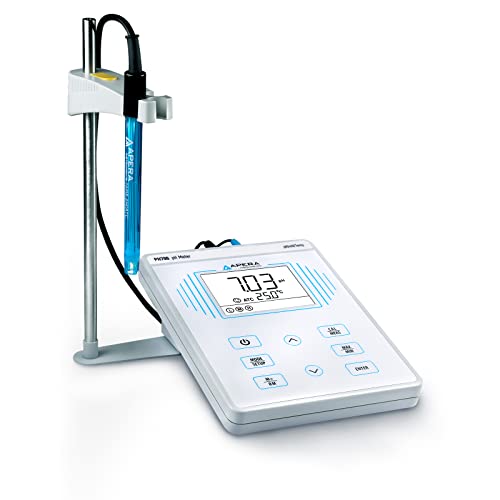
The AI501 PH700 from Apera Instruments combines pH and temperature measurements in a benchtop unit, featuring a 3-in-1 pH/Temp electrode and auto calibration, with self-diagnosis and fast, stable readings. This setup is well-suited for laboratories, classrooms, and controlled testing environments where precision is critical. It is best for users who value integrated temperature data and automated calibration, but it requires a stable workspace for bench use and may be overkill for simple field checks.
Bluelab PROBPH pH Probe for Water

The Bluelab PROBPH pH Probe is designed for hydroponic systems and indoor grow setups. It emphasizes durability, waterproofing, and a longer, more reliable lifespan due to a double junction design and a robust cable. It is best for growers needing dependable readings in nutrient solutions where contamination can be an issue. A potential limitation is that it works optimally with compatible Bluelab meters and controllers; using it outside that ecosystem may reduce performance consistency.
Buying Guide: Key Considerations For Your pH Meter And Electrode
- Purpose and environment: Choose a meter and electrode intended for the setting—fieldwork, home use, or a lab. Harsh liquids or suspensions benefit from rugged, open-junction probes.
- Electrode type and replacement: Replacement electrodes extend device life. Consider whether you need a 3-in-1 electrode (pH/temperature) or a dedicated single function probe.
- Calibration and temperature: Auto temperature compensation (ATC) and easy calibration reduce drift and improve accuracy across temperatures.
- Cable length and placement: Longer cables enable flexible placement in tanks, pools, or outdoor setups. Ensure compatibility with your meter’s inputs (e.g., BNC).
- Durability and maintenance: Waterproofing, double junction designs, and ease of cleaning influence long-term reliability in messy liquids.
- Readability and display: Backlit LCDs and clear units improve readability in varied lighting conditions.
- Portability vs. bench use: Handheld meters are great for quick checks; bench meters often provide more precise control and data features.
Frequently Asked Questions
- What is a pH electrode and why replace it? A pH electrode measures hydrogen ion activity in a solution. Electrodes can degrade due to contamination, drying, or wear; replacement maintains accuracy and responsiveness.
- How do I calibrate a pH meter? Most meters require calibration with standard buffers (often pH 4, 7, and 10). Follow the device’s calibration prompts, and ensure buffers are fresh and at room temperature.
- What’s the difference between open junction and double junction probes? Open junction probes reduce clogging in dense samples but can be more susceptible to contamination. Double junction designs offer longer life and better reliability in dirty or complex liquids.
- When is ATC most beneficial? Automatic Temperature Compensation helps ensure accurate readings across temperatures, especially in environments that shift from cool to warm.
- Is a handheld pH meter sufficient for hydroponics? For many home and small-scale setups, yes. For professional or large-scale systems, a benchtop meter with a robust electrode may provide more consistent results.
- How should I maintain a pH electrode? Rinse with deionized water after use, keep the electrode moist with storage solution when not in use, and calibrate regularly to prevent drift.