Best Low RPM Permanent Magnet Generator Options for Wind and Water Projects
Looking for a reliable low RPM permanent magnet generator suitable for wind or water applications? This guide highlights five practical choices designed for simple operation, durability, and stable output at low speeds. Best for hobbyists and professionals seeking gearless, direct-drive generators that can be driven by wind or water without complex gear systems. Each option is evaluated for suitability, limitations, and who benefits most from its design.
The following quick-reference table summarizes the five selected products, including their typical use case and voltage range. This helps you compare at a glance before diving into detail sections.
| Product | Brand | Recommended Use | Voltage / Output |
|---|---|---|---|
| 12000W Low RPM PM Generator (Rectifier) | Generic | High-output wind/water turbine projects | 12,000W, 12V/48V variants |
| 3-Phase Low RPM PM Generator (12V) | Generic | Small wind/water setups, educational builds | 12V nominal |
| 12000W Low RPM PM Generator (Rectifier, 48V) | Generic | Wind turbines with rectifier, higher voltage setup | 12,000W, 48V |
| EODSAD 1500W PMA Generator | EODSAD | Micro wind/water projects, charging and lighting | 1500W, 14V |
| MDYHY 1200W PMA Generator | MDYHY | Low RPM charging and lighting for vehicles or turbines | 1200W, 12–14V |
12000W Low RPM Permanent Magnet Generator, 3 Phase Gearless With Rectifier

- Brand: Generic
- Features: NdFeB rare-earth magnets, high-quality copper windings for efficiency; die-cast aluminum shell for durability; corrosion-resistant finish for longevity; gearless design for direct wind/water drive
Best for: High-output wind or water turbine projects where a gearless, maintenance-light generator is desired. This model emphasizes stability and durability at low speeds, making it suitable for long-running installations. Caution: ensure proper rectification and wiring to handle 12V or 48V configurations as needed.
3-Phase Permanent Magnet Generator, Low RPM Gearless PMA

- Brand: Generic
- Features: NdFeB magnets, high-quality copper windings; die-cast aluminum cover for resistance to strong winds; corrosion-resistant finish; gearless direct-drive design
Best for: Small to mid-size wind or water installations needing a simple, direct-drive PMA with robust enclosure. Better for scenarios prioritizing durability in exposed environments. Limitation: may require external regulator or controller depending on system voltage.
EODSAD PMA Generator 1500W with Built-In Voltage Stabilizer

- Brand: EODSAD
- Features: Permanent magnet, silicon rectifier integration; built-in voltage stabilizer; dual-purpose charging and lighting; pure copper winding
Best for: Micro to small-scale charging and lighting setups where a compact generator with voltage stabilization is preferred. Choose this if you need integrated regulation and a simplified wiring path. Caution: verify compatibility with your load and charging requirements due to 1500W rating at a specific voltage.
12000W Low RPM PM Generator, 48V Output

- Brand: Generic
- Features: NdFeB magnets, robust copper windings; aluminum shell; corrosion-resistant coating; gearless design for direct drive
Best for: Wind turbines requiring higher voltage operation (48V) with a strong, low-speed generator. Advantage: higher system voltage can reduce current for the same power. Limitation: ensure rectification and controller are sized for 48V operation.
MDYHY Permanent Magnet Generator, 1200W 12V-14V
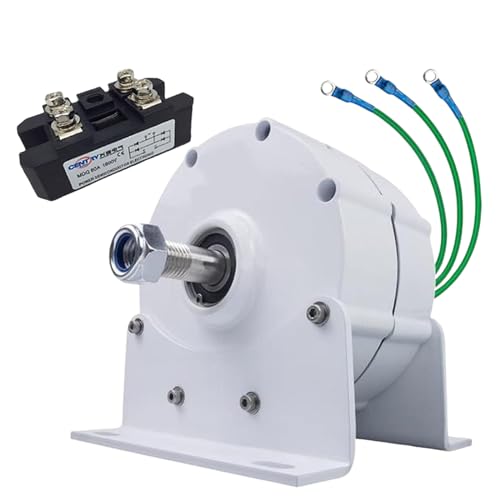
- Brand: MDYHY
- Features: 1200W rating, operates at low RPM; built-in voltage stabilizer; designed for charging and lighting with a wide voltage range
Best for: Vehicles or small wind projects that require a compact, efficient PMA with stable output across 12–14V. Choose this if you need a budget-friendly, low-RPM PMA with integrated regulation. Caution: confirm load compatibility and mounting requirements for mobile or vehicle-based applications.
Buying Guide
What to consider when choosing a low RPM permanent magnet generator:
- Voltage and output needs: Decide whether you need 12V, 14V, or higher like 48V, and match to your battery or load.
- Gearless design benefits: Fewer moving parts means less maintenance and simpler installation, but ensure your mounting and drive alignment are solid.
- Enclosure and durability: Look for die-cast aluminum housings and corrosion-resistant finishes for exposed environments.
- Rectification and regulation: Check if a rectifier or built-in voltage stabilizer is included or required for your system.
- Best use case: Large wind or water turbines benefit from higher power ratings; micro setups suit small charging or lighting needs.
- Installation considerations: Vibration, mounting points, and electrical safety are critical for long-term operation.
FAQ
- What is “low RPM” in a permanent magnet generator?
– It refers to generators designed to produce useful power at slow rotational speeds typical of small wind or water turbines, reducing gearing needs. - Do these generators require gears?
– No; many are gearless and drive directly from the turbine, which simplifies maintenance and reduces mechanical loss. - Is a voltage regulator needed?
– Often yes; some models include built-in stabilizers, but larger systems may need an external regulator or charge controller. - Can I use these with 12V or 48V battery banks?
– Yes, depending on the model. Ensure your wiring, rectification, and battery bank match the generator’s voltage output. - Are these suitable for vehicles or boats?
– Some models are designed for agricultural vehicles or small trailers; check load ratings and mounting compatibility for mobile use. - What maintenance is required?
– Regular inspection of electrical connections, mounting hardware, and any cooling features; gearless designs generally require less moving-part maintenance.