Best Over Sink Water Heaters for Instant Hot Water
Answering the need for immediate hot water at the sink, these over-sink or under-sink units provide on-demand heating without a bulky storage tank. They’re ideal for small kitchens, apartments, RVs, or any setup where space is limited. The top picks below are selected for reliability, safety features, and ease of installation. Suitable buyers include apartment dwellers, homeowners upgrading a laundry or kitchen sink, and campers who want quick hot water without running a large faucet. A concise product table follows to compare key specs at a glance.
| Product | Best For | Key Feature |
|---|---|---|
| AIYEZIDT Tankless 110V | Space-conscious kitchens | Instant hot water in 3–5 seconds |
| BOSCH Tronic 3000 ES2.5 | Under-sink reliability | 2.5 gallon capacity, 98% thermal efficiency |
| xwdzswgs Tankless 110V | Compact setups | LED display, 3000W, adjustable temp |
| ThermoMate ES150 | Small apartments | 1.32 gallon, 99% thermal efficiency |
| LECLOC Mini 3000W | High-flow at limited spaces | IPX4, safety features, 30–55°C range |
AIYEZIDT Tankless 110V Instant Water Heater
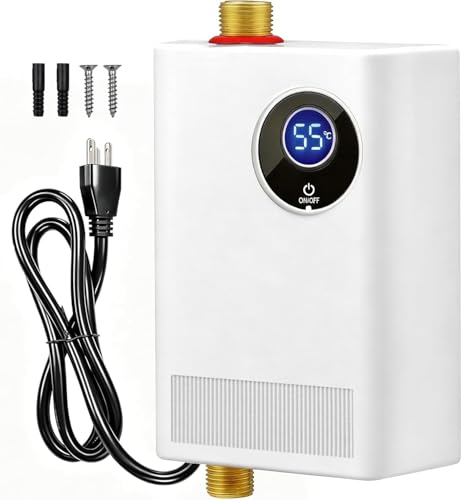
The AIYEZIDT 110V mini tankless water heater delivers instant hot water at the sink with a 3–5 second response. It supports a maximum temperature of 131°F (55°C) and is designed for wall mounting to save counter space. This model is best for small kitchens, bathrooms, RVs, and camping, where compactness is essential and quick access to hot water is a priority.
Best for: users needing quick, point-of-use hot water in tight spaces. The design emphasizes immediacy and compactness over bulkier heating systems. Caution: the unit’s heat range is limited, so extreme cold inlet conditions may reduce output temperature.
BOSCH Electric Mini-Tank Water Heater Tronic 3000 T ES2.5
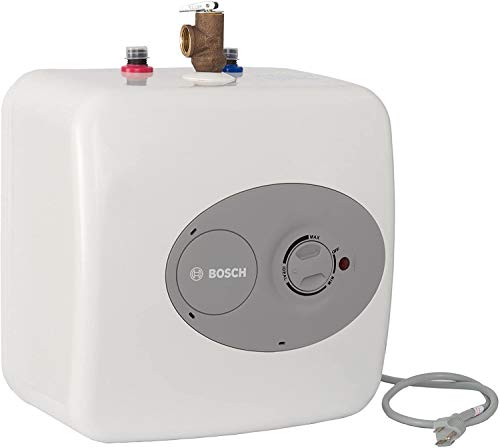
The Bosch Tronic 3000 T ES2.5 is a 2.5-gallon mini-tank designed for under-sink installation. It features high thermal efficiency and easy standalone use with a 120V outlet. Its compact form makes it a strong choice for places needing reliable hot water close to the point of use, especially where a storage tank is feasible but space is limited.
Best for: users who want a reliable under-sink hot water solution with straightforward installation. Caution: not designed for high-demand outputs like showers; best for single-tap use or small sinks.
xwdzswgs Tankless Electric 110V 3000W

This under-sink tankless heater from xwdzswgs uses 3000W power to deliver instant hot water and features an LED display for easy temperature control. It’s designed for wall mounting and is suitable for kitchens and bathrooms where space is at a premium. It’s capable of heating water quickly but note the output varies with flow rate and inlet temperature.
Best for: those seeking an adjustable, LED-enabled unit to supply point-of-use hot water. Caution: not ideal for high-flow demands; efficiency depends on water flow and inlet temperature.
ThermoMate ES150 Mini Tank Water Heater

The ThermoMate ES150 is a compact 1.32-gallon tank designed for point-of-use installation under the sink. It offers a high thermal efficiency around 99% and three adjustable temperature settings, with 77–140°F ranges and a freeze protection mode. The unit can be mounted on the wall or floor, depending on space and preference.
Best for: apartments or tiny homes needing consistent hot water at a sink without large equipment. Caution: smaller capacity means it handles limited simultaneous usage; consider higher capacity if multiple taps are used.
LECLOC Mini Tankless 3000W Under Sink

The LECLOC unit is a 3000W plug-in under-sink heater featuring IPX4 waterproofing and a big temperature knob for easy adjustments from 30°C to 55°C. The 3000W capacity supports low-flow hot water delivery and is positioned as a convenient option for single taps with space constraints. A note suggests considering higher-wattage models for a better warm-water experience in broader use cases.
Best for: users who want a simple, safe, and adjustable under-sink heater with a clear control interface. Caution: designed for low-flow use; not suitable for showers or multiple concurrent outlets at full flow.
Buying Guide: What to Consider When Choosing an Over Sink Water Heater
Purpose and flow: Determine how many outlets you need to support hot water at once. If you primarily need hot water at a single sink, a smaller unit is often sufficient. For dishwashing or frequent use, a higher wattage or slightly larger tank can improve performance.
Electrical setup: Most units run on standard 110–120V circuits. Check your available outlets and whether you can hard-wire or you’ll rely on a plug-in model. Safety features such as IPX4 waterproofing, leakage protection, and dry-boil protection are important for kitchens and bathrooms.
Temperature control: Look for precise adjustable settings, LCD or LED displays, and clear temperature ranges. Temperature consistency matters for dishwashing, handwashing, and cosmetic uses.
Space and installation: Under-sink or wall-mounted units save space but require clear space for installation and venting if applicable. Consider the must-have mounting option (wall vs. floor) and whether you need flexible hoses or standard fittings.
Durability and materials: Stainless steel interior tanks resist corrosion and scale buildup better than some plastics. Enamel-lined tanks also improve longevity. Consider the warranty and maintenance requirements when comparing models.
Energy efficiency: Higher thermal efficiency reduces standby heat loss. The most efficient models tend to deliver hot water faster with less energy waste, especially in compact configurations.
Limitations and cautions: Some units are optimized for low-flow at a single sink and may struggle with simultaneous use at multiple taps. Temperature outputs vary with inlet water temperature and flow rate, so plan for typical household conditions rather than ideal scenarios.
Frequently Asked Questions
- Can I install an over-sink water heater by myself?
– Many models are designed for DIY installation, especially plug-in units. If mounting or electrical work is required, follow the manufacturer’s instructions and local codes, and consider professional help for electrical connections. - What is the typical temperature range I can expect?
– Most offer adjustable ranges from around 77°F to 140°F (25°C to 60°C), with some units offering hotter max temps depending on power limits and inlet water temperature. - Will these work with cold water lines in winter?
– Yes, but cold inlet temperatures reduce the maximum output if the unit’s wattage is fixed. In colder climates, a higher-wattage model may maintain comfortable temperatures more consistently. - Are these units safe for use in kitchens and bathrooms?
– Yes when equipped with features like IPX4 waterproofing, leakage protection, and automatic shutoff in non-working conditions. Always follow installation guidelines to maintain safety. - What should I consider if I have multiple sinks?
– For multiple outlets, choose a higher-wattage model or one designed for larger outputs to minimize temperature drop when water demand rises.