Best Outdoor Septic Tank Alarm Systems for Quick Flood Alerts
Answering the need for reliable high-water awareness, these outdoor septic tank alarms help protect properties from septic overflow and flood damage. They are best for homeowners, property managers, and contractors who require durable, weatherproof monitoring that can alert remotely or locally. The following picks emphasize outdoor capability, robustness, and clear audible or visual alerts.
Summary of selected products:
| Product | Best for | Key Feature | Enclosure/Standards |
|---|---|---|---|
| SJE Rhombus Tank Alert I-101-01X | Low-current outdoor monitoring | Low current, 0.160 mA at 125 VAC; snap action contacts | High impact, corrosion-resistant float housing |
| SPI Observer 500 | Indoor/outdoor alarms with a visible indicator | Indoor/outdoor alarm, large light, audible horn | Rugged mounting for exterior use |
| SJE-Rhombus XT | Auto-reset and weather-protected alerts | Auto reset; enclosure Type 3R watertight; test switch | Outdoor-ready, weatherproof |
| QHHR Sump Alarm | Septic sump with external pump coordination | High water alarm with float switch; external pump option | Independent alarm and pump circuit |
| Sekelo High Water Alarm | Indoor/outdoor reliability with clear alerts | 90 dB alarm; IP67 weatherproof enclosure | LED indicators and rugged enclosure |
SJE Rhombus 1002235 Tank Alert I- 101-01X

Features: Low current, non-arching applications down to 0.160 mA at 125 VAC; mechanically activated snap action contacts; high impact, corrosion-resistant polypropylene float housing.
Best for: Outdoor tanks where low standby current and robust float housing are priorities. Choose this if you need a simple, reliable float-based alert with minimal power draw.
Limitation: Limited data on auto-reset or remote notification capabilities; rely on local audible/visual alerting only.
SPI Observer 500

Features: Indoor and outdoor alarm, large light, audible horn.
Best for: Environments where a visibly large alert and a loud audible warning are important, especially in dim outdoor spaces or garages.
Limitation: May not include advanced auto-reset or water-tight enclosure beyond standard outdoor use.
SJE-Rhombus Tank Alert XT
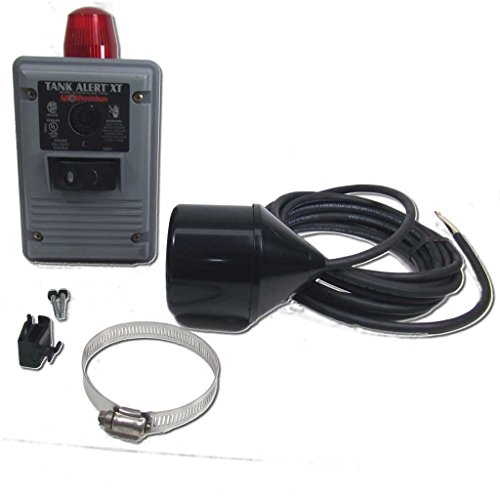
Features: Enclosure meets Type 3R water-tight standard; automatic alarm reset; horn silence switch and alarm test switch.
Best for: Applications needing auto-reset and a robust, water-tight housing for repeated outdoor exposure. Choose this when you want simple reset after a high-water event.
Limitation: Auto-reset feature may require manual testing to confirm proper re-arming in some setups.
QHHR Sump Pump Alarm

Features: High water level alarm control panel with float switch; separate pump and alarm circuits; 110 dB alarm and external connection capability.
Best for: Systems requiring independent alarm operation even if the pump circuit fails, with external pump coordination for septic tanks and ponds.
Limitation: External pump integration may require precise wiring to ensure separation remains intact.
Sekelo High Water Alarm

Features: 10 ft level float switch; 90 dB alarm; IP67 indoor/outdoor use; LED indicators.
Best for: Users needing a longer float switch and robust weatherproofing for reliable outdoor operation.
Limitation: 90 dB alarm may be less audible in very large outdoor spaces or noisy environments; consider placement accordingly.
Zuomeng Septic Pump Alarm

Features: High water level detection with external pump connection; 110 dB alarm; IP67 casing; separate pump and alarm circuits.
Best for: Environments requiring strong water level detection, bright flashing alerts, and reliable separation of pump and alarm circuits to prevent total failure from pump issues.
Limitation: Plastic IP67 housing is robust but may heat in direct sun in hot climates; plan for shade where feasible.
Buying Guide
What to consider when selecting an outdoor septic tank alarm
- Environment and exposure: Choose an enclosure rated for outdoor use (IP ratings, Type 3R or equivalent) to withstand rain, dust, and temperature swings.
- Alarm type: Decide between audible only, visual (flashing light), or a combination. For remote areas, combine loud alarms with visible indicators for clarity.
- Power and current draw: Look for low current designs if power availability is limited, and confirm compatibility with your existing electrical setup (AC voltage, single vs. multiple circuit feeds).
- Auto-reset vs. manual reset: Auto-reset can reduce follow-up actions after a true event; manual reset may prevent false alarms in busy environments.
- Float switch length and placement: Longer float switches provide greater coverage for large basins. Ensure wiring and placement minimize false triggers from debris.
- Mechanical vs. electronic reliability: Mechanically activated contacts are simple and robust, but consider models with test and silence switches for maintenance checks.
- Compatibility with pumps: If coordinating with a sewage or sump pump, verify whether the alarm can operate independently if a pump fails, or if it supports external pump integration.
Quick tips for installation and use
- Mount alarms above typical flood levels to avoid nuisance triggers from minor splashes.
- Test alarms regularly using built-in test features to ensure function after weather events.
- Label locations clearly so occupants or responders know where to check the alarm when it sounds.
FAQ
- What is an outdoor septic tank alarm best for?
It is best for monitoring high-water levels in septic tanks or sump pits, triggering audible and/or visual alerts to prevent overflows. - Can these alarms work with a separate pump?
Some models support external pump connections or have separate pump and alarm circuits for reliability. - What enclosure rating is recommended for outdoor use?
Look for Type 3R watertight ratings or IP67 when exposure to rain and dust is likely. - Is auto-reset important?
Auto-reset simplifies rearming after an alarm, but some users prefer manual reset to confirm conditions before arming again. - How loud should the alarm be?
90–110 dB alarms are common; choose placement to ensure the sound is audible in the relevant areas without causing nuisance. - Should I choose a model with a float switch?
Float switches provide automatic level detection and can coordinate with pumps, but verify compatibility with your system’s wiring.