Best on-Demand Water Heaters by BTU: A Practical Buyer’s Guide
Answering your on-demand water heater BTU questions starts with matching heat output to your home’s hot-water needs. This guide highlights five top options, spans indoor and outdoor models, and explains who each is best for. Whether you need high flow for multiple outlets or a compact unit for a smaller space, you’ll find clear reasons to choose each model.
The table below compares the five selected products to help you spot the best fit at a glance.
| Product | Best For | BTU / GPM |
|---|---|---|
| GEARPASS Propane Tankless Water Heater | Homes needing strong simultaneous outlets | 160,000 BTU • 6.3 GPM |
| GASLAND CS422BLP | Families needing reliable whole-home hot water | 113,000 BTU • Up to 5.0 GPM |
| OEVANT Outdoor Tankless | Outdoor installations and remote access | 130,000 BTU • 5.3 GPM |
| CAMPLUX BW158 | Portable or space-limited setups | 41,000 BTU/hr • 1.58 GPM |
| GASLAND BE528 | Large household or outdoor kitchen use | 136,000 BTU • 5.28 GPM |
GEARPASS Propane Tankless Water Heater
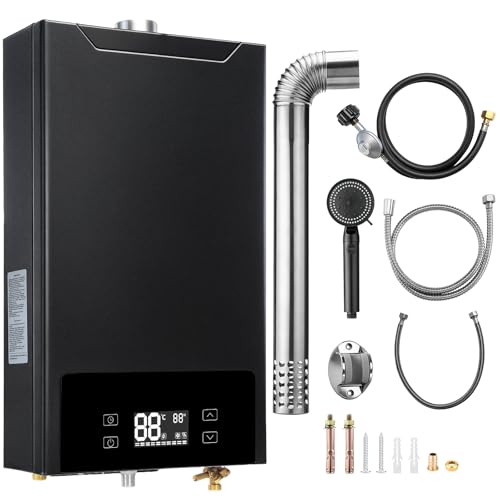
Best for: households that require high hot-water output across multiple outlets. This model delivers up to 6.3 GPM with 160,000 BTU, supporting simultaneous usage in kitchens and baths without significant temperature swings. The stainless steel housing and oxygen-free copper heat exchanger enhance durability and heat transfer efficiency.
Why selected: high BTU and flow rate make this unit a strong option for larger homes or active households. On-demand operation reduces standby energy waste.
Caution: designed for propane (LPG) and a standard 110–120V circuit; ensure your installation site has proper ventilation and electrical capacity.
GASLAND CS422BLP Propane Tankless Water Heater

Best for: homes needing reliable whole-home hot water with a balance of price and performance. This unit provides up to 5.0 GPM at 113,000 BTU, suitable for 3–5 outlets depending on incoming water temperature and flow.
Why selected: CSA-certified with multiple safety features, including a flame sensor and freeze protection, offering robust protection in varied climates.
Limitation: performance depends on incoming water temperature; very cold supply may reduce attainable GPM.
OEVANT Outdoor Tankless Water Heater
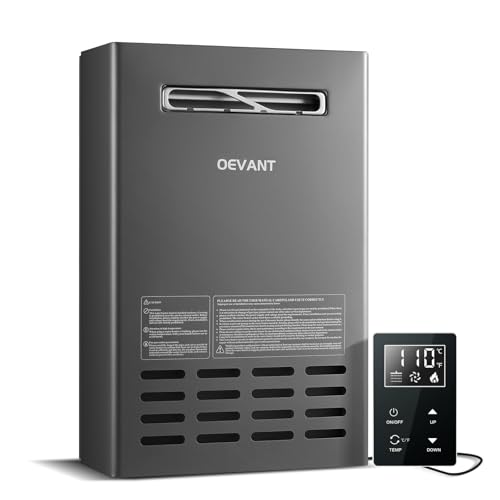
Best for: outdoor installation with remote operation needs. It supplies 3–5 taps with 130,000 BTU and 5.3 GPM, making it suitable for yards, cabins, or patios where indoor space is limited.
Why selected: all-weather performance with wind resistance and freeze protection. CSA-certified with safety protections adds peace of mind for exterior use.
Limitation: outdoor placement may require weatherproofing and adequate venting; ensure proper clearances as per installation guidelines.
CAMPLUX Propane Portable Water Heater BW158

Best for: portable use and space-constrained setups. The BW158 delivers up to 41,000 BTU/hr and 1.58 GPM, suitable for camping, RVs, or small cabins needing immediate hot water on the go.
Why selected: lightweight (about 13 lbs) with a foldable handle for easy transport; simple hookup improves portability.
Limitation: lower GPM compared with larger residential models; best for single-outlet use or light simultaneous demands.
GASLAND BE528 Outdoor Tankless

Best for: large households or outdoor kitchen setups where several outlets demand hot water. The BE528 uses 136,000 BTU and delivers up to 5.28 GPM.
Why selected: high BTU and flow rate with safety protections suitable for off-grid or outdoor living. It is designed for rugged outdoor use with safety features to control heat and flame.
Limitation: outdoor units require weatherproof installation and may require additional venting or clearance considerations for best performance.
Buying Guide: Key Purchase Considerations
- What BTU/gpm do I need? Larger homes or multiple outlets benefit from higher BTU and GPM. If cold water supply is very cold, you may still see reduced GPM at higher flow rates.
- Indoor vs outdoor installation: Indoor models save weather considerations but require proper ventilation and space. Outdoor units add placement flexibility but must be weatherproof and secure.
- Fuel type and efficiency: Propane models provide clean burning and fast heating. Look for units with heat exchangers and energy-saving on-demand operation to reduce waste.
- Safety features: Freeze protection, flame sensor, overheat cutoff, and low-water protection should be prioritized, especially for outdoor setups or homes with kids and elderly occupants.
- Installation requirements: Check electrical needs (voltage, circuits) and water-pressure compatibility. Some units need a minimum water pressure to start reliably; others tolerate lower pressure better.
- Maintenance and durability: Stainless steel housings and corrosion-resistant components extend lifespan in challenging environments.
FAQ
- What does BTU mean for a tankless water heater?
BTU indicates heating capacity; higher BTU generally supports higher flow rates (GPM) or better performance in cold water conditions. - Is a higher GPM always better?
Higher GPM means more simultaneous hot-water outlets can run, but you must ensure the unit’s BTU supports that flow with your incoming water temperature. - Do I need a vent for propane tankless heaters?
Propane models may require venting depending on installation; follow the manufacturer’s venting instructions and local codes. - Can outdoor units be used indoors?
Outdoor-rated units are designed for exterior use and should not be installed indoors unless specified by the manufacturer. - What maintenance is required?
Regular descaling (where mineral content is high) and annual inspections of combustible safety components help maintain performance. - What installation considerations matter most?
Adequate space for venting and intake, proper clearance from combustibles, correct gas supply sizing, and correct electrical supply are essential.