Best 12V to 220V Inverter Guide for American Buyers
Answering the common question, a 12V to 220V inverter converts DC power from a vehicle or battery to standard household AC power. This guide highlights five top options, detailing who each is best for, and where they fit in practical use. Ideal buyers include campers and RV travelers, DIY car battery setups, home backup planners, and lightweight electronics enthusiasts seeking portable power. The products below balance power output, reliability, and size to help you pick the right inverter for your needs. A quick buying table is provided for fast comparison.
| Product | Best For | Why Selected |
|---|---|---|
| LOKLNEYK 1pcs AC Pure Sine 12V to 220V 220W | Compact mobile setups | Pure sine output in a small form, suitable for sensitive devices. |
| Generic 4000W DC to AC Inverter | Heavy-duty tools and appliances | High capacity with USB and LED display for monitoring. |
| Walfront 60W 220V to 12V Converter | Low-power lighting and basic devices | Simple, stable DC output with dimming/remote options. |
| Walfront 12V/24V 10W Transformer | Low-voltage projects | Two output options, robust copper wiring. |
| VariCore 1800W Pure Sine Wave Inverter | Home, RV, off-grid | Highly efficient, protective features, real-time status display. |
LOKLNEYK 12V To 220V 220W Pure Sine Inverter

Best for compact mobile setups. This inverter delivers a clean, stable sine wave ideal for sensitive electronics in cars, boats, or small off-grid systems. The compact design helps when space is at a premium. A caution: its 220W rating may limit running multiple high-draw appliances simultaneously.
Generic 4000W DC to AC Inverter with USB and LED Display
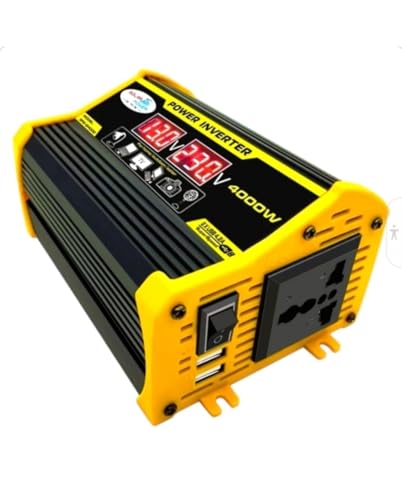
Best for power-hungry tools and appliances on the go. This unit handles larger loads with a dual USB port and a visible LED display for voltage and battery status. It’s well-suited for RVs, trucks, and job sites. Limitation: larger size and heavier weight reduce portability compared to smaller inverters.
Walfront 60W 220V To 12V Converter (60W)

Best for low-power lighting and basic electronics. This 60W step-down takes 220V AC and outputs 12V DC, suitable for dimming, remote control, and simple devices. A limitation: not designed for high-load devices or continuous heavy use.
Walfront 12V/24V to 12V/24V Transformer (10W)

Best for basic, low-wattage projects with two output voltage options. It provides a sturdy build with copper winding and flame-retardant nylon core. Choose this if you need a simple DC-DC option for small devices; avoid for heavy appliances.
VariCore 1800W Pure Sine Wave Inverter

Best for home backup, RV, and off-grid use. This 1800W unit provides a high-quality sine wave with 3600W peak, improving compatibility with most electronics. It includes protection features and an LCD status display. Caution: performance can vary under heavy inductive loads, and installation costs may apply for mounting and wiring.
Buying Guide: Choosing the Right 12V To 220V Inverter
- What will you run? List devices and total wattage to choose an inverter with adequate continuous wattage and surge capacity. Higher loads require higher wattage.
- Pure sine wave vs modified sine wave: Pure sine is better for sensitive electronics like laptops, TVs, and medical devices. Modified sine can work for simple tools but may cause noise or inefficiency.
- Portability vs capacity: Portable units are lighter and easier to transport; larger units support more devices but require secure mounting and heavier wiring.
- Power management features: Look for UV/overload protection, low-voltage shutoff, thermal protection, and an LCD or digital readout for monitoring.
- Installation considerations: Ensure compatible connectors, proper fusing, and venting for heat. If mounting in a vehicle, consider IP rating and vibration tolerance.
- Safety: Avoid using high-power devices near flammable materials. Follow manufacturer installation guidelines to prevent electrical hazards.
FAQ
- Can a 12V inverter power a household refrigerator?
– Yes, if the inverter has sufficient continuous wattage and surge capacity for the fridge’s compressor, especially at startup. - Is pure sine wave always necessary?
– Not always, but it’s safer for electronics and motors. For basic tools, modified sine may suffice but with less efficiency. - What is surge capacity?
– The maximum instantaneous power the inverter can deliver for a short time when starting appliances. It’s often higher than the continuous wattage rating. - Do these inverters require maintenance?
– Generally low maintenance, but ensure clean ventilation, secure connections, and periodic inspection of cables and fusing. - Can I use these in an RV or car battery setup?
– Yes, many are designed for mobile use, but verify battery compatibility, gauge of wiring, and fuse requirements for your vehicle’s electrical system. - Are USB ports standard on all inverters?
– Some include USB ports for quick device charging, while others focus on traditional AC output alone.
This article provides a practical overview of popular 12V to 220V inverters. Each option targets different use cases—from compact mobile setups to heavy-duty off-grid power. Use the buying guide to align your needs with the correct wattage, wave type, and portability. For best results, verify compatibility with your devices and installation environment before purchase.