Best Off Grid Solar System With Generator for Home Backup
Choosing a reliable off-grid solar system with a built-in generator capability can safeguard homes during outages and power gaps. This guide reviews five capable kits that pair solar power with battery storage or generator-ready inverters, highlighting compatibility, scalability, and practical uses for American households. Each option supports multiple voltages and can back essential appliances in a grid-down scenario.
The table below summarizes the selected products to help you compare at a glance.
| Product | Brand | Key Benefit |
|---|---|---|
| Guardian 6000 Solar Generator Kit | OUPES | 4608Wh capacity, 6000W continuous / 7200W boost, dual voltage |
| 10KW Off-Grid Solar System Kit | ECO-WORTHY | High continuous output, scalable with multiple units |
| 10KW Home Off-Grid System | ECO-WORTHY | Large capacity, UL1741/UL9540A certified, 410W panels |
| Mega 1 Solar Generator Kit | OUPES | 1024Wh LiFePO4 battery, 2000W AC output, expandable |
| Solar Generator 1000 v2 | Jackery | 1070Wh, 1500W AC output, fast charging, lightweight |
OUPES Guardian 6000 Solar Generator Kit
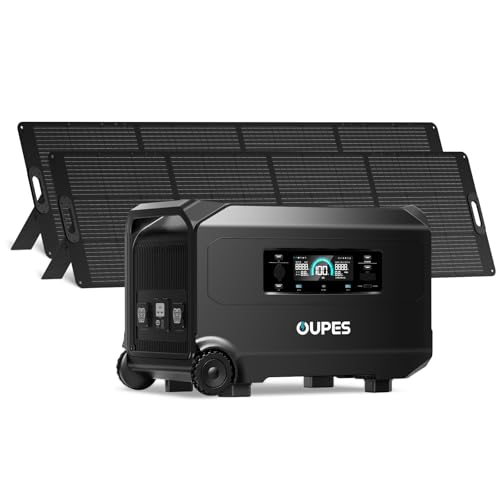
The Guardian 6000 kit combines a large-capacity power station with two 240W solar panels to deliver immediate off-grid capability. With 4608Wh of energy storage, it provides substantial run time for essential household devices. The system can integrate with standard transfer switches or inlet boxes, allowing rapid whole-house backup without the need for a professional electrician in many setups. Its dual 120V/240V output supports appliances ranging from refrigerators and medical equipment to small HVAC systems, making it a versatile choice for offline living or emergency readiness.
ECO-WORTHY 10KW Output Off-Grid Solar System Kit

This complete kit from ECO-WORTHY delivers a robust 10KW continuous output with a 60kW peak capability and 9.36KWh daily potential under favorable sun. The system features 2340W of panel capacity and UL 1741 certification for safety and performance, with CAN/RS485 connectivity to monitor battery status via a mobile app. The setup is designed for high-demand loads, including AC units or large refrigerators, and supports 120V/240V split-phase output for American homes. The package includes a 48V LiFePO4 battery array for compact storage with long cycle life.
ECO-WORTHY Home Off-Grid Solar Power System

This kit centers on a 10KW inverter with 410W panels and a 48V LiFePO4 battery pack, designed for plug-and-play compatibility with compatible inverters. It emphasizes seamless integration, with UL1973 and UL9540A safety certifications and CAN/RS485 communication for real-time monitoring. The 3U server-like rack battery format saves space and eases mounting for compact living spaces while delivering dependable 240V/120V output. It’s well-suited for homes looking to expand capacity over time without sacrificing safety or configurability.
OUPES 2000W Mega 1 Solar Generator Kit

The Mega 1 kit offers a compact yet capable power solution with a 1024Wh LiFePO4 battery and a 2000W AC output, suitable for road trips, RVs, and off-grid living. It supports UPS functionality and includes an integrated app for monitoring and control. The system is designed for expansion, enabling users to add additional batteries later to reach greater total capacity, making it adaptable as energy needs grow or as seasons change.
Jackery Solar Generator 1000 v2

The Jackery 1000 v2 pairs a 1070Wh LiFePO4-based power station with a 200W solar panel for a portable off-grid setup. It delivers up to 1500W AC output and 100W USB-C power, ideal for camping, emergencies, or small-home use in power outages. The device emphasizes fast charging and longevity, with a claimed lifespan extending beyond a decade due to its durable battery chemistry and safety features. Its lighter weight and compact form factor make it a popular choice for travelers and rural homes alike.
Buying Guide
Key considerations when selecting an off-grid solar system with generator capabilities:
- Energy capacity versus consumption: Match battery capacity (Wh) to typical daily loads. Bigger homes or longer outages require higher storage and solar input to replenish it daily.
- Output voltage and power: Ensure 120V/240V support for common appliances, and verify peak and continuous power ratings align with your must-run devices.
- Solar input and expandability: Panels wattage and the potential to add more solar or batteries later can extend system life and flexibility.
- Certification and safety: Look for UL1741/UL9540A or equivalent certifications, especially for high-capacity systems and storage batteries.
- Integration with home electrical: For whole-house backup, confirm compatibility with inlets, transfer switches, and potential electrician requirements for seamless operation.
- Portability vs. permanence: Portable kits suit RVs and emergencies; larger home systems prioritize permanent mounting and scalability.
- Monitoring and control: Mobile apps or CAN/RS485 interfaces help track battery health, state of charge, and system performance in real time.
- Reliability under real conditions: Consider heat tolerance, charging rate under varying sun, and battery efficiency at different temperatures.
- Maintenance and service: Evaluate warranty length, parts availability, and ease of battery replacement or expansion down the line.
- Budget and total cost: Factor in panels, inverter quality, battery chemistry, and future expansion when planning your investment.
Possible configurations for different needs:
- Emergency-only backup: A compact generator with solid battery capacity can power essential appliances for hours to a day or two.
- Residential whole-house backup: A larger kit with a transfer-switch-ready connection provides seamless switching for refrigerators, pumps, lights, and climate control.
- Outdoor or off-grid living: A portable generator-centric kit with modular solar panels suits frequent travel or cabin use, with easy expansion as energy needs grow.
In selecting a system, compare the balance of capacity, solar input, safety certifications, and ease of integration with your home’s electrical setup. The right combination will depend on how often outages occur, what appliances you must keep running, and whether you prioritize portability or permanent installation.