Best Off Grid Inverter 10kW: Powerful 10kW Solutions for Remote Power
Finding a reliable 10kW off-grid inverter can transform a cabin, workshop, or remote home into a stable, independent power source. This guide reviews five top 10kW options, highlighting compatibility with common battery chemistries, multiple MPPT inputs, and grid or generator integration. Each product is selected for performance, durability, and suitability for large loads like air conditioners, pumps, and heavy appliances in off-grid settings.
Summary of selected products:
| Product | Brand | Input | MPPT | Battery Type | Key Strength |
|---|---|---|---|---|---|
| ZLPOWER 10KW Off-Grid Hybrid | CAMINI | 48V DC | 2 MPPT | LiFePO4, Lithium, Lead-Acid, Batteryless | Dual-phase output; strong solar input |
| Anern 10KW Solar Inverter | Anern | AC/Grid & Solar | 3 MPPT | Battery-free design | High flexibility; pump-ready |
| Y&H 10.2KW Hybrid Inverter | Y&H | PV & AC | Dual MPPT | LiFePO4/Lead-Acid | Multiple charging modes |
| ECO-WORTHY Powermega 48V System | ECO-WORTHY | 48V DC | Built-in 1 MPPT (system) | LiFePO4 | Integrated battery + inverter |
| OUBOTEK 12V to 120V Off-Grid Inverter | OUBOTEK | 12V DC | Single MPPT | Lead-acid capable | Wide AC outlets, remote |
Note: The list prioritizes 10kW class inverters suitable for off-grid configurations, with emphasis on energy storage compatibility, multiple PV inputs, and reliable performance under sustained loads.
ZLPOWER 10KW Off-Grid Hybrid Inverter (Camini)

The ZLPOWER 10KW Hybrid Inverter provides a pure sine wave output with 120V/240V split-phase or single-phase options, ideal for off-grid homes, workshops, and cabins. It supports 50Hz/60Hz operation for stability. Dual MPPT controllers (125–430VDC) enable up to 11,000W PV input with a 200A charging current, maximizing energy harvest. It is compatible with 48V LiFePO4, lithium-ion, AGM, GEL, and lead-acid batteries, and can operate without batteries by using PV input directly. Smart dual activation wakes lithium batteries via PV or AC input and supports LiFePO4 BMS communication.
Key considerations:
– Strengths: High solar input capability, flexible battery and AC configurations, parallel operation up to six units.
– Limitations: Batteryless mode depends on solar input; ensure PV array sizing matches your load profile.
– Best for: Remote off-grid cabins or workshops needing robust, scalable power with strong solar support.
Anern 10KW Solar Inverter AC230V Off-Grid

The Anern 10KW inverter runs in a battery-free configuration, delivering 220-230VAC pure sine wave output suitable for sensitive electronics. It features three independent MPPT trackers (18A each) to optimize energy harvest from multiple PV arrays and offers flexible PV configurations. Its design supports heavy-duty applications, including water pumps and three-phase motors, making it apt for agricultural or remote-site operations where reliability is essential.
Key considerations:
– Strengths: Battery-free operation reduces system complexity and cost; multiple MPPT inputs improve performance under shading.
– Limitations: Batteryless mode requires adequate solar generation; appropriate sizing of PV arrays is important.
– Best for: Remote irrigation, backup power, and areas with abundant sunlight but limited storage needs.
Y&H 10.2KW Hybrid Inverter With Built-in 160A Charge Controller

The Y&H 10.2KW on/off-grid hybrid inverter integrates a built-in 160A charge controller and dual MPPT inputs with flexible PV configuration (up to 500V input). It supports LiFePO4 and lead-acid batteries and offers multiple charging modes, including Solar First and Mains First, along with a hybrid charging option. The system aims to deliver stable 230VAC output with smart mode switching and auto-restart when AC power returns, ensuring continuous operation for off-grid scenarios.
Key considerations:
– Strengths: Strong versatility across battery chemistries; programmable modes for diverse load profiles.
– Limitations: Higher complexity; ensure proper configuration for maximum efficiency.
– Best for: Systems needing adaptable charging strategies and robust grid-tailure resilience.
ECO-WORTHY Powermega 48V System With 10kW Hybrid Inverter
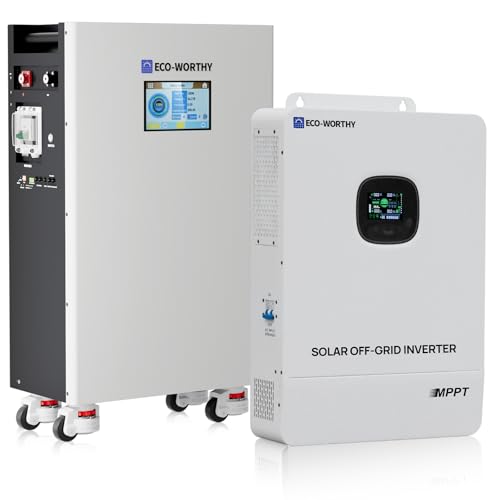
This ECO-WORTHY package pairs a 10kW hybrid inverter with a 48V 314Ah LiFePO4 battery, yielding about 16.1 kWh of usable energy. It includes a built-in Bluetooth & WiFi module for mobile app monitoring and RS485/CAN/RS232 for broader inverter communication. The battery features an Active Balancing Smart BMS, a built-in circuit breaker, and safety alarms to protect against overcharge, over-discharge, over-current, short circuits, and temperature extremes. The system targets home backup and off-grid storage needs with integrated safety features.
Key considerations:
– Strengths: All-in-one energy storage with monitoring and safety features; substantial usable capacity.
– Limitations: Higher initial cost; ensure compatibility with existing appliances.
– Best for: Home backup and off-grid cabins needing integrated storage and monitoring.
Y&H 10000W Hybrid Inverter With Dual MPPT
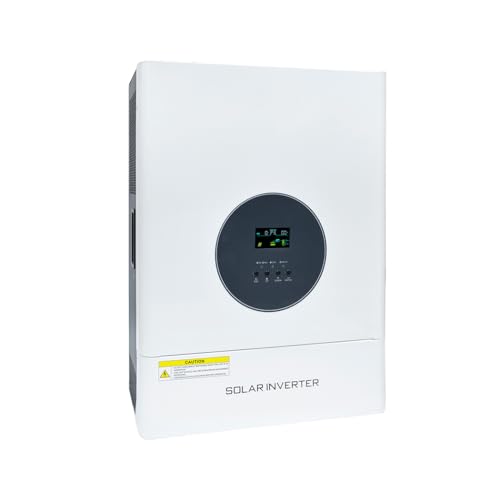
Y&H’s 10000W solar inverter combines 48V input with 220-240VAC split-phase output, offering 120A MPPT support and significant surge capacity. It provides four charging modes and three output modes to adapt to a range of off-grid, backup, and hybrid configurations. The inverter supports both solar and mains inputs with seamless transfer and maintains a stable 220V±10% output for varied loads, including heavy appliances, welders, and motors.
Key considerations:
– Strengths: Quad-mode operation provides extensive control over energy flow.
– Limitations: High power systems require careful wiring and thermal management.
– Best for: Industrial or heavy-duty off-grid setups needing dependable transfer behavior and mode flexibility.
Buying Guide: Key Purchase Considerations and Comparisons
- System topology: Decide between pure off-grid, hybrid (solar + grid), or batteryless setups. Hybrid inverters offer flexibility but require more planning around charging sources and energy storage.
- Battery compatibility: Ensure the inverter supports LiFePO4 and other chemistries you intend to use. Battery-free designs reduce storage costs but rely on PV input or external power.
- MPPT capacity: More MPPT inputs and higher PV input limits maximize energy harvest, especially in partially shaded locations. Consider how many PV strings you’ll run and how shading may affect output.
- Phase and voltage: For homes with heavy loads, a 120/240V split-phase output can power large appliances efficiently. Confirm compatible phase options and frequency (50/60Hz).
- Protection and safety: Look for smart BMS compatibility, over/under voltage protection, short-circuit protection, and cooling features. A built-in LCD helps monitor performance and fault codes.
- Monitoring and connectivity: WiFi, Bluetooth, and RS485/CAN interfaces enable remote monitoring and integration with home energy management systems.
- Installation and maintenance: Evaluate remote location needs, potential for parallel operation, and whether maintenance requires professional installation, especially for 3-phase or large-load configurations.
- Cost vs. value: While a higher upfront cost may seem daunting, evaluate total cost of ownership, including batteries, PV array size, and potential savings from optimized energy use.
- Scalability: If you plan to expand capacity, choose inverters that allow parallel operation or easy addition of more units to reach your target 10kW+ capacity.
Overall, for American off-grid applications requiring a reliable 10kW class inverter, consider models with multiple MPPT inputs, strong solar harvest capability, and robust battery compatibility. The right choice balances initial cost, storage strategy, and anticipated load demands to ensure steady power across seasons and weather conditions.