Best Occupancy Switches for Lighting in Homes
Choosing the right occupancy switch can improve energy efficiency and convenience across bathrooms, hallways, closets, and living areas. This guide features top-rated options that automatically turn lights on or off based on motion or occupancy, with various wiring needs and compatibility. Below is a quick overview of five products to consider, followed by detailed sections and a practical buying guide.
| Product | Brand | Key Feature |
|---|---|---|
| Lutron Maestro MS-OPS2-WH | Lutron | Single-pole occupancy sensor, automatic on/off |
| Lutron Caseta PD-OSENS-WH | Lutron | Wireless sensor for Caseta ecosystem, automatic control |
| TOPGREENER TDOS5-HL-W-2PCS | TOPGREENER | No neutral wire, adjustable time delay |
| TOPGREENER TSOS5-W | TOPGREENER | No neutral wire, wide compatibility, single pole |
| ELEGRP Occupancy Switch (10 Pack) | ELEGRP | No neutral wire, universal CFL/LED/Incandescent support |
The following five products were selected for their reliability, ease of installation, and clear occupancy features. Each entry includes a brief overview, core benefits, and installation considerations to help you compare options quickly.
Lutron Maestro Motion Sensor Light Switch

The Lutron MS-OPS2-WH is a single-pole occupancy sensor switch designed for bathrooms, garages, laundry rooms, or closets. It automatically turns lights on when you enter and off when you leave, helping reduce energy waste. Features emphasize automatic operation, simple implementation, and practical use for rooms where hands-free control improves efficiency. Installation is straightforward for standard single-pole circuits, and the sensor adds reliable off behavior when no motion is detected. Ideal for people seeking a no-fuss solution with a proven brand.
Lutron Caseta Auto On/Off Motion Sensor
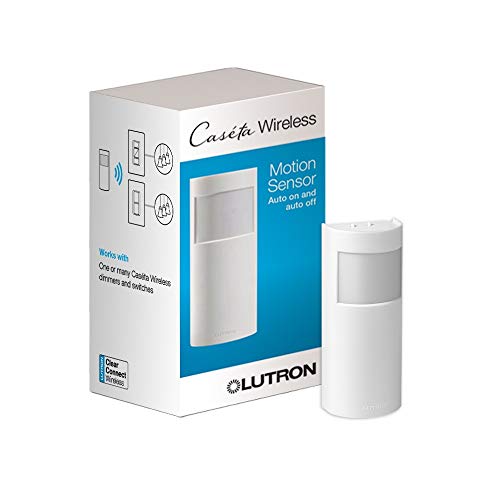
The Caseta PD-OSENS-WH sensor integrates with Caseta dimmers and switches, enabling automatic on/off control for connected devices. It supports active hours, sunrise/sunset, and app-based customization through a Caseta Hub. The sensor can manage multiple Caseta devices within 60 feet, offering broad control in a smart home environment. This option suits users who already use Caseta products and want seamless integration with lighting, shades, and fans, without running wires to additional switches.
TOPGREENER TDOS5-HL-W-2PCS

The TDOS5-HL-W-2PCS offers no-neutral-wall-wire installation with occupancy and vacancy modes and adjustable time delays (including quick test). It includes a wall plate and supports auto-on/auto-off behavior. The device is designed for easy wiring, making it a practical upgrade for rooms where neutral wires are not available. It provides flexibility for different room sizes and usage patterns, helping tailor sensor sensitivity and response to daily activity.
TOPGREENER TDOS5-HL-W-6PCS
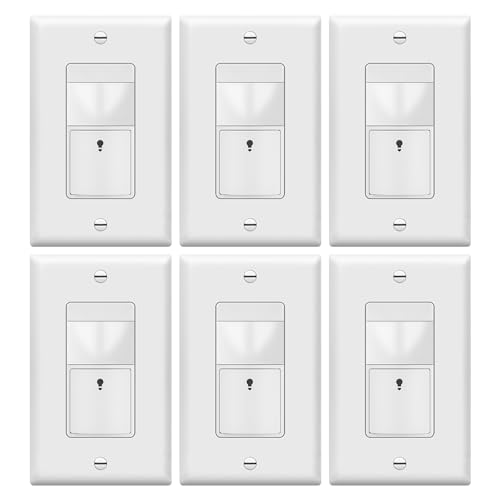
Another no-neutral option from TOPGREENER, this 6-pack provides occupancy-based auto ON/OFF control with no ground wire required in certain installations. It features a universal wiring design, a switch under the faceplate to toggle OCC/VAC modes, and adjustable time delays (15 seconds to 30 minutes). The broad pack size is ideal for multi-room retrofits or new construction requiring consistent sensor behavior across several switches in a home.
ELEGRP Occupancy Motion Sensor Switch (10 Pack)

The ELEGRP occupancy switch provides no-neutral operation and supports universal CFL/LED/Incandescent compatibility. The matte white finish and slim profile fit modern interiors, while the 10-pack offers a scalable solution for larger homes or commercial retrofit projects. Sensitivity and response are designed for straightforward use, making it a practical choice where extensive sensor coverage and broad device compatibility matter most.
Buying Guide
Key purchase considerations help match the right occupancy switch to a space and wiring setup:
- Wiring requirements: No-neutral versus neutral-required options affect installation in older homes or where wiring is constrained. If no neutral is available, select models explicitly stating no neutral is required.
- Sensor type and mode: Occupancy (auto-on) and vacancy (manual off) modes offer different control patterns. For hallways and closets, occupancy mode reduces the need to touch switches; for rooms with pets or frequent movement, adjust sensitivity accordingly.
- Compatibility and ecosystem: If you already use a smart home hub or brand, choose sensors that integrate with that system (for example, Caseta or other ecosystems) to centralize controls and scenes.
- Adjustability: Time delays, sensitivity, and light-level sensing determine how aggressively the sensor responds. Look for models with adjustable delay (seconds to minutes) and brightness triggers to avoid lights turning on too often or staying on too long.
- Mounting location and coverage: Ceiling-mounted PIR sensors offer broad coverage but require proper placement to avoid false triggers. For wall-mounted switches, check the maximum load rating and whether it supports LEDs and CFLs reliably.
- Installation complexity: Some switches install like standard switches, while others require hub configuration or app setup. If you want quick retrofits, prioritize simple wiring and quick pairing with existing devices.
In choosing between single-pole switches and wider smart-home compatible sensors, consider whether you want standalone occupancy control or integration with lighting and shades. A no-neutral option is valuable for retrofits, while a Caseta-compatible sensor can unlock broader automation capabilities. For high-traffic areas, a sensor with adjustable time delays helps balance energy savings with user convenience. Finally, verify that the device is UL-listed and rated for the intended bulb types to ensure safe and reliable operation.