Best Solar Energy System Guide: Top Products and Buying Tips
As solar energy systems become more accessible, selecting the right components matters for reliability, safety, and long-term savings. This guide highlights five relevant products—from complete off-grid kits to energy-monitoring tools and a solar heating reference book—to help American homeowners evaluate options for a new solar energy system. Each item is summarized with key features to consider before purchase.
| Product | Brand | Type |
|---|---|---|
| ECO-WORTHY 10KW Off Grid Complete Kit | ECO-WORTHY | Off-grid solar system |
| Emporia Vue 3 Home Energy Monitor | EMPORIA | Energy monitor and automation |
| ECO-WORTHY 7.168KWH 800W Solar Panel Kit for RV | ECO-WORTHY | RV/off-grid kit |
| [Ultra] ECO-WORTHY 1200W 24V System | ECO-WORTHY | Off-grid solar + lithium storage |
| The Passive Solar Energy Book | Rodale | Informational reference book |
The products below are organized to cover system kits, monitoring, mobile/off-grid applications, and reference knowledge. Each section includes practical considerations for installation, safety certifications, compatibility, and real-world use cases.
ECO-WORTHY 10KW Off Grid Complete Kit

The ECO-WORTHY 10KW Off Grid Complete Kit combines multiple 195W solar panels with a 10KW inverter to deliver a robust 240V output suitable for home, shed, cabin, or workshop energy backup. The system is designed for parallel expansion, enabling greater output as needs grow. Safety certifications include UL 1741 for the inverter and UL 1973/9540A for storage components, meeting North American standards for electrical safety and battery storage systems.
Key considerations include the ability to support high-power appliances (air conditioners, refrigerators, and heat sources) during grid outages, ease of installation for semi-professional hobbyists, and potential for future scalability. Real-world performance depends on shaded conditions, array orientation, and proper wiring. Expect solid performance for a mid-to-large off-grid residence or a well-insulated RV setup when grid power is unavailable.
Emporia Vue 3 Home Energy Monitor
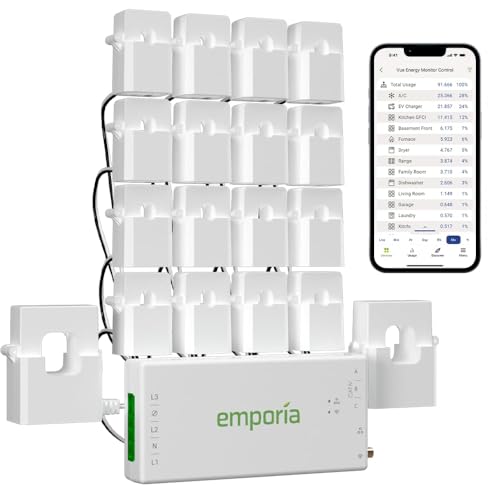
Emporia Vue 3 provides real-time electricity usage data and solar/net metering monitoring with UL certification for safety. It installs in a circuit panel using clamp-on sensors and supports single-phase, 2-wire, 3-wire, and various 3-phase configurations with additional sensors. The system offers 24/7 energy management, automation capabilities, and remote monitoring via a mobile app. A one-year warranty backs the hardware, contributing to reliable, ongoing energy oversight for solar-powered homes.
Consider compatibility with existing electrical panels, whether the monitoring granularity meets your needs (per-appliance vs. whole-home), and how the data integrates with other smart-home or energy management setups. For households with solar, net metering monitoring can help quantify savings and detect anomalies early.
ECO-WORTHY 7.168KWH 800W Solar Panel Kit for RV

This RV-focused solar kit includes 4x200W bifacial panels (total 800W) and a 3000W inverter charger to provide both solar power and mains charging. It is designed for off-grid RV use, with a user-friendly installation flow and a built-in UPS-style transfer to mains power when available. The kit supports long travel days with power needs like a fridge, climate control, and entertainment systems, ensuring continuous operation during outings and camping trips.
Key considerations are the efficiency of bifacial panels, compatibility with your RV electrical system, and the ability to store or buffer energy for overnight use. The kit’s Bluetooth/WiFi features help monitor performance and ensure timely maintenance, while the compact footprint makes it suitable for smaller vehicle configurations.
[Ultra] ECO-WORTHY 1200W 24V Solar System
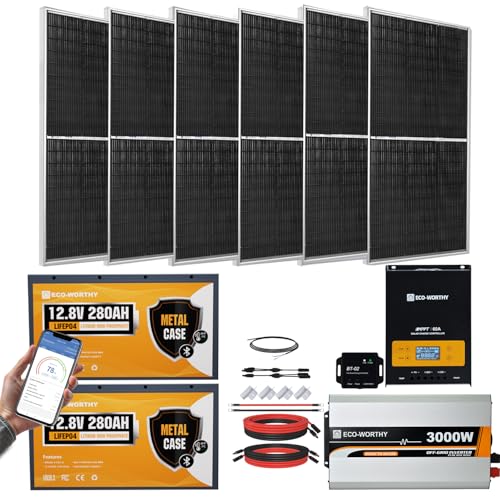
The Ultra ECO-WORTHY 1200W system is a compact off-grid configuration featuring a 195W solar array paired with a 24V lithium battery bank and a 3000W pure sine wave inverter. It emphasizes mobile and remote-location readiness, with a dual-axis tracker option that claims higher daily energy output. The 12.8V 280Ah lithium storage offers deep cycles and a robust Battery Management System for safety and longevity. The kit is designed for campers, small cabins, or emergency backup power for essentials.
Important factors include the tracker’s maintenance needs, storage capacity relative to daily consumption, and how the system handles peak loads (e.g., microwaves or air heaters). A well-matched solar array and battery capacity can support a practical off-grid lifestyle with reliable nighttime power.
The Passive Solar Energy Book

This reference work provides foundational knowledge on passive solar design for homes, greenhouses, and building projects. It focuses on architectural strategies to maximize natural heat gain and minimize energy usage, complementing active solar systems. It is appropriate for readers seeking long-term, passive efficiency improvements alongside active solar gear.
Key considerations include applicability to your climate, building orientation, thermal mass strategies, and how passive design can pair with active solar components for a holistic energy plan. The book helps homeowners understand integration points between architecture and solar technology.
Buying Guide: Key Purchase Considerations and Comparisons
- System goals: Determine whether you need an off-grid solution, grid-tied monitoring, or a hybrid approach for backup power and energy cost savings.
- Certifications and safety: Look for UL, UL 1741, and UL 1973/9540A certifications for inverters, batteries, and safety compliance. This influences warranty and reliability.
- Scalability: If future expansion is likely, choose components that support modular growth (e.g., add-on panels, additional inverters, or expandable storage).
- Battery technology: Lithium options offer higher depth of discharge and longer lifespans than lead-acid; ensure the BMS supports your usage patterns and climate.
- Monitoring and control: A good energy monitor should integrate with solar production, home consumption, and net metering to help optimize savings and detect issues early.
- Installation considerations: Ensure compatibility with your electrical panel, roof space, and mounting hardware. Some kits are user-friendly for DIY enthusiasts; others may require professional installation.
- Climate and shading: Real-world output depends on sun exposure, panel orientation, and local weather. Factor seasonal variations into your design.
- Cost vs. value: While prices aren’t listed here, compare total system capacity (kW/kWh), efficiency, and expected lifetime against upfront costs and potential incentives.
- Maintenance: Assess the ease of cleaning panels, checking connections, and updating software for monitoring devices.
- Warranty coverage: Review term length and what components are protected (panels, inverters, batteries, monitors) to gauge long-term reliability.