Best New Electric Wall Heaters for Modern Homes
Smart, energy‑efficient, and easy to install, today’s electric wall heaters offer targeted warmth for bedrooms, living areas, and home offices. This guide highlights five new models that blend safety, quiet operation, and convenient control. Each option includes features like thermostatic control, smart connectivity, and energy‑saving modes to help you choose the right heater for your space and budget. Below is a quick summary table of the featured products to help you compare at a glance.
| Product | Brand | Key Feature |
|---|---|---|
| Dreo WH719S | Dreo | Wide 120° oscillation and smart control |
| Envi Plug-in Panel | ENVI | Fan‑less, 24/7 operation with safety sensor |
| Cadet CSC151TW | Cadet | Thermostat included, standard 1500W power |
| Heat Storm Infrared | Heat Storm | Wi‑Fi connected infrared heating |
| Leafinnerin 9815WH | Leafinnerin | Large‑area coverage with adjustable output |
The following sections present five carefully chosen models that address common needs—from quiet, low‑wattage designs for bedrooms to more robust panels suitable for larger living spaces. Each product includes a brief overview, notable features, and practical considerations to help you decide which heater best fits your room size, noise tolerance, and existing heating setup.
Dreo Smart Wall Heater WH719S

The Dreo WH719S combines rapid comfort with flexible control. Its 1500W power supports medium to larger rooms, while the 120° vertical oscillation helps distribute heat evenly from top to bottom. An adjustable thermostat allows precise temperature settings, with a range that accommodates most comfort zones. The heater doubles as a smart device; users can schedule heating times, control settings via the Dreo app, and issue voice commands through Alexa or Google Home. For households seeking a fast, even warm‑up and modern connectivity, this model offers practical convenience alongside efficient performance.
Envi Plug‑in Electric Panel Wall Heater
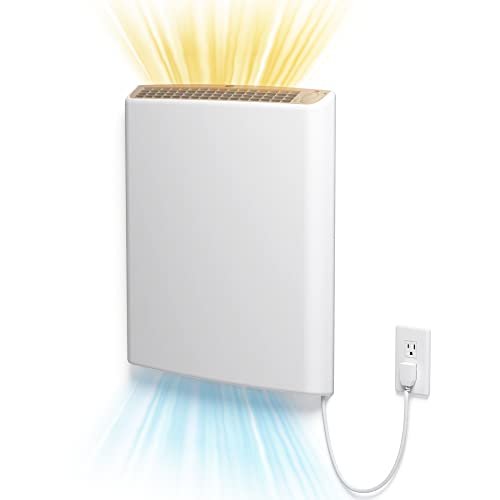
ENVI’s plug‑in panel is designed for targeted, energy‑efficient heating with a focus on safety and quiet operation. The unit runs at a cool 90°F and features a wall‑sense safety sensor that cuts power if it’s removed from the wall, enabling 24/7 operation in homes with children or pets. Its fan‑less design minimizes dust circulation and helps maintain humidity, which can reduce nasal dryness and other winter discomforts. This heater is ideal for spaces like bedrooms or home offices where silent heating and simple installation are priorities.
Cadet Com‑Pak Electric Wall Heater

The Cadet Com‑Pak system provides a straightforward solution for established heating setups. With a 120V system delivering up to 1500 watts (5120 BTU), it suits smaller to mid‑sized rooms where immediate warmth is needed. The unit ships with a thermostat, allowing precise local control without relying on central thermostats. It is a practical choice for retrofit projects or spaces where a conventional heater is preferable, offering familiar operation and dependable performance.
Heat Storm HS‑1500‑PHX‑WIFI Infrared Heater

Heat Storm’s infrared wall unit emphasizes technology and convenience. It features built‑in Wi‑Fi for remote control and scheduling, a digital touchscreen thermostat, and a remote control. Infrared heating provides rapid warmth to occupants and objects in the room, which can be advantageous for zones where quick heat is desired. The compact wall‑mounted design saves floor space, making it suitable for bedrooms, kitchens, or home offices where a slim profile is advantageous and you want modern connectivity without a bulky heater unit.
EnviMAX 220V Hardwired Panel Heater

The EnviMAX wall heater is designed for larger spaces and hardwired installations. It provides 1000 watts of steady heat while maintaining a cool touch surface due to its wall‑sensor safety features. The model emphasizes efficiency and continuous operation, supporting 24/7 heating with a fanless, quiet performance. It also highlights safety and energy savings by enabling targeted heating that can supplement or replace central heating, depending on your climate and insulation. For rooms where space is at a premium and silent operation matters, this panel heater offers a balanced solution.
Buying Guide: Key Considerations For Selecting The Right Electric Wall Heater
When selecting a new electric wall heater, consider room size, heat output, noise, and control options. Start with room square footage to estimate required wattage: most bedrooms and small living spaces benefit from 500–1500 watts, while larger rooms may need higher outputs or supplemental heating. Also evaluate the following aspects:
- Heating method: Infrared versus convection (fanless) versus forced air. Infrared heats objects and people directly, while convection warms the air.
- Safety features: Tip‑over and overheat protection, wall sensing, and cool‑to‑the‑touch surfaces reduce risk around children and pets.
- Control and connectivity: Built‑in thermostats, programmable schedules, and smart home compatibility (Alexa/Google Home) add convenience and potential energy savings.
- Installation: Consider whether a plug‑in panel or hardwired installation better fits your space and electrical setup. Some units offer 120V operation, while others require 240V or dedicated circuits.
- Noise level and airflow: Fan‑less designs minimize dust circulation and noise, which matters in bedrooms and study areas.
- Heat distribution: Models with wide oscillation or louvers can improve coverage in larger rooms or irregular layouts.
- Maintenance: Dust filtration, accessibility for cleaning, and overall build quality influence long‑term performance.
In practice, for a bedroom or home office, a quiet, thermostat‑driven, plug‑in panel or compact infrared heater with smart control can be ideal. For larger living spaces, lean toward models with higher wattage and robust heat distribution or a hardwired panel that can be integrated with existing HVAC strategies. Always ensure the chosen heater is compatible with your electrical system and complies with local safety standards.