Best NEMA 6-50 EV Charger Options for Home Charging
The following guide focuses on NEMA 6-50 EV chargers, a common 240V outlet standard for home garages and workshops. These units deliver Level 2 charging, balancing speed, safety, and portability. Each option below is selected for reliability, ease of use, and compatibility with SAE J1772 and many North American EVs and PHEVs. Read on to compare features, installation needs, and performance to help you choose the right charger for your home needs.
Summary at a glance: Below is a quick reference table of five strong picks, highlighting their key strengths and target use cases. Click the product headings to view full details on Amazon.
| Product | Brand | Max Output | Cable Length | |
|---|---|---|---|---|
| Morec 40A NEMA 6-50 Charger | Morec | 9.6 kW (40A) | 25 ft | Home with 50A circuit, portable use |
| Grizzl-E Classic 40A | Grizzl-E | 40A | 24 ft | Rugged indoor/outdoor, all-weather |
| ChargePoint HomeFlex | ChargePoint | Up to 50A (configurable) | Included cable length varies | Smart features and network access |
| Grizzl-E Classic (Second Model) | Grizzl-E | 40A | 24 ft | Durable metal enclosure |
| MECMO NEMA 6-50P to 14-50R Adapter | MECMO | up to 32A (adapter) | — | Interoperability with Tesla and other EVs |
Morec Level 2 EV Charger ETL Certified

Morec offers a 40A, 9.6kW Level 2 charger designed for NEMA 6-50 outlets. It supports 220-240V and provides a 25-foot cable for flexible installation. The unit emphasizes plug-and-play convenience and a simple setup for home garages. A compact, portable design helps with rentals or temporary use, and LED indicators simplify status checks. It requires a 50A circuit breaker to achieve full 9.6kW charging, aligning with typical residential electrical upgrades for EVs. The charger is compatible with SAE J1772 plug-in vehicles, including most EVs and PHEVs sold in North America.
Grizzl-E Classic NEMA 6-50EV Charger

This Grizzl-E Classic unit is built for rugged conditions, with a NEMA 6-50 plug and a 24-foot premium cable. It is UL certified and IP67 rated for water resistance, making it suitable for indoor and outdoor use. The charger supports multiple amperage settings up to 40A, enabling 28-30 miles of range per hour at full capacity. It includes safety protections such as over/under voltage, ground fault, and over-temperature monitoring, plus self-recovery after power outages. The metal enclosure adds durability for demanding environments.
ChargePoint HomeFlex Level 2 Charger

ChargePoint HomeFlex offers flexible charging with a configurable output up to 50A. It integrates with ChargePoint’s broad network and mobile app, allowing remote control, reminders, and roaming across thousands of charging locations. HomeFlex emphasizes smart charging capabilities and compatibility with smart home ecosystems. The wide network access means users can often locate charging options on trips, while the at-home charger provides reliable, secure Level 2 power for daily use. The unit is designed for easy installation with a NEMA 6-50 plug for 240V circuits.
Grizzl-E Classic Second Edition

This second Grizzl-E Classic model mirrors the rugged design with a metal enclosure and a 24-foot premium cable. It supports up to 40A charging and is UL certified for safety and performance. The unit delivers robust protection features—over current, over voltage, under voltage, ground fault, and temperature monitoring—while offering multiple amperage configurations for different circuit sizes. Its durable construction and weather resistance make it a practical option for varied environments, including outdoor installations with appropriate weatherproofing.
MECMO NEMA 6-50P to 14-50R Adapter

The MECMO adapter provides a 6-50P to 14-50R conversion, enabling compatibility with a wider set of EV charging plugs, including certain Tesla and other Level 2 chargers. It is designed specifically for EV charging use and is not suitable for RV hookups. The adapter emphasizes a secure, ground-connected connection and is not intended for household dryer outlets. This accessory can expand charging versatility when you own multiple charging devices with different receptacles, but it requires careful matching of outlet and plug types to avoid compatibility issues.
CircleCord NEMA 6-50P to 14-50R Adapter
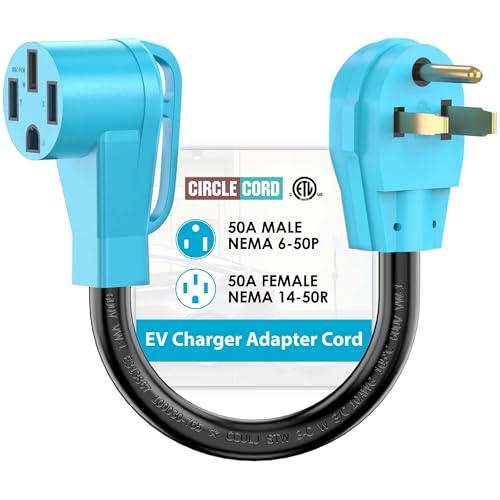
The CircleCord adapter pairs a NEMA 6-50P male with a 14-50R female, featuring a rugged 6-gauge jacket and an ETL listing. The 180-degree bent design with a grip handle aids in handling and strain relief during charging. While it enhances compatibility for Level 2 EV charging, users should confirm the specific receptacle and cable configurations of their charging setup to ensure safe operation.
ChargePoint HomeFlex NACS and NEMA 6-50 Plug

ChargePoint’s HomeFlex variant emphasizes smart charging with a robust app and a broad network. It supports flexible output, enabling efficient charging for a range of EVs. The charger integrates seamlessly with ChargePoint’s ecosystem, offering 24/7 support and access to a large network of charging locations. It’s an attractive option for users who value remote management, data insights, and integration with smart home devices, while maintaining reliable Level 2 charging at home via a NEMA 6-50 outlet.
Buying Guide: Key Purchase Considerations for NEMA 6-50 EV Chargers
- Output and efficiency: Choose chargers rated up to 40A or 50A, depending on your vehicle’s acceptance and your electrical capacity. Higher amperage yields faster charging but requires a compatible circuit and breaker size.
- Cable length and portability: Longer cables offer installation flexibility but add weight. Portable units suit renters and temporary setups, while fixed installations benefit from shorter, neater runs.
- Safety features: Look for UL or ETL certification, GFCI protection, over/under voltage safeguards, and temperature monitoring. IP ratings help determine outdoor suitability.
- Connectivity and smart features: Some chargers integrate with mobile apps, networks, and roaming locations. Consider your preference for monitoring, reminders, and data access.
- Installation requirements: A 50A circuit is common for 9.6kW charging. Verify electrical panel capacity, wire gauge, and any local code considerations before purchase.
- Compatibility: Most Level 2 chargers use SAE J1772 connectors. If you plan to share charging with different vehicles, ensure compatibility with your EV’s inlet and any adapters you might use.
- Durability and environment: For outdoor use, prioritize weather-resistant enclosures (IP rated), durable housings, and corrosion resistance.
- Cost of ownership: Beyond the purchase price, consider installation costs, potential rebates or incentives, and any subscription fees for smart features.
- Expansion and future-proofing: If you anticipate upgrades to higher-rate charging or more vehicles, choose adaptable units with adjustable amperage or broader network support.
Notes on Compatibility and Usage
All selected products primarily target NEMA 6-50 outlets and Level 2 EV charging. Some items are designed for outdoor or rugged environments, while others emphasize smart networking features. When planning installation, confirm your electrical panel capacity and ensure appropriate circuit breakers are installed according to local electrical codes. For renters or multi-vehicle households, portability and ease of transfer can be valuable advantages. Use approved adapters only when specifically recommended by the charger manufacturer to avoid safety risks.
Additional Considerations
Consider warranty coverage, customer support availability, and the potential need for professional installation. For long-term usage, a unit with reliable remote diagnostics and documented safety test results can reduce maintenance concerns. When evaluating options, compare the maximum charging rate achievable with your vehicle’s onboard charger to ensure you aren’t paying for more speed than you can utilize.