Best Natural Gas Sniffer Detectors for Home Safety and RV Use
Answering the question most buyers have: which natural gas sniffer detector provides reliable, rapid gas detection for home or RV use? The top picks below emphasize fast response, clear alarms, and ease of use. These devices help identify leaks from methane, propane, and other combustible gases in tight spaces. They suit homeowners, RV enthusiasts, and DIYers who want quick, actionable alerts. The following five products are highlighted for their balance of accuracy, portability, and user-friendly features.
Summary of chosen products
- PT520A Natural Gas Detector — best overall for long reach and fast source localization
- PT199 Natural Gas Leak Detector — best budget starter with strong alarms
- PT177 Gas Leak Detector — best pocket-ready option with auto-calibration
- PT205 Natural Gas Detector — best for %LEL awareness and explosive risk insight
- PT210S Gas Leak Detector — best probe design for hard-to-reach areas
TOPTES PT520A Natural Gas Detector

The PT520A detects methane, propane, natural gas, LPG, butane, and more in tight spaces. Its 17-inch gooseneck helps locate a leak source quickly in basements, gas fireplaces, or storage areas. Best for users who need to reach into confined spaces or locate a leak’s origin with a single probe pass. The device responds in 0.5 seconds and uses a 75dB audible alarm with seven colored bars that intensify with gas concentration. Detection range is 50-10,000 ppm (Methane).
Who this is best for: homeowners and RV owners who regularly inspect difficult-to-reach areas and want fast, visual and audible confirmation. Caution: extended exposure to high concentrations should prompt immediate professional evaluation; verify batteries periodically as indicated by the device’s indicators.
TOPTES PT199 Natural Gas Leak Detector
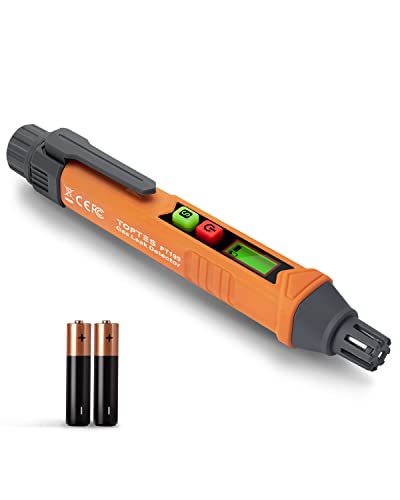
The PT199 is a compact, portable gas sniffer that detects natural gas, methane, propane, butane, LPG, and more. It provides rapid visual and audible alarms within 0.5 seconds, with an LCD screen that turns red as gas concentration rises. Batteries are included (2x AAA), and a 30-second warm-up prepares the detector for use. It auto-powers off after 5 minutes of inactivity or gas detection. Best for: quick spot checks and everyday home safety without more advanced features.
Limitation: smaller form factor may limit reach in larger spaces; keep a spare set of batteries on hand for frequent testing.
TOPTES PT177 Gas Leak Detector

The PT177 is a pocket-sized detector that pinpoints leaks of combustible gases including LPG, methane, ethane, propane, and natural gas. It requires a 30-second warm-up in a clean, gas-free environment to ensure accuracy and performs auto-calibration after powering on. Five red LEDs and a 75 dB alarm intensify as gas concentration increases. Best for: RV enthusiasts and homeowners who want a portable, always-on screening tool. Caution: ensure proper warm-up in a clean environment for reliable readings.
TOPTES PT205 Natural Gas Detector

The PT205 is designed to measure a wide range of combustible gases and provides %LEL detection for methane, butane, propane, and more. It offers rapid 0.5-second detection and combines visual bar graphs with audible alarms. A notable feature is %LEL readouts between 1%LEL and 10%LEL, helping users gauge explosion risk more precisely. Best for: households and RV users who want to monitor not just presence of gas but relative explosive risk. Limitation: higher complexity could require a brief learning period for interpreting %LEL values.
TOPTES PT210S Gas Leak Detector

The PT210S emphasizes portability with a four-inch probe and a pen-shaped form for accessing tight spaces. It displays gas concentration in Percent LEL with a two-digit readout and provides a 0.5-second response time. A 75 dB alarm, red display, and rising bar graphs indicate increasing danger. Best for: users who need precise leak readings in hard-to-reach areas, such as behind appliances or inside vents. Caution: ensure the probe is clean and dry for best accuracy.
Buying Guide
What to consider when choosing a natural gas sniffer detector
Response time, detection range, and alarm clarity are crucial. Look for devices with fast 0.5-second or better response and clear visual/audible alarms. If you frequently inspect tight spaces, a longer probe (like 17 inches) or a compact pocket size may be the deciding factor.
Gas types and detection capabilities
Most models detect methane, propane, natural gas, LPG, and butane. Some devices offer %LEL or %LEL alarms, which helps assess explosive risk. Decide whether you want basic leak detection or a device that provides concentration percentages for informed decisions.
Power, battery life, and maintenance
Consider whether batteries are included and how long they last under typical use. Check warm-up times and whether the device has auto-off to conserve power. Some models include auto-calibration or require a clean environment for best accuracy.
Portability and ease of use
Pocket-sized detectors are convenient for quick checks, while larger units with longer probes excel at locating leaks in fixed installations. A device with a simple interface and fast setup helps reduce user error during urgent situations.
Safety and reliability considerations
Choose devices from reputable brands with clear alarm signals and robust construction. For high-risk environments, prioritize detectors that offer precise readouts and clear escalation of warnings as gas levels rise. Always follow manufacturer guidelines for calibration, maintenance, and replacement parts.
Frequently Asked Questions
- What is a natural gas sniffer detector used for? It detects leaks of combustible gases like methane, propane, and butane, providing visual and audible alarms to improve home and RV safety.
- Which detector is best for tight spaces? Detectors with long probes or goosenecks (such as 17-inch variants) are best for accessing tight spaces and locating the leak source.
- What does %LEL mean? %LEL indicates the lower explosive limit percentage, showing how close the gas concentration is to a potentially explosive level.
- Do these devices require batteries? Most models include batteries or require standard batteries; check what is included with your purchase and whether the device auto-powers off after inactivity.
- How accurate are these detectors? Detectors provide rapid readings and alarms; accuracy depends on calibration, environment, and proper warm-up time as specified by the manufacturer.
- Should I rely on a single detector? For comprehensive coverage, consider a detector with a longer probe for reach, plus a portable unit for quick checks and RV use.