Best MPPT Grid Tie Inverter Solutions for Home Solar Power Systems
Finding the right MPPT grid-tie inverter is essential for maximizing solar energy on-grid performance. This guide highlights five top options, each designed to optimize maximum power point tracking, ensure stable AC output, and connect safely to the electrical grid. Below you’ll find concise product overviews, key features, and practical guidance to help you compare models for 12V, 24V, and higher PV configurations.
Summary of Selected Products
| Product | Brand | MPPT Range | Output | |
|---|---|---|---|---|
| 1000W Grid Tie Inverter | Y&H | 15.5–23V | AC 90–140V | 18–21V Vmp, 20–24V Voc |
| 700W Grid Tie Inverter | POWLSOJX | DC 18–50V | 120/230V AC | DC input 18–50V |
| 1400W Grid Tie Inverter | Y&H | 30–39V | AC | Vmp 30–39V |
| Max 1000W Grid Tie Inverter | EEYBLAEEY | DC 10.8–32V | AC 90–140V | Pure sine output |
| 600W Grid Tie Inverter | Y&H | 15–22V | AC 110V | 12V solar panels |
Y&H 1000W Grid Tie Inverter Stackable MPPT
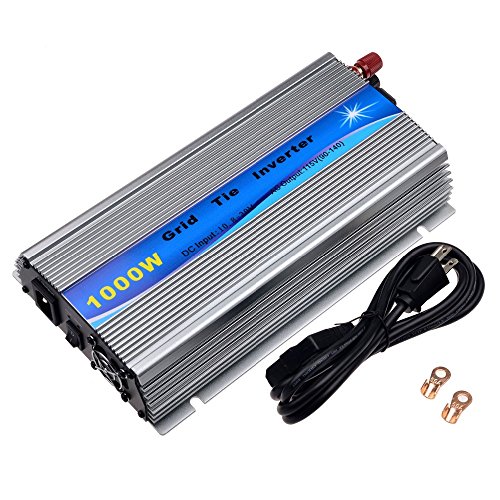
Designed for on-grid operations, this model uses MPPT to optimize panel inputs and convert DC to grid-compatible AC. The product supports Vmp in the 18–21V range and Voc 20–24V, with an MPPT window of 15.5–23V. It is intended for grid-tied configurations and requires a proper AC connection to the utility grid. Users should avoid connecting load ports to the inverter and ensure correct polarity during wiring. The unit targets 200–1000W solar input, making it suitable for mid-size residential PV arrays. Indicators show whether the panel power is sufficient to stay within MPPT ranges.
Key usage notes: do not mix input voltages outside the specified MPPT range, and verify DC polarity before powering. This model is stackable to scale capacity for growing solar setups, but always follow installation guidelines to prevent overheating and miswiring risks.
POWLSOJX Solar Grid Tie Micro Inverter MPPT

This micro-inverter line emphasizes precise MPPT to boost solar generation by more than 25% in practice. Its pure sine wave output helps maintain clean power for sensitive electronics. A key advantage is high transmission efficiency, with a reverse flow capability designed to feed unused energy back to the grid. The LCD-style or display-oriented monitoring allows users to gauge voltage, frequency, and real-time power metrics, helping with troubleshooting and optimization. Aluminum construction supports durability in typical outdoor or exposed mounting locations.
POWLSOJX Solar Grid Tie Micro Inverter MPPT 180W-700W
Featuring a robust built-in MPPT algorithm, this model captures and locks in the maximum power point to improve generation by upwards of 25%. It supports a DC input range up to 50V, enabling compatibility with various solar panel configurations. The unit supports 120V or 240V (230V/120V) AC output and highlights a clean pure sine wave output for broader device compatibility. It also emphasizes high transmission efficiency, leveraging reverse transmission to maximize overall system performance.
Y&H 1400W Grid Tie Inverter Stackable MPPT

Targeted at higher-capacity PV arrays, this 1400W unit uses an MPPT range around 30–39V to maximize efficiency for mid-to-high voltage panels. The design supports stackability for expansion and emphasizes high MPPT responsiveness, claiming efficiencies exceeding 99% with rapid tracking. Its aluminum alloy housing adds durability and helps dissipate heat to maintain performance under load. It is suited for grid-tied installations with equipment rated for 110–120V output in typical American households.
EEYBLAEEY Solar Inverter Max 1000W

EEYBLAEEY offers a 1000W grid-tie option with aluminum alloy construction aimed at longevity in outdoor environments. The device converts DC from solar panels into a grid-compatible AC output, suitable for home solar systems. Pure sine wave output helps protect sensitive electronics and provides stable power delivery. The overall build emphasizes corrosion resistance, heat tolerance, and consistent performance across typical on-grid installations, making it a viable option for residential projects seeking reliable grid-tied operation.
Y&H Grid Tie Inverter 600W Stackable
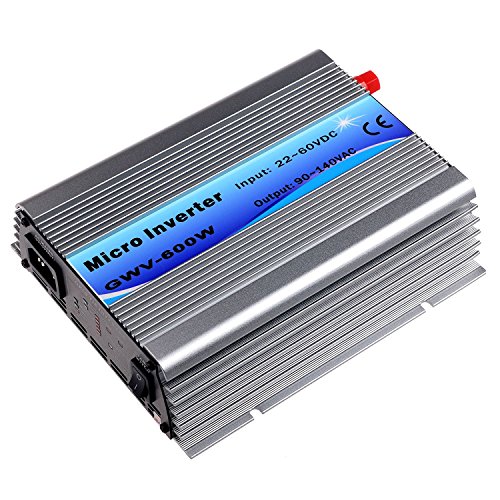
This 600W model is designed for 12V solar panels and supports MPPT in the 15–22V range. It emphasizes correct wiring polarity and recommends ventilation to keep temperatures in check due to internal heat generation. The unit provides grid-compatible AC output and is aimed at smaller solar setups or as a modular component in larger configurations. Its compact design can simplify integration into smaller installations while maintaining essential MPPT tracking for better efficiency than basic inverters.
Buying Guide: Key Purchase Considerations
- MPPT Range and Panel Compatibility: Match the inverter’s MPPT window to your PV array’s Vmp and Voc. Wider MPPT ranges provide flexibility with different panel brands and configurations.
- Grid Compatibility and Output Voltage: Ensure the inverter supports your local grid voltage (US standard is typically 110–120V or 230V in some regions) and that its output waveform is a true pure sine wave for sensitive electronics.
- Ventilation and Durability: On-grid inverters generate heat. Look for aluminum housings or IP-rated enclosures for outdoor or damp environments, and plan for adequate airflow or cooling where needed.
- Wiring Safety and Polarity: Correct DC polarity and protected input connectors reduce the risk of fault conditions. Some models emphasize MC4-compatible inputs to prevent reverse wiring mistakes.
- Scalability: If you anticipate expanding the PV array, consider stackable designs or models that support higher aggregate input power without sacrificing efficiency.
- Monitoring Capabilities: LCD or digital meters, as well as remote monitoring options, help you observe voltage, current, frequency, and energy output, aiding maintenance and performance optimization.
- Installation Tips: Use ventilated, dry, and cool spaces for non-weatherproof units. For outdoor installs, follow manufacturer guidelines on mounting, protection from the elements, and secure mounting to prevent damage.
- Safety and Code Compliance: Verify that the inverter is UL-listed or compliant with regional electrical standards and that grid-tie wiring adheres to local regulations and utility interconnection requirements.
Overall, when selecting an MPPT grid tie inverter, balance the PV array size, voltage range, and desired grid connection with durability, monitoring, and expansion potential. The models highlighted above represent a spectrum from compact, low-wattage options to higher-capacity, stackable configurations, each focusing on efficient MPPT control and grid-ready AC output.