Best Motors for Wind Turbines: Top DIY Wind Turbine Kits
Choosing the right motor and kit is essential for demonstrations, education, and small-scale wind projects. This guide highlights five relevant options that cover beginner to intermediate experimentation, from compact mini motors to larger wind turbine kits. Each entry includes key specs, typical use cases, and how they perform in DIY wind energy setups. Use this overview to compare starter kits, educational bundles, and scalable systems for classrooms, hobbyists, and small off-grid projects.
| Product | Brand | Notes |
|---|---|---|
| Sntieecr 6 Set Mini Generator Motors | Sntieecr | |
| EUDAX Mini Generator Motors 3V-12V | EUDAX | |
| Thames & Kosmos Wind Power V4.0 | Thames & Kosmos | |
| RELAXORIX 1000W Wind Turbine Kit | RELAXORIX | |
| RIYIN 120V DC Motor Wind Turbine | RIYIN |
Sntieecr 6 Set Mini Generator Motors
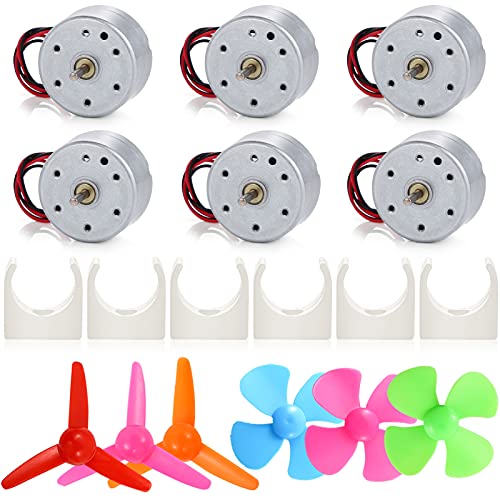
The Sntieecr kit includes six mini DC motors, mounting brackets, and multiple propeller sets. Motors operate at DC voltages of 3V, 4.5V, and 12V, with corresponding RPM ratings of 1500, 2500, and 6500. This configuration supports small wind-turbine experiments and electro-mechanical demonstrations, including energy conversion between kinetic and electrical energy. The compact diameter (24 mm) and color-varied propellers make it ideal for classroom experiments and DIY projects that require quick setup and modular testing. Use these as starter generators to observe output under different wind or fan-driven speeds.
EUDAX Mini Generator Motors 3V-12V

The EUDAX mini motors mirror the 3V-12V range with a 24 mm body diameter and a 22.21 mm height. They come with a shaft and propeller options, offering similar voltage-to-speed mappings (3V/1500 RPM, 4.5V/2500 RPM, 12V/6500 RPM). This kit emphasizes versatility for science projects, toy design, or small wind-turbine demonstrations. It is well-suited for students exploring mechanical-to-electrical energy conversion, as well as for hobbyists building compact turbine displays or wind-powered LED experiments.
Small Wind Turbine Generator Micro DC Motor

This compact setup features a large 17.5 cm blade diameter with 11 blades, designed to be driven by a fan or blower rather than relying on natural wind. It uses a DC motor rated for a wide voltage range (0–36V) and up to about 3800 RPM at 12V, expanding the range of experimentation. While it is not ideal for outdoor wind, it demonstrates wind-powered electricity generation on a bench, making it suitable for lab desks, classrooms, and DIY projects that require visible turbine action and LED demonstrations.
EUDAX 6 Set Mini Generator Motors with Propellers

A multi-functional beginner kit from EUDAX, this set includes six generator motors, mounting brackets, propellers, LED indicators, quick connectors, and an English manual. It supports three voltage-speed profiles (3V/1500 RPM, 4.5V/2500 RPM, 12V/6500 RPM) and adds LEDs for immediate visualization of energy conversion. The package highlights versatility by enabling wind-driven, solar-driven, and battery-driven experiments, making it a robust option for science fairs, classrooms, and home labs looking to illustrate practical energy generation concepts.
Thames & Kosmos Wind Power V4.0
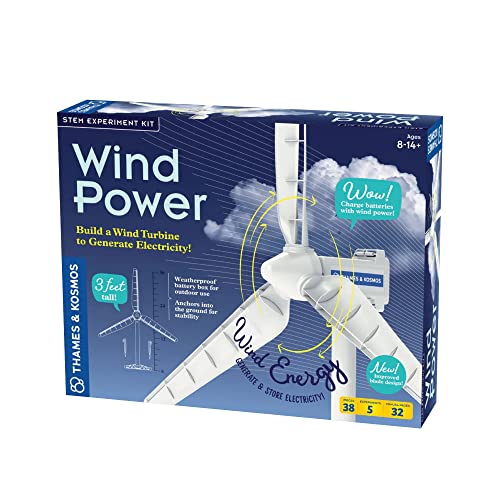
The Thames & Kosmos Wind Power V4.0 kit guides learners through building a 3-foot wind turbine to generate electricity. Its single-piece blade construction improves durability and aerodynamics, and the kit demonstrates how wind translates to electrical power that can charge a battery and run a small model car. This educational package emphasizes real-world turbine operation, giving students a tangible sense of wind energy, turbine efficiency, and the role of blades, rotors, and generators in power generation. It is well-suited for group demonstrations and extended STEM projects.
RELAXORIX 1000W Wind Turbine Kit

This 1000W wind turbine kit targets larger-scale demonstrations and off-grid applications. It uses a vertical design and a permanent magnet alternator to improve efficiency and energy capture. Nylon fiber blades are designed for lower startup wind speeds, making it suitable for variable wind environments. The kit is intended for more serious hobbyists and small rural off-grid projects, offering higher energy output while maintaining system reliability and robust performance under real-world wind conditions.
RIYIN 120V DC Motor Wind Turbine
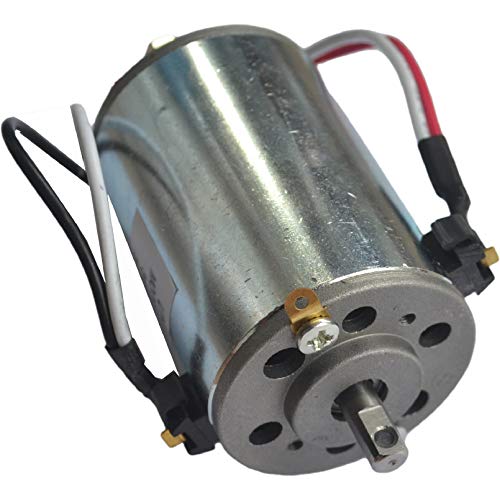
The RIYIN 120V kit demonstrates wind turbine concepts at a higher voltage level, offering a practical example of how turbine-generated electricity can be scaled for home or educational demonstrations. It features a front and rear bearing arrangement and a rated 120V DC output with observable performance at higher RPMs. This option is suitable for classrooms exploring electrical systems, voltage conversion, and larger-scale proof-of-concept turbines, though it demands appropriate safety considerations for high-voltage operation.
Buying Guide: Key Purchase Considerations
- Intended use: For classroom demonstrations, beginner kits with LEDs and simple blades are ideal; for hands-on projects or small off-grid tests, opt for kits with durable blades, robust bearings, and higher RPM ranges.
- Voltage and RPM ranges: A wider voltage spectrum (3V to 12V) allows learning across different wind conditions and speeds. Higher RPM motors enable faster demonstrations but require careful handling.
- Blade design and material: Nylon blades improve durability and startup performance, while larger blade diameters can capture more wind energy but demand more space.
- System complexity: Starter kits emphasize ease of use and rapid results; more advanced kits allow multi-mode operation (wind, solar, manual) and higher output potential.
- Educational value: Look for kits with clear manuals, diagrams, and experiments that illustrate energy conversion, efficiency, and turbine dynamics.
- Safety: High-voltage components or spinning blades require safe handling, especially in classrooms or public demonstrations.
- Expansion potential: If future projects may scale up, choose kits with modular components, spare parts, and compatibility with additional blades or generators.
Comparison of Core Features
- Mini motor kits (Sntieecr, EUDAX) emphasize quick setup, multiple voltages, and educational demonstrations for beginners.
- STEM kits (Thames & Kosmos) focus on hands-on turbine construction and real energy generation in a classroom-friendly format.
- Higher-capacity systems (RELAXORIX) target off-grid or larger demonstration projects with improved energy capture.
- High-voltage demonstrations (RIYIN) illustrate scaled electrical output but require careful safety practices.
When selecting a wind turbine motor or kit, align the choice with the learning goals, space, and safety considerations of the user. The five highlighted options provide a spectrum from simple, classroom-friendly experiments to more ambitious home or education-focused setups, enabling users to explore the fundamentals of wind energy conversion and turbine efficiency in practical ways.