Best Mechanisms for Automatic Doors: A Practical Guide for Homes and Businesses
Finding the right mechanism for automatic doors depends on door type, traffic, and accessibility needs. This guide highlights five reliable options, pairing clear features with who they are best for. Use these summaries to compare performance, ease of programming, and installation considerations.
Summary of selected products
- Olideauto Automatic Dual Door Operator — best for ADA-accessible entrances with two doors that must open simultaneously.
- Olideauto Automatic Swing Door Opener with Wireless Push Button — best for lightweight, single-leaf doors needing flexible wireless controls.
- Automatic Door Opener with 2 Remote Control — best for offices or shared spaces requiring remote access and multiple control modes.
- Lawrence Medium/Heavy Duty Door Closer (Embassy Series LH5016) — best for heavy doors where durable, adjustable closing speed is needed.
- Door Lock Reinforcer Privacy Door Latch — best for enhanced door security in privacy-sensitive spaces.
Olideauto Automatic Dual Door Operator
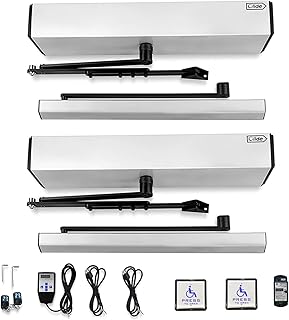
The Olideauto Dual Door Operator runs two swing doors in unison and is adjustable via a handheld programmer. It supports wireless and wired handicap push buttons for accessibility, and can re-open if an object is detected in the closing path. Best for facilities needing synchronized operation and easy one-handed programming. Caution: installation may require precise alignment of two doors and consistent power sourcing for reliable performance.
Olideauto Automatic Swing Door Opener with Wireless Push Button

This model combines automatic operation with a wireless push button for easy access and manual override. The handheld programmer enables quick parameter adjustments, including hold time and closing force. Best for single-door applications where user-friendly setup and on-site support are valued. Limitations include dependence on a stable power supply and the need to manage wireless range in larger spaces.
Automatic Door Opener With 2 Remote Control

This opener supports remote control operation within a 49-foot radius, plus code or ID card access. It can operate in automatic and manual modes, with a robust aluminum-anodized body designed for harsher environments. Best for offices, hospitals, and homes needing flexible access control. Consider it if you require proximity-based entry and a wide operating temperature range. Limitation: power and control system compatibility should be confirmed with existing door hardware.
Lawrence Medium/Heavy Duty Door Closer (Embassy Series LH5016)

The Embassy LH5016 is a commercial-grade, surface-mounted door closer with adjustable six-speed control and three valves. It’s designed to manage heavy doors and prevent slamming, supporting left or right configurations. Best for entrances with high foot traffic and stringent soft-close preferences. Caution: professional installation is recommended to ensure correct mounting and alignment on heavy doors.
Door Lock Reinforcer Privacy Door Latch

Door Lock Reinforcer adds privacy-focused security for swinging doors, reducing tampering and bump-ins. Best for hotel rooms, apartments, and private offices needing enhanced door reinforcement. Limitation: not a full automatic door operator; requires existing door hardware and manual operation in some cases.
Buying Guide: Key Considerations for Choosing Door Mechanisms
- Door type and weight: Heavier doors require stronger closers and larger motors. Choose a closer and opener rated for the door’s weight and width.
- Traffic and accessibility: If ADA compliance is essential, prioritize models with easy handheld programming and reliable hold-open features.
- Power and installation: Some units support wide voltage ranges and both wired/wireless controls. Verify voltage supply and mounting compatibility with your frame.
- Control options: Remote controls, codes, RFID, or wireless push buttons provide flexible access. Consider future access changes and security requirements.
- Safety and failure modes: Look for auto-reopen on obstacle detection and smooth manual override to prevent injuries or damage.
Frequently Asked Questions
- What is the main difference between automatic door operators and door closers?
– Operators automate opening and closing, while closers primarily control the speed and force of closing a door to prevent slamming. - Can these devices be installed on existing doors?
– Yes, most models are designed for retrofit onto common door types, but installation complexity varies by door material and frame. - Do these mechanisms support handicap accessibility?
– Several models include handicap push buttons or remote access options to enhance accessibility for disabled users. - Is remote access secure for commercial spaces?
– Many units support codes, cards, or remote controls with configurable access restrictions to balance convenience and security. - What maintenance is required?
– Regular checks of sensors, alignment, lubrication of moving parts, and battery replacement for wireless remotes or keypads are common tasks.