Best Marine and RV Deep Cycle Battery Options for 12V Power Systems
The market for marine and RV deep cycle batteries is broad, with options spanning AGM and LiFePO4 chemistries. This article highlights five well-regarded choices suited for RVs, boats, solar setups, and off-grid uses. Each option includes key specs, ideal uses, and what to consider when choosing a deep cycle battery for your lifestyle on the water or the road.
| Brand | Model | Chemistry | Voltage | Capacity |
|---|---|---|---|---|
| WEIZE | Weize 100Ah AGM | AGM | 12V | 100Ah |
| GRNOE | 2-Pack 12V 100Ah LiFePO4 | LiFePO4 | 12V | 100Ah each |
| Renogy | Deep Cycle AGM 100Ah | AGM | 12V | 100Ah |
| Interstate Batteries | Marine/RV 100Ah 825CCA | AGM | 12V | 100Ah |
| CHITOLI | 12V 100Ah LiFePO4 | LiFePO4 | 12V | 100Ah |
Weize 100Ah AGM Deep Cycle Battery
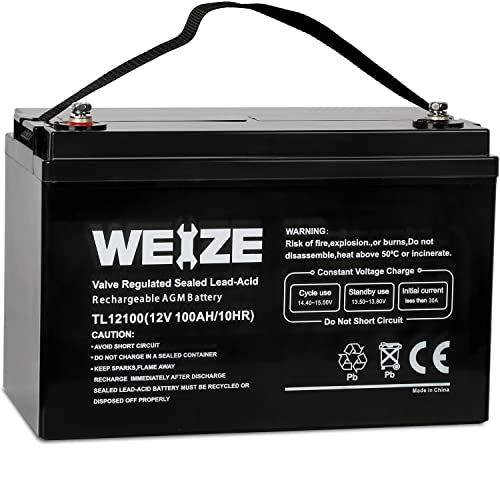
The Weize 100Ah AGM battery is a maintenance-free 12V option designed for RVs, solar systems, trolling motors, and marine applications. Its AGM technology minimizes acid leakage risk and requires little ongoing maintenance. A relatively low self-discharge rate helps when stored between uses, improving readiness for the next trip. The battery supports a strong 1100A max discharge current for brief high-power demands and is built to operate across a wide temperature range, with recommended use around moderate climates for longevity. The left-right terminal polarity is clearly marked to simplify wiring and installation.
GRNOE 2-Pack 12V 100Ah LiFePO4

GRNOE offers a two-pack of LiFePO4 12V 100Ah batteries with built-in 100A BMS and low-temperature protection. These cells deliver long cycle life, strong energy density, and a compact form factor. The BMS protects against overheating, overcurrent, overcharge, and short circuits, enabling safer operation in RVs, cabins, and cold-weather off-grid setups. A caution notes that charging requires an appropriate charger (14.6V±0.2V) rather than a standard 12V charger to reach full capacity. Weight is significantly lighter than traditional lead-acid packs, aiding portability and installation in compact spaces.
Renogy Deep Cycle AGM 12V 100Ah

Renogy’s Deep Cycle AGM battery is a trusted option for RVs and marine vessels, offering solid safety and performance. It supports series and parallel configurations (up to four in parallel) for scaled power in larger rigs or off-grid systems. The sealed design minimizes maintenance needs and reduces the risk of leaks. Renogy’s reputation is backed by extensive adoption worldwide, with a focus on consistent performance across a variety of loads, from lighting to appliances. The battery’s safety and reliability make it suitable for long trips where dependable power is essential.
Interstate Batteries 100Ah AGM Marine/RV

Interstate’s 100Ah AGM model is designed for dual-purpose Marine and RV use, serving as a starting battery and a power supply for trolling motors and onboard accessories. The design emphasizes rugged reliability and extended service life, with performance claims suggesting 2x to 3x longer life than conventional AGM options. It aims to provide strong cranking power alongside deep-cycle capability, supporting extended trips with lights, pumps, and electronics. The unit is built to handle the vibrations common in marine and RV environments, reducing the risk of premature failure.
CHITOLI 12V 100Ah LiFePO4 Battery

CHITOLI provides a LiFePO4 12V 100Ah option with a built-in smart BMS to guard against overcharge, over-discharge, over-current, and short circuits. Lightweight and compact relative to lead-acid equivalents, these lithium packs deliver high cycle life—up to 15,000 cycles at moderate depth of discharge. While suitable for RVs, trolling motors, and home energy storage, they are best used where the system can accommodate LiFePO4 charging profiles and the BMS monitoring requirements. The battery is marketed as a replacement for lead-acid batteries, emphasizing energy density and longevity.
Buying Guide: Key Purchase Considerations
- Chemistry mismatch and compatibility: AGM vs LiFePO4 each have distinct charging needs, weight, and cycle life. LiFePO4 generally offers longer life and lighter weight but may require compatible charging strategies and equipment. Ensure your charger and inverter are compatible with the battery chemistry you select.
- Capacity and power needs: 100Ah is common for RVs and small to mid-size boats. For larger rigs or high-energy loads, consider multiple batteries in series/parallel or higher-capacity packs to meet runtime goals without frequent recharges.
- Discharge rate and peak power: Look for batteries with a high max discharge current if you require quick power for starting motors or running high-draw devices. AGM batteries often handle brief surges well; LiFePO4 models provide steadier, longer deep-cycle performance.
- Temperature tolerance: Marine and RV environments vary in temperature. Batteries with built-in temperature protection or BMS features help prevent performance loss in cold or hot climates.
- Maintenance and safety: AGM batteries are maintenance-free but heavier and have modest cycle life. LiFePO4 batteries are lighter and longer-lasting but require proper charging profiles and BMS management for safety and longevity.
- Installation and space: Consider physical size, terminal layout, and mounting options. Compact LiFePO4 packs can save weight and space in limited areas, while AGM units tend to be bulkier but widely available.
- Lifecycle cost: While LiFePO4 incurs higher upfront costs, its longer cycle life can reduce total cost of ownership over time. Weigh initial investment against expected usage and replacement intervals.
- Maintenance schedule: Even maintenance-free options benefit from periodic checks (connections, terminal cleanliness, and ensuring vents remain clear for older lead-acid designs).
- Charging infrastructure: Ensure your solar controller, generator, or shore power setup can deliver appropriate charging voltage and current for your chosen chemistry. LiFePO4 requires different charging voltages than traditional lead-acid.
Across these five options, buyers can balance weight, longevity, and upfront cost. For frequent road-trips and moderate power draws, AGM choices remain reliable and widely supported. For longer lifespans, lower weight, and deeper cycling, LiFePO4 models offer compelling benefits with the right charging setup. Always confirm compatibility with your existing power system components before purchasing.