Best Marine Grade Switch Panels for Boats and RVs in 2026
If you’re upgrading a boat, RV, or off-road vehicle, a marine grade switch panel is essential for organized power control. This guide highlights five reliable options, explains who they’re best for, and helps you compare features like IP ratings, USB charging, voltmeters, and built-in fuses. Whether you’re wiring a small runabout or a larger motorhome, these panels offer safer, clearer access to 12V–24V systems. The buyer table below summarizes the top picks for quick reference.
Selected products at a glance
- DaierTek 6 Gang Marine Rocker Switch Panel – Best for compact, feature-rich panels with USB and voltmeter.
- Nilight 90101E 5 Gang – Best for integrated voltmeter, fuse protection, and broad vehicle compatibility.
- Nilight 6 Gang Rocker Panel – Best for DIY-ready kit with USB, voltmeter, and multiple circuit breakers.
- FXC 5 Gang Marine Panel – Best for IP66 waterproof aluminum design with dual USB and voltmeter.
- RVBOATPAT 7 Gang – Best for higher channel needs with USB charging and night-glow labeling.
DaierTek 6 Gang Marine Rocker Switch Panel

This 6-gang rocker panel supports 12V systems with dual LED indicators and a built-in cigarette lighter socket plus a USB charger. Compared with basic panels, this model adds a voltmeter and dual USB ports, making it easier to monitor battery health and charge devices while on deck or at the dock. Best for boaters and RV owners who want a compact, feature-rich panel in a single unit.
Who it’s best for: small to mid-size boats or campers needing a versatile, LED-lit panel with USB charging and a voltmeter. Why selected: it combines lighting, charging, and monitoring in one enclosure without excessive bulk. Caution: product data does not specify IP rating, so ensure mounting in a protected environment if exposed to heavy spray.
RVBOATPAT Marine Boat Switch Panel 8 Gang

This 8-gang panel uses a pre-wired setup and anodized aluminum for durability, with dual cigarette lighter sockets and a 20A per-way rating. It’s designed for automotive and marine use with robust construction. Best for users who want a ready-to-install, corrosion-resistant panel with multiple charging options and a straightforward wiring path.
Who it’s best for: boaters or vehicle operators needing more circuits and dual lighter sockets for on-the-go charging. Why selected: pre-wired design reduces installation time and helps maintain safe, organized wiring. Caution: the higher channel count means the panel is larger; verify available mounting space before purchase.
Nilight 90101E 5Gang With Voltmeter

This 5-gang panel packs a digital voltmeter, dual USB ports, a 12V outlet, and a protective fuse system. It is designed to work across 12V–24V systems and fits cars, boats, RVs, and light trucks. Best for those who want real-time voltage readouts alongside charging and control switches. Caution: some users may prefer higher amperage for heavy loads; check your circuit demands before wiring.
Who it’s best for: drivers and boaters who value voltage monitoring as part of daily use. Why selected: integrated voltmeter provides immediate feedback on battery status, reducing guesswork. Better for: moderate power needs with multiple loads in a single cockpit or cabin area. Caution: ensure fuse ratings align with connected devices to avoid nuisance trips.
Nilight 6 Gang Rocker Panel With USB And PD-C

This 6-gang, pre-wired panel adds a PD Type C port along with USB charging, a voltmeter, and circuit protection. It’s designed for cars, boats, RVs, and trucks, making it a versatile option for mixed-use vehicles. Best for tech-forward users who need fast USB-C charging and an at-a-glance voltage readout. Caution: wiring complexity can increase with PD-C integration; follow included instructions carefully.
Who it’s best for: owners who want USB-C fast charging and a compact, all-in-one control surface. Why selected: PD-C adds modern charging capability beyond standard USB-A; ideal for devices with USB-C power needs. Choose this if: you require USB-C power delivery in addition to traditional USB sockets. Avoid this if: you don’t need PD-C or prefer a separate USB-C module external to the panel.
FXC Waterproof Marine Boat Switch Panel 5 Gang
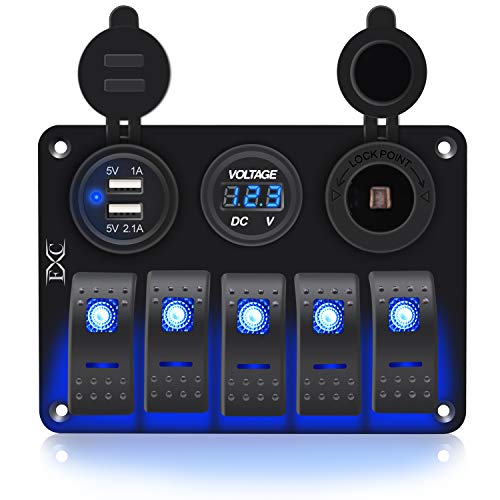
This 5-gang aluminum panel is IP66 waterproof and includes a 12V cigarette socket, voltmeter, and dual USB charging. The marine-grade construction provides corrosion resistance and durable switches. Best for riders and sailors who need a rugged, weather-resistant panel with built-in monitoring. Caution: IP66 rating indicates protection against heavy seas and powerful water jets; ensure seals are properly engaged during installation.
Who it’s best for: those seeking a durable, all-in-one control surface for wet environments. Why selected: sturdy aluminum construction and integrated voltage readout simplify maintenance in marine settings. Choose this if: you prioritize weather sealing and corrosion resistance. Avoid this if: you require more than five circuits in a single unit.
RVBOATPAT 7 Gang Marine Switch Panel

This 7-gang panel features USB charging, a voltmeter, and dual safety protections across 12V/24V systems. It is designed for a wide range of vehicles, including boats, RVs, trucks, and off-road machines. Best for users needing multiple circuits with built-in monitoring and charging capacity. Caution: older electrical systems may require additional fusing or harness adaptations for seamless integration.
Who it’s best for: multi-circuit setups with a need for reliable USB charging and voltage monitoring. Why selected: seven channels provide flexibility for complex electrical layouts. Choose this when you require more circuits than typical five-gang designs. Avoid this if space is tight or if you only need a few switches.
Buying Guide: Key Considerations For Marine Switch Panels
What should you check before buying?
- Power handling: Confirm amperage per circuit and total load to match your boat, RV, or vehicle’s electrical system.
- Voltage range: Most panels run on 12V–24V; verify compatibility with your equipment.
- Protection features: Look for fuses or circuit breakers, overload protection, and short-circuit safeguards.
- Water and dust resistance: IP or IP65/IP66 ratings indicate suitability for damp or wet environments.
- Integrated features: Voltmeters, USB ports, PD-C, and cigarette lighter sockets affect usability and charging options.
- Panel material and durability: Aluminum panels are common for marine use due to corrosion resistance.
- Pre-wired vs. DIY wiring: Pre-wired panels save installation time but may limit customization.
- Panel size and layout: Ensure the unit fits your dash, console, or distribution center and offers clear labeling.
What configuration best fits your needs?
- Simple, compact setups: A 4–5 gang panel with USB, voltmeter, and a single cigarette lighter is often enough.
- Full-feature cockpit: A 6–8 gang with dual USBs, voltmeter, and multiple circuit breakers provides flexibility for maritime or RV systems.
- Tech-forward charging: Panels with USB-C PD and Volt meters help maximize device charging and system visibility.
Installation tips
- Plan wiring routes to minimize cross-talk and ensure proper grounding.
- Label each switch in a way that matches connected circuitry for easier operation.
- Test power-off protection first to prevent accidental shorts during setup.
- Waterproof seals and grommets should be installed where conduits pass through panels.
Frequently Asked Questions
- What is the main advantage of a voltmeter on a switch panel? It provides real-time battery status, helping prevent unexpected power loss.
- Do all marine switch panels support 12V and 24V systems? Most do, but confirm the voltage range in product specs to avoid compatibility issues.
- Are USB-C ports in marine panels common? Some models include USB-C PD, which speeds up charging for modern devices.
- Is IP66 enough for outdoor marine use? IP66 protects against powerful water jets and heavy rain; for submersion or frequent spray, higher ratings may be preferable.
- Can I install a panel myself? Many panels are designed for DIY installation with pre-wired options, but always follow the manufacturer’s instructions.