Best Marine Battery Extension Cable Kits for Trolling Motors
Direct answer: If you need extra reach from your boat battery to a trolling motor or charger, these marine battery extension kits provide length, durability, and clean installation. They’re best for boaters who want flexible cable routing, easy setup, and corrosion-resistant connections. The top picks below cover common voltages, lengths, and connection styles to fit most trolling motor and charger configurations.
Buyer-friendly summary table:
| Product | Length / Gauge | Best For |
|---|---|---|
| NOVINO Trolling Motor Battery Cable Extension Kit (10 ft, 8 AWG) | 10 ft, 8 AWG | Long reach to trolling motor; compact kit |
| T-H Marine Hydra Battery Cable Extender | 5/16-18 studs; supports up to 2 AWG | Clean, splicing-free connections; accessible layout |
| GaiRen Trolling Motor Battery Extension Kit (5 ft, 8 AWG) | 5 ft, 8 AWG | Quick lengthening for 12V/24V setups |
| ProMariner 51805 5′ Universal DC Cable Extender | 5 ft; ring terminals | Universal marine charger compatibility |
| ProMariner 51815 15′ Universal DC Cable Extender | 15 ft; ring terminals | Long reach for bow, center, or stern locations |
NOVINO Trolling Motor Battery Cable Extension Kit — 10 Feet

Best for: Boat owners needing a full 10-foot extension without performance loss. This kit includes a red and black 10-foot extension cable plus connect hardware and electrical tape for a clean install. The 8 AWG gauge supports standard trolling motor currents with straightforward wiring from the battery to the motor.
Why selected: Durable copper conductors and included hardware simplify installation. Better for longer runs where a shorter extension would require additional joins or splices. Limitations: May be bulkier than shorter options for tight compartments.
T-H Marine Hydra Battery Cable Extender

Best for: Users who want an accessible, clean battery setup with fewer butt splices. This extender provides positive and negative terminals and helps manage cable routing by lengthening the connection to a more convenient location.
Why selected: Includes both terminals for complete battery connection management and reduces need for factory splices. Limitation: It uses a different stud size (5/16-18) and may require compatible hardware if your boat’s connectors differ.
GaiRen Trolling Motor Battery Extension Kit — 5 Feet

Best for: Mid-length installations in 12V to 48V systems where a compact 5-foot extension is ideal. The kit includes red and black wires, crimped ring terminals, hardware, electrical tape, and heat shrink tubing for a secure finish.
Why selected: Quick lengthening without impacting trolling motor performance. Caution: Shorter length may require more frequent routing changes in smaller boats.
ProMariner 51805 5′ Universal DC Cable Extender
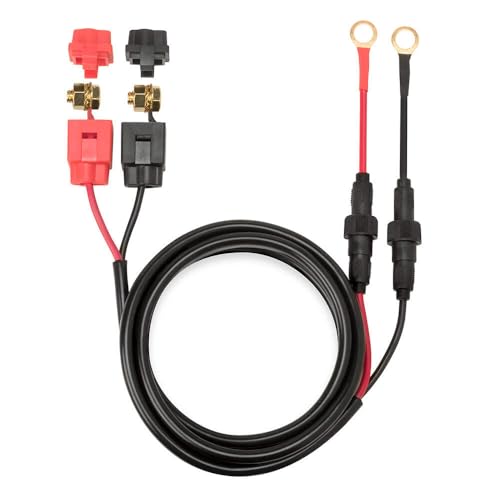
Best for: Boat owners with onboard marine chargers and a need to connect to battery compartments in bow, center, or stern locations. This 5-foot extender is color-coded and designed for quick, no-cut installation.
Why selected: Universally compatible with most marine chargers and eliminates the need for splicing. Limitation: Limited to 5 feet, which may not cover longer runs without combining segments.
ProMariner 51815 15′ Universal DC Cable Extender

Best for: Users needing long reach to reach battery compartments located far from the bow, center, or stern. The 15-foot extender supports standard marine charger configurations with ease.
Why selected: Long reach and color-coded, ready-to-install design. Caution: A longer cable run could increase voltage drop if gauge is not matched to load.
Buying Guide: Key Considerations for Marine Battery Extension Cables
- Cable gauge: Choose 8 AWG for standard trolling motor currents and moderate distances. Heavier loads or longer runs may benefit from thicker gauges.
- Length: Match the length to your boat layout. Longer cables offer flexibility but may add resistance; shorter may constrain routing.
- Terminals and hardware: Prefer kits that include ring terminals, screws, and protective tape or heat shrink for a secure, corrosion-resistant connection.
- Voltage compatibility: Ensure the extension supports your system voltage (commonly 12V, 24V, or 36V/48V). Some kits adapt to multiple voltage setups.
- Installation approach: Look for no-cut, no-splice designs or easy-to-wire configurations to minimize installation time and risk.
- Durability and protection: PVC insulation, corrosion resistance, and weather sealing matter in marine environments and exposure to saltwater.
- Compatibility with chargers: If you plan to extend to onboard chargers, verify the extender is designed for use with marine chargers and ring-terminal cables.
- Safety: Avoid exposed wiring; ensure proper insulation and secure fastening to prevent chafing or short circuits during operation.
FAQ
- What gauge is best for trolling motor extensions? Most common setups use 8 AWG for reliable current handling and flexibility; heavier systems may require thicker gauges.
- Can I extend multiple cables in series? It’s generally better to use a single, longer extension or appropriately rated products designed for extension to avoid voltage drop and reliability issues.
- Do I need to splice or cut anything? Look for no-cut or no-splicing designs to simplify installation and reduce risk.
- Will longer cables reduce performance? If the gauge is appropriate for the load, length alone should not degrade performance, though excessive length with undersized gauge can increase resistance.
- Are these extenders compatible with all marine chargers? Many are universal, but always check the charger’s connection type and the extender’s terminal compatibility.
- What maintenance helps longevity? Keep connections clean and tight, protect exposed terminals with tape or heat shrink, and inspect for corrosion after saltwater use.