Best Low Voltage Electrical Cable for Landscape Lighting
Answering your search for reliable low voltage electrical cable, this guide highlights the best options for landscape lighting setups. Ideal buyers include DIY homeowners installing path lights, deck lighting, or garden features; contractors seeking consistent performance, and hobbyists working on small-scale outdoor circuits. The products below emphasize direct burial compatibility, conductor material, and durability to help minimize voltage drop and maintenance. A quick summary table follows to compare key traits at a glance.
| Product | Conductor | Length | Best For |
|---|---|---|---|
| GOSDENG 12/2 Low Voltage Landscape Wire | 12 AWG, Copper-Clad Aluminum | 250 ft | Long runs, flexible, budget-friendly projects |
| SUNVIE 12/2 Low Voltage Landscape Wire (250 ft) | 12 AWG, Pure Copper | 250 ft | Stable brightness over long runs |
| SUNVIE 12/2 Low Voltage Wire (100 ft) | 12 AWG, Pure Copper | 100 ft | Smaller installations, direct burial |
| NAOEVO 18 Gauge Wire (100 ft) | 18 AWG, Tinned Copper | 100 ft | Automotive, hobby projects, light-duty lighting |
| Wirefy 14/2 Low Voltage Landscape Wire (100 ft) | 14 AWG, Pure Copper | 100 ft | Residential path and accent lighting |
GOSDENG 12/2 Low Voltage Landscape Wire
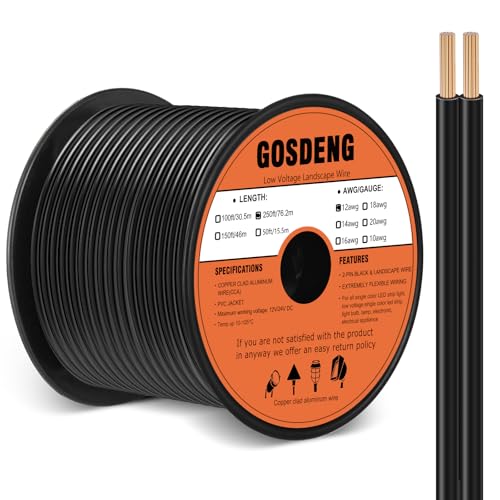
- Best for: Long, flexible runs with CCA conductor for light-weight installations on a budget.
- Why selected: Includes a 250 ft spool, black 2-conductor arrangement, and a flame-retardant, dampproof PVC jacket. Suited for broad landscape layouts where wiring must weave around features.
- Caution: Copper-Clad Aluminum (CCA) wires can have higher resistance than pure copper over very long runs; consider voltage drop calculations for extended layouts.
SUNVIE 12/2 Landscape Wire (250 ft)
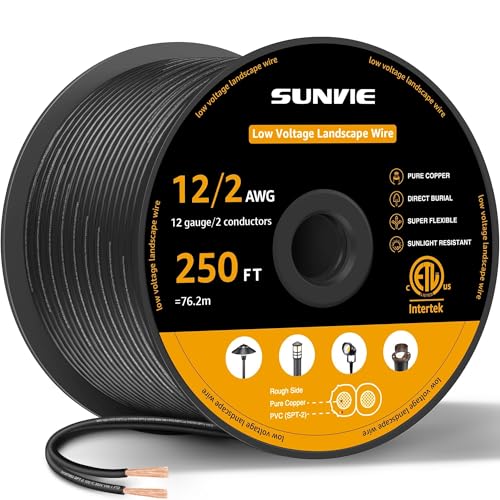
- Best for: Users who want Pure Copper for minimized voltage drop over long distances.
- Why selected: 100% pure copper, VW-1 fire resistance, and direct burial capability for outdoor lighting without protective conduit in many setups.
- Caution: Higher material cost than CCA options; plan budget accordingly if length is extensive.
SUNVIE 100 ft 12 Gauge Wire
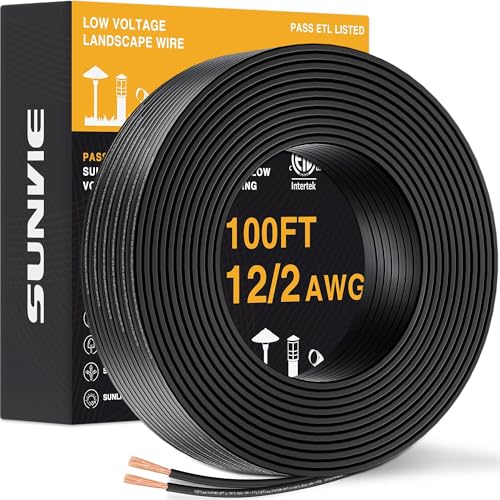
- Best for: Small-to-medium landscape projects requiring reliable conductivity in a 100 ft run.
- Why selected: 100% pure copper with direct burial suitability, providing consistent brightness and lower resistance in shorter lengths.
- Caution: The 100 ft length may still pose voltage drop considerations for high-load fixtures; plan runs to minimize total length from the transformer.
NAOEVO 18 Gauge Wire (100 ft)

- Best for: Automotive wiring or hobby projects where flexibility and smaller diameter are beneficial.
- Why selected: 18 AWG stranded tinned copper with high flexibility and IP68 waterproof jacket, rated up to 600V, suitable for low-voltage use in controlled environments.
- Caution: 18 AWG is thinner than typical landscape lighting conductors; consider load limits and potential voltage drop on longer runs.
Wirefy 14/2 Low Voltage Landscape Wire (100 ft)

- Best for: Residential projects with standard lighting like path lights and deck lighting.
- Why selected: 14 AWG pure copper, direct burial suitability, and easy handling for DIY installation.
- Caution: Slightly thicker insulation than thinner gauge wires; ensure connector compatibility with existing fixtures and transformers.
Buying Guide
What gauge should you choose? The gauge (AWG) determines current capacity and voltage drop. Heavier gauges (12–14 AWG) are better for longer runs and higher fixture counts, while lighter gauges (18 AWG) suit shorter, lighter-duty tasks. Direct burial suitability matters for exterior use; must resist moisture, sunlight, and abrasion. Copper versus copper-clad aluminum affects conductivity, weight, and cost. Pure copper minimizes voltage drop but costs more; CCA is lighter and cheaper but may require careful planning for long runs. Consider transformer wattage, total load, and run length to ensure adequate voltage at the farthest fixture. For DIYers, a 250 ft spool of 12/2 or 14/2 often covers typical yard projects with room to spare. For professional installations, verify building codes and burial regulations in your area.
Key considerations by scenario:
- Long runs (over 100 ft): Opt for 12/2 or 14/2 with pure copper if possible to reduce voltage drop.
- Direct burial: Ensure the cable jacket is rated for outdoor and soil exposure; UV resistance helps with sun exposure.
- Water exposure: Tinned copper or coated conductors offer improved oxidation resistance for damp environments.
- Wire flexibility: Higher strand counts yield more flexible cables, which eases routing around features.
- Budget vs performance: If cost matters more, CCA options can be acceptable for short to mid-length runs; for longer runs, prioritize pure copper.
Frequently Asked Questions
- What gauge should I use for a 25 ft run to one spotlight?
– For short runs, 14/2 or 12/2 is typically sufficient; consider 12/2 if planning more fixtures or potential future expansion. - Is pure copper cable necessary for landscape lighting?
– Pure copper minimizes voltage drop over longer distances, especially important in longer runs; consider CCA for budget-focused, shorter runs. - Can low voltage cable be buried directly in the ground?
– Yes, many low voltage cables are designed for direct burial, but verify the product’s UV resistance and burial guidelines. - How do I estimate voltage drop for a run?
– Calculate total load (watts) divided by voltage (volts) times the distance (feet) and refer to conductor resistance data; many manufacturers provide voltage drop charts for guidance. - What is the advantage of a higher gauge over a lower gauge?
– A higher gauge number indicates thinner wire; lower gauge (12, 14) conducts better over longer distances and supports higher loads with less voltage drop. - Are there safety considerations for low voltage landscape cable?
– Use a properly rated transformer, keep connections watertight, and bury cables to prevent physical damage and trip hazards.