Best Low Voltage Electric Motors for DIY Projects and Hobby Tech
Low voltage DC motors power a wide range of projects from small RC toys to educational science experiments. This guide highlights five practical motors suitable for beginners and seasoned makers alike, focusing on compact size, reliable torque, and broad compatibility with 1.5V–6V or similar power sources. Explore options for DIY cars, aircraft models, wind turbines, and classroom demonstrations. The selection emphasizes low noise, stable performance, and ease of integration with common components.
| Product | Voltage Range | Approx. Speed (RPM) | Notes |
|---|---|---|---|
| XYRSTOLR 5Pack DC Motor | 1V–6V | 5,000–20,000 | Small, high-torque, low-noise |
| Mudder 20 Pieces Micro Electric Motor | 1.5V–3V | 10,000–23,000 | Metal core, durable, versatile for kits |
| Topoox 6 Pack DC 3V 1730RPM | DC 1.5V–9V (typical use at 3V) | 1,730 | Great for mini fans and wind-turbine ideas |
| EUDAX 6 Set Rectangular Mini DC Motor | 3V | 24,000 | Plastic gears, high speed, multiple parts |
| Antrader DC Motor Mini 5V 6000RPM | 5V | 6,000 | Compact, useful for toys and experiments |
This table highlights five relevant options for typical low-voltage hobby projects. Each item below provides a concise overview of features, usage ideas, and compatibility with common DIY setups.
XYRSTOLR 5Pack DC Motor Overview

The XYRSTOLR package includes five mini DC motors designed for a wide voltage range of 1V to 6V. With speeds from 5,000 to 20,000 RPM, these motors offer strong torque for small DIY projects such as RC boats, airplanes, and model toys. The motors feature a galvanized steel housing with silicon copper rotors for efficient current use and a nylon back cover for durability. They are suitable for science experiments, classroom demonstrations, and hobby builds that require compact motors with reliable operation and low noise.
Key considerations:
– Voltage flexibility supports multiple power sources, including simple battery packs.
– Low-noise operation makes them suitable for indoor projects and quiet operation.
– Compact dimensions (approximately 21 mm diameter, 25 mm length) fit compact chassis and gear assemblies.
– The included 2 mm shaft supports common propellers and couplers, though you’ll need compatible adapters for some builds.
Mudder 20 Pieces Micro Motors

The Mudder set features 20 small DC motors rated for DC 1.5–3V with a typical speed around 10,000 to 23,000 RPM. These metal-bodied devices offer high torque for their size and are ideal for DIY toy cars, airplanes, and classroom experiments that demonstrate basic motor theory. The package’s small form factor and broad compatibility with low-voltage power sources make it convenient for rapid prototyping and STEM activities. The motors are described as low-noise with stable performance suitable for long-term use in projects.
Key considerations:
– High-speed potential supports dynamic propeller or gearing experiments.
– Metal construction contributes to durability for repeated assembly and disassembly.
– A broad set of units is useful for group projects or multiple prototypes in a classroom setting.
– Ensure appropriate voltage control to avoid overheating when used at upper RPMs.
Topoox 6 Pack DC 3V Motors
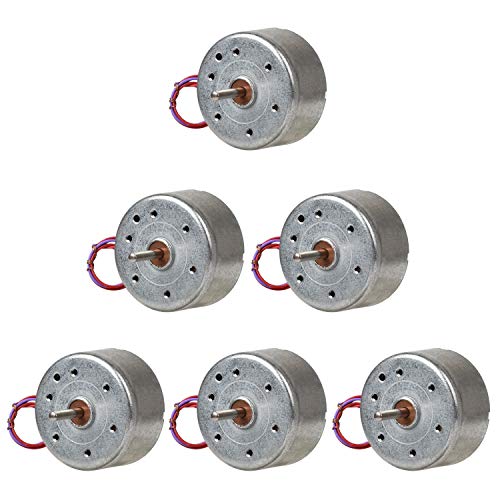
Topoox offers a six-pack of DC motors rated at 3V with a nominal speed of 1,730 RPM. They support a wide operating voltage range of 1.5–9V, making them versatile for STEM projects, mini fans, windmill demos, and small robotics. The motors have a 25 mm diameter housing and a 9 mm shaft, with installation considerations including a mounting hole distance of 15 mm. They’re easy to install and store, and they respond well to gentle use in educational kits or compact hobby builds.
Key considerations:
– 3V nominal operation is a common sweet spot for many micro projects.
– Moderate RPM balances torque and control for propellers and small fans.
– Easy installation makes them suitable for classroom demonstrations and quick prototypes.
– Protect from moisture or rust by sealing when stored for long periods.
EUDAX 6 Set Rectangular Mini Motors

The EUDAX 6-pack provides rectangular mini DC motors designed for DIY science projects with a 3V rating and a high 24,000 RPM speed. The kit includes 84 plastic gears, a battery holder, a boat rocker switch, and a shaft propeller. The motor body is 27 mm in diameter with a 15 mm mounting hole distance and a 10×2.0 mm shaft. Instructions emphasize careful circuit design to prevent short circuits and overheating, making this a robust choice for more complex projects that include gearing and power management.
Key considerations:
– High RPMs enable fast-driven experiments, such as propeller tests and small gearboxes.
– Gear and accessory components support more complex builds, including teaching gear ratios.
– Requires mindful wiring and protection to avoid overheating battery holders.
– The 27 mm body size fits moderately sized enclosures and project boxes.
Antrader Mini DC Motor 5V

The Antrader 5V micro motor is designed for DIY toys and educational experiments. At 5V operation and around 6,000 RPM, it provides a solid balance of speed and control for small fans, experimental devices, and classroom demonstrations. The motor comes with a 11 cm wire lead to simplify integration into circuits and prototypes. Its compact 24×12 mm body makes it a versatile choice for tight layouts and compact controllers, with straightforward drive compatibility for common battery packs.
Key considerations:
– 5V operation suits typical microcontroller projects and USB-powered prototypes.
– Moderate to high RPM supports quick demonstrations without heavy gearing.
– Wire leads simplify connection to breadboards or microcontroller pins.
– Sizing is appropriate for small propeller or gearing experiments.
Buying Guide: Key Purchase Considerations and Comparisons
- Voltage compatibility: Choose motors that match your power source—1.5V–3V units for smaller experiments and 3V–6V or 5V units for more robust DIY projects. Consider voltage margins to prevent overheating.
- Speed and torque: Higher RPM motors deliver faster movement but may require careful control; if torque is critical (tiny RC cars, gear reduction), prefer motors with higher torque specs or add a gear train.
- Size and mounting: Verify housing diameter, length, shaft size, and mounting hole spacing to ensure the motor fits your chassis or project enclosure.
- Noise and stability: Low-noise motors are preferable for classroom setups and indoor demonstrations. Look for stable performance under load and long-term use.
- Durability and materials: Metal housings and robust rotors tend to last longer in educational kits and prototype builds. Plastic gear motors are lightweight but may wear faster under heavy use.
- Accessories and gearing: Some kits include gears, battery holders, switches, and propellers. Assess whether you need these extras to complete your project without sourcing additional parts.
- Wiring and connections: Check lead length and connector types. Some motors provide bare leads, while others include integrated connectors or mounting hardware.
- Maintenance: Consider lubrication needs and serviceability. Some motors are designed to be low-maintenance, while others may require occasional lubrication for smooth operation.
- Safety and usage: Always operate at safe voltage levels and include current-limiting or protective circuitry to prevent short circuits and overheating in educational settings.
These considerations help compare options across different use cases—educational demonstrations, entry-level robotics, hobbyist builds, and simple wind or propeller experiments. The selected motors provide a spectrum from compact, low-voltage devices to higher-speed models suitable for more dynamic projects.