Best Low Voltage Baseboard Heater Thermostats for Precise Comfort and Savings
The best low-voltage baseboard heater thermostats combine reliability, energy savings, and easy installation. This guide highlights five top options for American homes, suitable for single rooms, whole-home setups, or commercial spaces. Whether you want smart control, mechanical simplicity, or precise digital programming, there’s a model that fits your needs. The following picks are organized to help you compare features, compatibility, and practical use cases at a glance.
Quick comparison table of selected products:
- Mysa Smart Thermostat LITE — Best for Wi‑Fi control and scheduling on 120V-240V baseboards
- Cadet T522-W Double Pole Mechanical — Best for quick, reliable one-for-all line-voltage installs
- Stelpro SWT1F Single Pole Mechanical — Best for versatile baseboard and fan-heater setups
- Honeywell Home RLV4305A1000 — Best for a digital, 5-2 day programmable schedule
- Emerson 1E30N-910 Mechanical — Best for simple operation in varied heating systems
Mysa Smart Thermostat LITE for Electric Baseboard Heaters
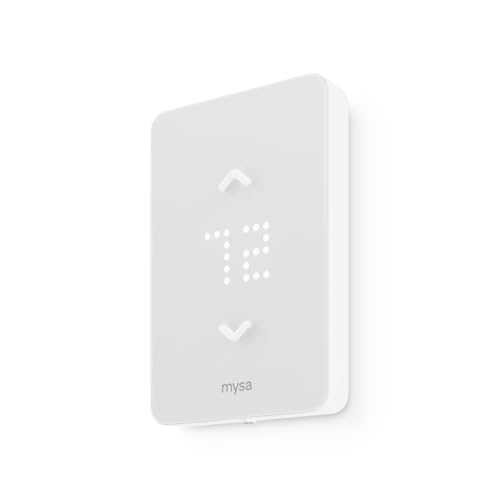
Best for homeowners who want Wi‑Fi control and scheduling without a hub. The Mysa LITE supports 120V-240V baseboards and offers 7-day scheduling with in-app control. It works with Apple HomeKit, Amazon Alexa, and Google Home for voice commands, and it also supports remote monitoring from anywhere with a Wi‑Fi connection. The product is ideal for smart home enthusiasts seeking energy savings by customizing daily routines and away modes. A potential limitation is reliance on a stable Wi‑Fi connection for remote features.
Cadet Double Pole Mechanical Wall Thermostat

Best for straightforward, reliable line-voltage control with simple installation. This double pole (4-wire) thermostat includes a positive off position and color-coded wiring for easier setup, making it a solid choice for replacing older line-voltage units. It’s suitable for both residential and some commercial applications where mechanical control is preferred. Caution: It relies on traditional wiring and does not offer smart features or app control.
Stelpro SWT1F Mechanical Line Voltage Thermostat

Best for versatile applications across baseboards and fan heaters. The SWT1F is a single-pole mechanical thermostat designed for 240‑volt operations, providing straightforward temperature adjustments and quick installation with a two-wire setup. It suits spaces where robust mechanical control is adequate and where compatibility with a wide range of heating products is desired. Limitation: Lacks digital scheduling or smart connectivity.
Honeywell Home RLV4305A1000 5-2 Day Programmable Thermostat

Best for a digital schedule with weekday and weekend options. The RLV4305A1000 is a 5-2 day programmable thermostat designed for electric baseboards and convectors. It emphasizes precise temperature control with minimal swings, aided by TRIAC switching for quiet operation. It’s a solid choice when a simple, battery-free or minimal-wiring installation is preferred, though it may lack the full smart-home integration some users want.
Emerson 1E30N-910 Low V Mechanical Thermostat
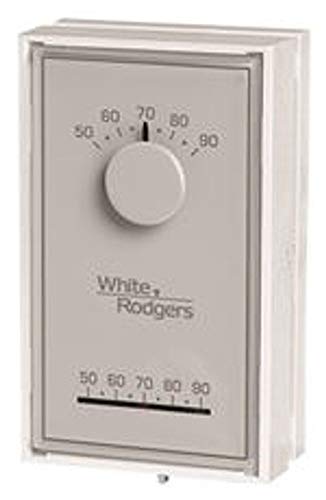
Best for varied heating systems that need a simple mechanical solution. The Emerson 1E30N-910 supports heat-only and millivolt systems and covers a broad operating range of 50–90°F, with robustness against vibration. It’s a practical option where mechanical controls are preferred or required by the installation environment. Caution: It may not offer the fine temperature control or smart features found in digital models.
Buying Guide
What to consider when choosing a low voltage baseboard thermostat:
- Voltage compatibility: Ensure the thermostat supports your baseboard system’s voltage (120V vs. 240V) and wire configuration (one-pole vs. two-pole).
- Control type: Decide between mechanical, digital programmable, or smart Wi‑Fi-enabled controls based on your desired level of automation and integration with other devices.
- Installation ease: Some units require two-wire setups; others need a neutral or additional conductor. Check your existing wiring before purchasing.
- Energy-saving potential: Programmable and smart thermostats can reduce heating costs by adjusting temperatures when rooms are unused or during away periods.
- Compatibility with home ecosystems: If you want voice control or routines, choose devices that work with HomeKit, Alexa, or Google Home.
- Reliability and maintenance: Mechanical models tend to have fewer failure points but lack remote access; digital models offer more features but require power and sometimes firmware updates.
Practical buying tips
- If you value remote control and scheduling, start with a Wi‑Fi thermostat like the Mysa LITE and verify it supports your exact baseboard voltage and wiring.
- For straightforward replacements without smart features, consider mechanical options such as the Cadet T522-W or Stelpro SWT1F for easy installation and dependable performance.
- For a digital schedule in a budget-friendly package, the Honeywell RLV4305A1000 provides reliable 5-2 day programming suitable for many homes.
- Check local codes and ensure the thermostat you choose matches the installation requirements of your baseboard system to avoid compatibility issues.
Frequently Asked Questions
- What is a low-voltage baseboard thermostat? — It’s a thermostat designed to control electric baseboard heaters that operate at higher voltage, typically requiring proper wiring and often two or more hot lines.
- Do smart thermostats work with baseboard heaters? — Yes, but ensure the model supports high/line voltage and the wiring in your system. Some are compatible with HomeKit, Alexa, or Google Home.
- Are mechanical thermostats better for reliability? — Mechanical thermostats are simple and less prone to software failures, but lack programmable features and remote control.
- Can I install these myself? — Many baseboard thermostats are designed for straightforward wiring, but some installations may require a licensed electrician, especially when dealing with high voltage or old wiring.
- Will a thermostat reduce my heating bill? — Programmable and smart thermostats can reduce costs by optimizing when and how heat is applied, though actual savings depend on usage patterns and climate.
- What should I check before buying? — Verify voltage, pole configuration, wiring needs, and whether you prefer mechanical or smart controls to fit your home.