Best Low RPM Wind Generators for Reliable Off-Grid Power
If you want efficient energy generation at low wind speeds, a low RPM wind generator can be the right choice. These models are designed to start generating power sooner, operate smoothly without gears, and resist harsh conditions. This guide highlights five options suited for different buyers: homeowners seeking quiet, residential setups; boaters and campers needing compact, reliable units; and off-grid enthusiasts aiming for durable, scalable systems. The following table summarizes key choices to help you compare at a glance.
- 12000W Low RPM Permanent Magnet Generator (48V) — Best for high-output off-grid systems
- 3000W Wind Turbine Generator Kit — Best for small households and compact installations
- 800W Horizontal Wind Turbine Generator — Best for homes, cabins, RVs, and limited spaces
- Lizponaza Wind Turbine 500W Vertical Axis — Best for low-noise operation in urban or quiet settings
- MKPARTY Micro Spiral Wind Turbine 50W — Best for multi-unit installations in tight spaces
| Product | Rated Power | Best For | Notes |
|---|---|---|---|
| 12000W Low RPM (48V) | 12 kW | High-demand off-grid systems | Gearless, water/wind turbine capable with rectifier |
| 3000W Wind Turbine Kit | 3 kW | Small homes, boats, terraces | Vertical axis, low start wind |
| 800W Horizontal Wind Turbine | 800 W | Residential yards, RVs | Low start wind, built-in controller |
| Lizponaza 500W Vertical Axis | 500 W | Quiet environments | Low-noise, two blades |
| MKPARTY 50W Spiral Turbine | 50 W | Urban rooftops, multiple units | Compact, scalable |
12000W Low RPM Permanent Magnet Generator (48V)

Best for high-output, off-grid setups. This gearless generator uses rare earth NdFeB magnets and copper windings to improve efficiency and matching with wind turbines or other generators. It features a die-cast aluminum shell for durability in strong winds and corrosion-resistant treatment for longevity. The design is simple and gearless, allowing direct drive by wind or water, making maintenance straightforward. Ideal for users who need robust, scalable power and straightforward operation.
Caution: The product specifies it requires an external drive/inverter and battery system to deliver usable AC power. Ensure you have compatible components for full system integration.
3000W Wind Turbine Generator Kit
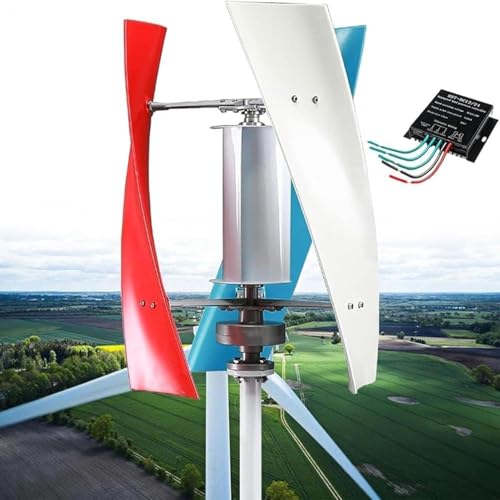
Best for small households, boats, cabins, or terraces seeking a compact, efficient wind source. The kit uses three-phase AC PMG with a low start wind speed and intelligent regulation to optimize current and voltage. Its three-blade rotor and automatic locking system reduce vibration and enhance wind resistance for stable operation. The design supports longer service life with a focus on easy maintenance and reliable performance in modest wind conditions.
Limitation: Designed for steady, moderate winds; very high gusts should be managed with proper mounting and protection systems to avoid over-speed conditions.
800W Horizontal Wind Turbine Generator

Best for residential use in yards or RV setups. This model starts generating at just 1.0 m/s wind, making it suitable for low-wind regions. It uses a three-phase AC disk generator and dual bearings for quiet, smooth operation. The six-blade design improves energy capture and reduces vibrations, while a durable housing protects against weather. It is ideal for homeowners seeking steady, low-noise power in everyday conditions.
Caution: Intended for off-grid or supplemental use; ensure you have a compatible controller and storage solution for sustained power delivery.
Lizponaza Wind Turbine 500W (Vertical Axis)

Best for low-noise operation in urban or quiet environments. The vertical-axis design uses a permanent magnet generator with two aluminum blades to deliver up to 500W. It emphasizes a compact footprint, easy installation, and durable operation with low-noise performance—less than 62 dB in typical operation. It is well-suited for rooftops, gardens, or hybrid solar-wind setups where space is limited.
Limitation: Vertical-axis units may produce less peak power in very high winds compared to larger horizontal designs, but they excel in steady, low-wind conditions.
MKPARTY Micro Spiral Wind Turbine

Best for space-constrained areas and scalable setups. This 50W turbine features a compact, spiral blade design and low-noise operation. It is suitable for rooftops, balconies, or street lighting, and multiple units can be connected in parallel to expand power generation. The three-phase permanent magnet generator provides efficient DC output that can be paired with controllers for off-grid use.
Limitation: The lower rated power means it suits smaller loads or aggregation with multiple units; single units may not cover larger energy needs without expansion.
Buying Guide: Key Considerations For Low RPM Wind Generators
- Power requirements: Match rated output to your daily energy needs and any storage capacity you plan to install.
- Wind site assessment: Consider average wind speeds, gusts, and turbulence. Low-start wind speed models excel in mild climates.
- System integration: Most low RPM generators require a compatible inverter, charge controller, and battery bank or grid-tacing solution. Gearless designs simplify maintenance.
- Durability and weather resistance: Look for corrosion-resistant housings, sealed bearings, and robust blade materials for long-term reliability.
- Noise and vibration: Vertical-axis and multi-blade configurations can reduce noise. Consider mounting and location to minimize disturbance.
- Scalability: If you anticipate growing your system, pick models that can be combined in parallel to increase total output.
FAQ
- What is a low RPM wind generator?
A generator designed to produce power efficiently at low rotational speeds, often using permanent magnets and gearless direct drive for simplicity and reliability.
- Do I need an inverter with these generators?
Yes. Most systems require an inverter and a battery or storage solution to deliver usable AC power, plus a controller to regulate charging.
- Are vertical-axis turbines quieter than horizontal ones?
Typically yes, due to different blade dynamics and reduced tip speeds, which can result in lower perceived noise in some setups.
- Can I install multiple units at once?
Yes. Several models support parallel installation to scale output, but ensure proper electrical integration and wind loading considerations.
- What maintenance is needed?
Regular inspection of bearings, housing seals, and electrical connections is recommended. Gearless designs reduce moving parts, but mounting and wiring must be checked periodically.
- Which model is best for a small cabin?
The 800W Horizontal Wind Turbine or the 500W Lizponaza Vertical Axis are strong candidates, depending on space and noise tolerance requirements.