Best Low Power RV Air Conditioners for Off-Grid Comfort and Easy Install
Discover efficient, low-power RV air conditioners that work with batteries, solar setups, or modest generators. This guide highlights five compact models ideal for off-grid camping, tiny living spaces, and vehicles where power is precious. Each option prioritizes energy efficiency, quiet operation, and straightforward installation. Best for: weekend campers with limited electrical capacity, small RVs or vans, and off-grid travelers needing reliable cooling without straining their power systems. The following comparison helps you choose by cooling capacity, power draw, and suitability for heating or off-grid use.
| Product | BTU / Heating | Power Type | Best For |
|---|---|---|---|
| Somokg 11,000 BTU + 4,500 BTU heating | Cooling 11k; heating 4.5k | 12V DC | Moderate-to-large small RVs or vans needing both cooling and heating |
| Gidrox 10,000 BTU 12V DC | Cooling 10k | 12V DC | Quiet all-night cooling on battery power |
| FO-KOKO 5,200 BTU Portable | Cooling 5,200 | 400W low power (portable) | Small tents, RVs, vans, quick setup |
| BougeRV 3,500 BTU | Cooling 3,500 | App-controlled portable | Very small spaces, quick cooling) |
| iRooVee 11,000 BTU + 3,500 BTU heating | Cooling 11k; heating 3.5k | 12V DC | Off-grid campers needing dual cooling/heating |
Somokg 11,000 BTU Ultra-Low Power Draw
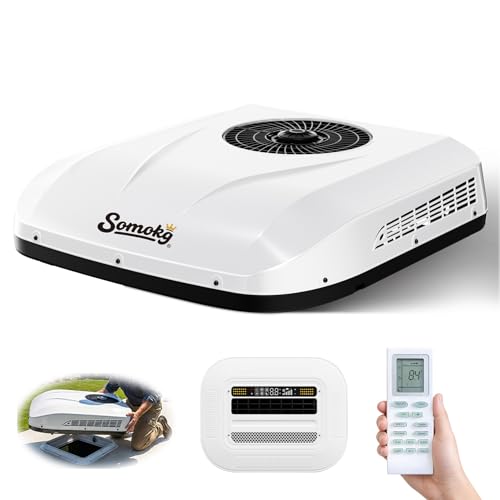
Cooling power: 11,000 BTU with soft start to reduce startup surge. Designed for off-grid operation, it supports 12 hours of Eco cooling with a 400Ah battery. Best for: mid-sized RVs or vans where power is limited but reliable cooling is needed. Limitations: primary heating is not stated; verify compatibility if heating is required.
Somokg 12V RV Air Conditioner With Heating

This unit blends cooling and heating (11,000 BTU cooling + 4,500 BTU heating) in a compact 12V package. It uses a soft start to lower power draw and runs on battery, solar, or generator with an Eco mode for extended operation. Best for: off-grid travelers seeking adjustable climate control. Caution: heating performance depends on ambient conditions and battery capacity; plan for adequate power reserves.
Gidrox 10,000 BTU 12V DC RV AC

Key features include 10,000 BTU cooling, inverter-based power management, and ultra-quiet operation around 40dB in Sleep mode. Best for: campers who want reliable nighttime cooling with minimal energy draw and quiet surroundings. Limitation: requires a suitable 12V power setup (battery capacity) to sustain all-night operation.
FO-KOKO 5200 BTU Portable Camping AC

Dual-loop water cooling, 5,200 BTU cooling, 400W power usage, and a compact 12.8×10.6×22.8 inch body make this a versatile option for tents, RVs, and garages. Best for: quick setup spaces where a window or roof unit isn’t feasible. Caution: water-cooled design may require space for condensate management and water supply.
BougeRV PC35 Portable 3,500 BTU
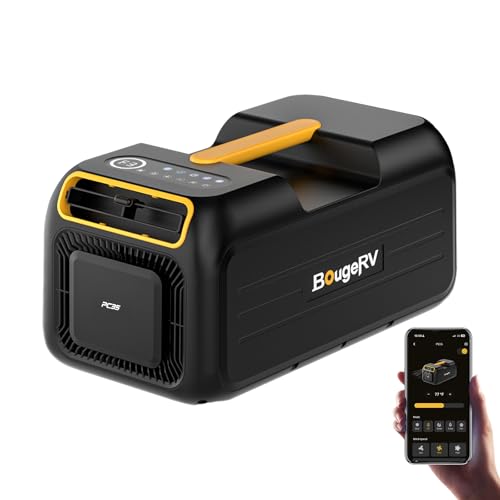
App-controlled portable unit offering 3,500 BTU cooling with up-to-date smart control. Best for: small tents or campers who want remote adjustment from an app within a short range. Limitation: smaller space coverage means suitability is best for compact setups.
iRooVee 11,000 BTU Cooling + 3,500 BTU Heating

Dual-function system delivering 11,000 BTU cooling and 3,500 BTU heating with a 12V power source. It emphasizes ultra-quiet operation (about 45dB) and is designed for off-grid use with battery power. Best for: mixed climates where heating and cooling are needed without extra equipment. Caution: ensure power capacity supports both modes during peak usage.
Buying Guide: Practical Considerations For Low-Power RV Air Conditioners
- Power availability: Match BTU needs to your battery bank and solar array. Higher BTU often means more power draw; look for soft-start and inverter efficiency to stretch battery life.
- Off-grid suitability: Check whether the unit is designed to run directly on 12V DC and whether it requires an inverter for AC operation.
- Noise levels: For campers, quieter models (below 40-45 dB) improve sleep and comfort. Consider fan design and compressor type.
- Heating capability: If you need year-round comfort, choose models with integrated heating or plan a separate heating strategy for cold nights.
- Portability and install: Portable units are easier to set up but require space and power. Rooftop units may need professional installation and roof clearance.
- Durability and environment: UV-stabilized housings and water-tight seals help in harsh climates; consider models with robust gasketing and weather resistance.
- Maintenance: Look for easy access to filters, coolant lines, and condensate drainage. Water-cooled designs require additional water management.
FAQs
- Can I run a 12V RV AC on a standard battery bank? Yes, if the system is designed for 12V DC operation and your battery capacity supports peak draw and runtime.
- Is heating available on all low-power RV AC units? Not all models include heating; only select units provide integrated heating or rely on external heaters.
- What is the typical runtime on Eco or Sleep modes? Eco or Sleep modes are designed to maximize efficiency, often delivering many hours of operation with a large battery bank.
- Do these units require professional installation? Some portable units require little to no installation, while rooftop or integrated systems may need mounting and electrical work.
- Are water-cooled portable ACs practical for all climates? Water cooling can improve cooling efficiency but adds maintenance for water management and condensate handling.
- Which model is best for off-grid vans? Models with low startup surge, solid battery compatibility, and quiet operation are typically best for off-grid vans. Consider a system with soft-start and inverter-based power management.