Best Low Noise 12V Power Supplies for Clean Audio and Reliable Electronics
Answering the need for quieter, more stable power, these low-noise 12V power supplies are designed to reduce ripple and interference for audio gear, video devices, and sensitive electronics. Ideal for audiophiles, video enthusiasts, and home theater builders seeking clearer sound, sharper video, and steadier operation. The top picks below cover switching and linear designs, multiple outputs, and various current capacities. Use this quick buying guide to compare options and choose the one that best fits your device and setup.
| Product | Best For | Why It Stands Out |
|---|---|---|
| iFi SilentPower iPower2 | Audiophile, studio setup | Active Noise Cancellation for ultra-low noise floor |
| iFi iPower X | Broad AV and electronics upgrades | Enhanced quiet power, versatile with many devices |
| WL-DP01 50VA Hi-Fi | Hi-Fi systems needing dual outputs | Three-level filtering; compact dual-output design |
| LitStar 12V 2A | LEDs, CCTV, general 12V devices | Automatic identification of required current |
| Emoryseric HiFi Linear PSU 24W | DAC, streamer, desktop audio | Dual outputs; true isolation and ultra-low ripple |
iFi SilentPower iPower2 — Low Noise DC Power Supply
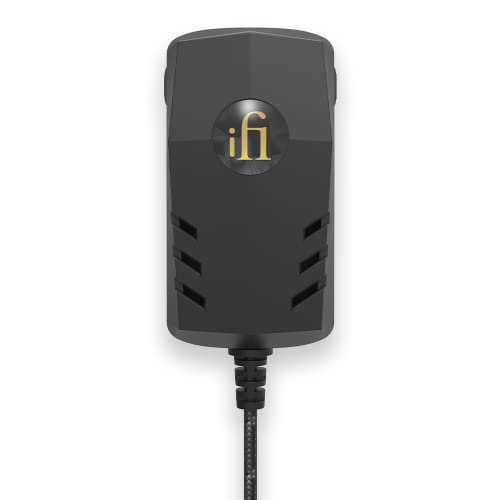
The iPower2 is designed to actively detect and remove unwanted electrical noise from typical wall warts and plugs, delivering a steadier DC output to sensitive devices. Best for turntables, DACs, media streamers, routers, and even LED lighting in studio environments. Key benefit is cleaner power that can reduce hum and digital interference, improving clarity in playback and video streams. A caution: select the correct size DC barrel adapter for your device to avoid polarity or fit issues.
Who it’s best for: Audio purists, home studios, and users with noise-sensitive gear seeking a quieter power source. The included adapter assortment adds flexibility for multiple devices.
What to know
- Active Noise Cancellation reduces spurious frequencies from household electronics.
- 4 DC barrel adapters and polarity options support common gear.
- Designed to upgrade stock power bricks, not as a universal charger.
iFi iPower X Low-Noise DC Power Supply
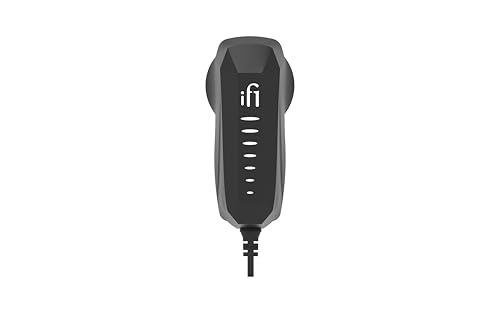
The iPower X offers a newly enhanced low-noise solution for a wide range of audio and electronics. It’s designed to eliminate noise from stock adapters, providing stable current for turntables, DACs, streamers, and more. Its Active Noise Cancellation reduces interference, yielding clearer sound and sharper video. Best for users who want improved sound detail and video fidelity with a single, compact power upgrade. A limitation is that performance depends on device compatibility with the included adapters.
Who it’s best for: Those upgrading from generic adapters who want a quieter, more reliable power source across AV and computer peripherals.
Key considerations
- Black version emphasizes discreet operation and compatibility with dark-room setups.
- Designed to pair with multiple device families for a cohesive power upgrade.
- Check device input requirements to ensure the right adapter is used.
WL-DP01 50VA Hi-Fi Ultra-Low Noise Linear Power Supply

This linear power supply emphasizes ultra-low noise with a three-level filtering design and high-quality regulation to minimize ripple. It features dual output sockets sharing total current, making it suitable for compact Hi-Fi setups that require two devices powered from one unit. Better for systems where one wall outlet must power multiple hi-fi components. Caution: the two outputs are not independent; they share power, so total current should be managed carefully.
Who it’s best for: Small to mid-size Hi-Fi setups needing clean, quiet power for two devices without adding multiple wall warts.
Filtering and stability
- Three-level EMI/capacitor/CLC filtering reduces ripple.
- Dual outputs simplify cabling and reduce wall-wart clutter.
- Not designed as fully independent regulator channels; monitor total current.
LitStar 12V 2A Power Supply

This AC adapter provides 12V at 2A with automatic current identification, helping to adapt to a range of devices such as LED strips, CCTV cameras, routers, and small electronics. It ships with multiple interchangeable connectors for flexible use. Best for users who want a universal solution across multiple 12V devices and DIY projects. Limitation: older or high-demand devices may still require higher current or specialized connectors not included in all bundles.
Who it’s best for: Home electronics users who want a flexible, plug-and-play 12V solution for a variety of devices and DIY projects.
LHY Audio Linear Power Supply 12V 50W (LPS50)

This linear power supply delivers ultra-low ripple and noise with a fixed 12V output and ±1% accuracy. It uses a multi-stage CLC filter and MOSFET stabilization to reduce interference, delivering clean current for DACs, preamps, and other Hi-Fi gear. Best for sensitive audio components where background noise can mask detail. Caution: only the 12V output is specified; other voltages are not supported on this unit.
Who it’s best for: Hi-Fi enthusiasts needing stable, quiet power for DACs, preamps, or desktop audio gear.
Emoryseric HiFi Linear Power Supply 24W
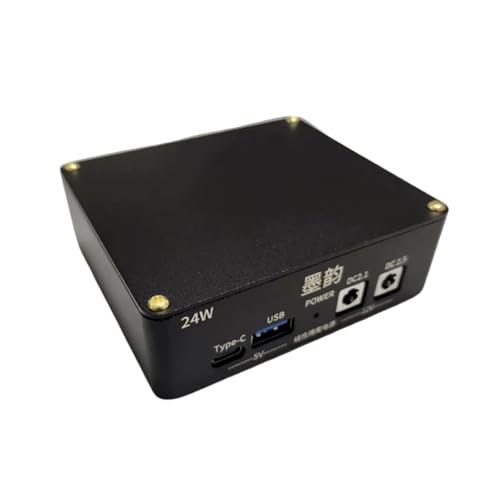
This dual-output PSU provides 5V 1A and 12V 2A, purpose-built for DACs, streamers, and R2R decoders. It emphasizes true isolation, ultra-low ripple, and a three-stage LCL filter to minimize ground noise and grain. Best for compact desktop systems requiring precise voltage for multiple Hi-Fi components. Limitation: the 5V port is optimized for low-current USB devices and may not support higher 5V/2A network devices.
Who it’s best for: Desktop hi-fi setups needing isolated, clean power for a DAC and a streamer or similar two-device configuration.
Buying Guide: Key Purchase Considerations
- Power needs: Match the supply’s voltage (12V) and current (A) to your devices’ requirements. Avoid underpowered units that limit performance.
- Noise performance: Look for features like Active Noise Cancellation or multi-stage filtering (CLC, EMI) for ultra-low ripple.
- Output topology: Decide between linear (generally purer) and switching (often lighter and cheaper) based on your sensitivity to hiss and your setup’s noise floor.
- Output options: Dual vs. single outputs, and whether outputs are independent or share current. Consider future expandability.
- Connectors and polarity: Ensure DC barrel size and polarity match your devices. Some kits include multiple adapters for flexibility.
- Isolation and grounding: True isolation helps minimize mains-related noise; verify design intents if you have a sensitive ground loop.
- Form factor and convenience: Size, cabling, and plug compatibility can affect placement and clutter in a rack or desk area.
- Compatibility: Some devices require exact current and voltage; verify with device manuals to prevent under- or over-voltage scenarios.
Frequently Asked Questions
- What is the advantage of a low-noise 12V supply for audio gear?
It reduces power-related hiss and ripple that can mask subtle details in music and film audio. - Do I need a linear or switching low-noise PSU?
Linear supplies typically offer lower ripple and quieter backgrounds, but switching units can be lighter and cheaper while still reducing interference. - Can a single 12V supply power multiple devices?
Yes, if the supply provides dual outputs or has enough current; monitor total current to avoid overloading. - What does “true isolation” mean in power supplies?
It means the transformer and regulation separate the device from mains noise, reducing ground noise and interference. - Are these power supplies compatible with Raspberry Pi or USB-powered gear?
Some units include USB adapters or 5V outputs suitable for USB devices; confirm adapter availability and amperage before use. - How do I choose the right adapter size?
Check your device’s DC jack size (diameter and polarity) and pick an option that fits securely and preserves correct polarity.