Best Low Energy Window Air Conditioners for Small Spaces and Bedrooms
Answering the search for a low-energy window air conditioner, this guide highlights compact models that blend efficient cooling with quiet operation and straightforward controls. These units are ideal for bedrooms, home offices, and small living rooms where conserving energy matters. Each product section explains who it’s best for, why it’s selected, and a practical caveat. A quick buying table follows to help you compare at a glance.
Summary Table of Chosen Products
| Product | Best For | Key Benefit | Energy Mention |
|---|---|---|---|
| Frigidaire 5,000 BTU Window AC | Small rooms up to 150 sq ft | Quiet operation, two fan speeds | Low noise 52 dBA |
| Midea 5,000 BTU EasyCool | Budget-friendly small spaces | 7 temp settings, easy controls | CEER 11.0 |
| GE Quiet Window Air Conditioner 5,000 BTU | Bedrooms and offices | Low noise modes, simple mechanical controls | Low 52 dBA mode |
| Amazon Basics 5,000 BTU Window AC | First-time buyers | 7 temp settings, washable filter | Two-speed cooling |
| TCL 5,000 BTU Window AC | Small rooms with flexible airflow | 4-way vent, energy-efficient | CEER 11.0 |
Frigidaire 5,000 BTU Window AC

Best for bedrooms and small living areas, this model cools up to 150 sq ft with two fan speeds and effortless temperature control. It emphasizes quiet operation at 52 dBA, making it a solid pick for light sleepers or offices. The washable filter supports easy maintenance and better long-term performance. Choose this if you value low noise and simple, reliable control.
Limitation: While energy-efficient for its class, it does not include smart features or remote control in the basic package.
Midea 5,000 BTU EasyCool Window AC

Best for tight budgets and smaller rooms, the Midea unit cools up to 150 sq ft with seven temperature settings and two speeds for cooling and fan modes. It features a reusable filter and easy-to-use mechanical controls. The unit carries a CEER of 11.0, signaling strong energy efficiency for its price range. Choose this if you want straightforward operation without digital controls.
Limitation: Mechanical controls may not satisfy users seeking app control or voice assistance.
GE Quiet Window AC 5,000 BTU

Best for nighttime use and small rooms, this GE unit cools up to 150 sq ft with two cooling modes and two fan speeds. Its mechanical controls keep setup straightforward and avoid beeps, while auto-restart adds convenience after power outages. This model suits bedrooms or offices where quiet, dependable performance is key.
Limitation: Lacks smart features or app connectivity; operation relies on traditional dials.
Amazon Basics 5000-BTU Window AC

Best for first-time window AC buyers and small rooms, this unit provides cooling and a fan-only mode with a washable filter. Seven temperature settings and two-speed options let you tailor comfort, while its straightforward controls support quick setup. Choose this if you want a simple, no-fruss experience with reliable maintenance.
Limitation: May lack some advanced energy-management features found in higher-end models.
TCL 5,000 BTU Window AC
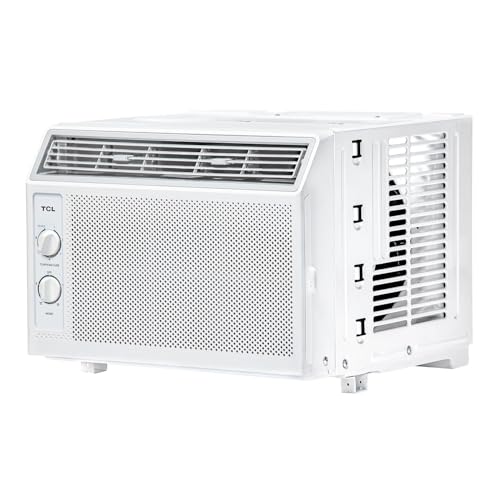
Best for flexible airflow and energy efficiency, this TCL model cools up to 150 sq ft and offers a four-way directional vent for targeted cooling. It emphasizes energy efficiency with a CEER around 11.0 and has multiple modes to adapt to different conditions. Choose this if you want easier airflow direction control and solid efficiency in a compact package.
Caveat: The unit focuses on efficiency and airflow versatility, but may lack smart home integration depending on the model configuration.
Buying Guide: Practical Considerations For Low Energy Window ACs
What room size should you target? For spaces up to 150 square feet, 5000 BTU units are typically appropriate. For larger rooms up to 550 square feet, consider a higher-capacity model with inverter technology, though this guide focuses on low-energy options for smaller spaces.
How important is energy efficiency? Look for CEER or EER values that reflect how well the unit converts electricity into cooling. Energy Star-rated models often offer better long-term savings, especially in rooms used most days.
What control style fits your lifestyle? Mechanical controls offer simplicity and reliability, while digital interfaces or app control can add convenience. For many users, quiet operation and consistent temperature are key considerations.
What about noise and comfort? Units with 52 dBA or lower are preferable for bedrooms. If the space doubles as an office, consider features like auto-restart and multiple fan speeds to maintain comfort without distraction.
Maintenance matters. Washable or reusable filters reduce dust buildup and improve efficiency. Regular cleaning helps sustain performance and extends the life of the unit.
Installation and compatibility. Ensure your window frame can accommodate a 5000 BTU model. Some units come with simple installation kits; others may require additional hardware. Always follow the manufacturer’s installation guidance.
Frequently Asked Questions
- What size window AC should I buy for a 150 sq ft room? Answer: A 5,000 BTU unit is typically suitable for rooms up to about 150 square feet, depending on insulation and sun exposure.
- Are inverter window ACs worth it for energy savings? Answer: Inverter models can adjust output to match cooling demand, often reducing energy use over time in larger or constantly used spaces.
- Do window ACs require professional installation? Answer: Most 5000 BTU units are designed for simple DIY installation with a standard window kit and level mounting.
- What maintenance is essential for efficiency? Answer: Regularly clean or replace filters, ensure drainage paths are clear, and keep condenser fins unobstructed for consistent performance.
- Can I use a window AC in a window with a crank open? Answer: Yes, but ensure the unit’s exhaust and seals align with the window design to avoid air leaks and reduced efficiency.
- Do all these models have a remote? Answer: Some units include basic remote control, while others rely on mechanical controls; check the product listing for specifics.