Best Low Current Amp Clamps for Parasitic Draw Testing
Whether you’re a professional automotive technician or a DIY hobbyist tracking parasitic draw, a low-current amp clamp helps pinpoint where unwanted drain originates. The following five clamps cover a range from ultra‑low 1 mA sensitivity to broader 60 A ranges, with practical notes on best uses and limitations. This guide helps you choose the right tool for small to medium electrical troubleshooting, battery maintenance, and motor or wiring issues.
At a glance, the table below highlights five options likely to match common needs: precise low-current measurements, portability, and ease of use. Use this quick reference to compare who each tool is best for and why it stands out.
| Product | Brand |
|---|---|
| Low Current Amp Clamp for parasitic Draw | Curien |
| Current Clamp Meter Leakage Current Tester 0mA-60A | Aramox |
| Hantek CC-65 AC/DC Multimeter Current Clamp Meter | Hantek |
| BSIDE Low Current Clamp Meter, DC/AC Amp with Smart Mode | BSIDE |
| TECPEL CA-60 AC/DC Current clamp Transmitter Probe | Tecpel |
Low Current Amp Clamp for Parasitic Draw

Best for: hobbyists and shop technicians testing parasitic draw directly at the battery cable. This model covers 10 mA to 80 A, making it suitable for small-to-medium component testing and general parasitic investigations. The clamp’s targeted low-current capability helps isolate small draws without needing to break the circuit.
Why selected: It emphasizes parasitic-draw testing at battery cables with a practical 10 mA sensitivity and a wide upper range. The design focuses on ease of use in automotive and electronics maintenance contexts.
Caution: Ensure the battery is safely disconnected during setup to avoid inaccurate readings from transient loads or misalignment of the clamp around the conductor.
Current Clamp Meter Leakage Current Tester 0mA-60A
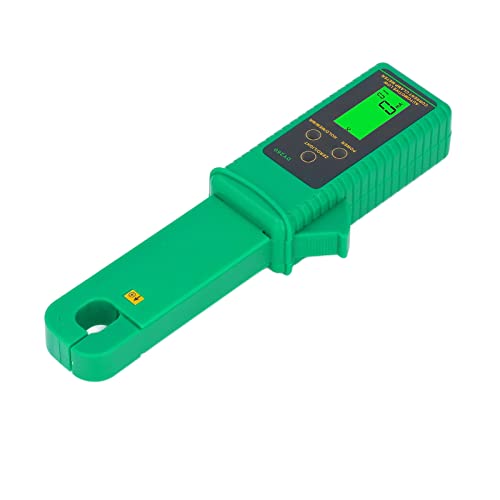
Best for: professionals checking automotive leakage, motor currents, and charger or startup currents with automatic AC/DC detection. Its 0 mA to 60 A range supports mid-size electrical systems and quick verification after repairs.
Why selected: The device is described as a practical, portable tester with automatic detection and a zero reference feature, making it convenient for field or shop use where quick checks of leakage and wire issues are needed.
Caution: This model may require careful handling when detecting very low currents near 0 mA, as ambient noise can affect precision; use proper grounding and shielding when necessary.
Hantek CC-65 AC/DC Multimeter Current Clamp Meter

Best for: users needing precise current measurements in motor drives and power electronics across AC and DC signals. The CC-65 supports up to 65 A and works well for automotive and industrial diagnostics where higher currents are common.
Why selected: It combines AC/DC current measurement with a broad frequency range, supporting more dynamic testing scenarios than basic clamps. It’s a solid pick for diagnostics on converters and controlled motors.
Caution: The upper end of the range may require careful placement around conductors to avoid tip- or jaw-induced measurement errors in tight spaces.
BSIDE Low Current Clamp Meter, 10mA Resolution

Best for: technicians needing high-sensitivity readings at low currents, especially for parasitic draw and micro-load tests. The 10 mA or 1 mA sensitivities enable nuanced measurement in automotive and electronics work.
Why selected: The model offers a rechargeable design and smart meters that simplify automatic measurements of voltage, resistance, and continuity, reducing setup time in field tests.
Caution: Sensitivity comes with susceptibility to external interference; use in a shielded environment or with proper grounding to minimize noise in readings.
BSIDE 1mA Clamp Meter, Smart Mode

Best for: pinpointing very small parasitic draws where milliamps matter, including battery preservation tests and electronics troubleshooting. The 1 mA sensitivity supports precise leakage checks.
Why selected: It pairs 1 mA sensitivity with smart measurement modes and rechargeable power, offering precise measurements without frequent battery changes during long sessions.
Caution: Not ideal for very high current measurements; stay within the device’s recommended range to avoid inaccuracies or overload.
BSIDE 1mA DC/AC Clamp Meter with LoZ

Best for: electrical testing where stray voltages could mislead readings; the low impedance mode helps identify ghost voltages and isolate true current draw.
Why selected: The dual-line display and low impedance mode provide clear, actionable data for diagnosing wiring issues and noisy circuits, making it easier to separate real current from phantom readings.
Caution: Low Impedance mode may reduce sensitivity for very small currents; use the appropriate mode based on the expected draw rate.
VIVANTECH High Accuracy Low Current Clamp Meter

Best for: automotive electrical diagnosis and power maintenance where accuracy matters from milliamp to tens of amps. The 1 mA resolution helps identify tiny leak currents and startup transients.
Why selected: It emphasizes high accuracy with dual AC/DC measurement, a backlit display, and convenient features like data hold and memory recall, supporting complex diagnostic workflows.
Caution: As with any high-accuracy meter, ensure proper jaw alignment and avoid clamping around multiple conductors or bundles which can skew results.
Buying Guide: How to Choose the Right Low Current Amp Clamp
What sensitivity do you need? If you regularly measure very small parasitic draws, choose clamps with 1 mA or 10 mA sensitivity. For general automotive diagnostics, 10 mA to 60 A ranges offer a balance of precision and range.
AC vs DC and automatic detection. Some clamps automatically detect AC or DC current, while others require manual selection. Consider your typical workflow and whether automatic detection saves time or adds a potential step for accuracy tuning.
Portability and form. Lightweight, handheld clamps with rechargeable batteries work well for field service. Larger clamps may offer higher current ranges but can be bulkier to carry in service kits.
Display and memory features. A backlit display, data hold, and memory recall simplify diagnostics in low-light environments and when you need to compare several readings side by side.
Low impedance mode. If you frequently encounter ghost voltages, a low impedance setting helps identify real loads versus stray potentials. This is especially useful in complex wiring and mixed systems.
Safety and setup. Always de-energize circuits before clamping around conductors that could pose hazards. Ensure the clamp is fully closed around a single conductor to avoid reading errors.
FAQ
-
What is a parasitic current clamp used for?
It measures small, unwanted electrical draws in a circuit or battery system to locate drivers of battery drain and improve efficiency.
-
How low should the current sensitivity be for automotive parasitic draws?
Commonly, 1 mA to 10 mA sensitivity is ideal for detecting tiny loads on automotive circuits, with wider ranges for higher currents from other components.
-
Is automatic AC/DC detection important?
It helps streamline testing, but ensure you understand how the device handles mixed or changing currents in your specific application.
-
What should I avoid when using a low-current clamp?
Avoid clamping around multiple conductors. Ensure the conductor is clean and isolated from nearby wires to prevent interference or inaccurate readings.
-
Can these clamps measure leakage on non-automotive circuits?
Yes. They are suitable for electrical maintenance, battery tests, and other circuits where small leakage currents matter, not just automotive scenarios.
-
What is the advantage of a rechargeable clamp?
It reduces downtime during field work and service calls, ensuring you can complete tests without frequent battery changes.