Best 48V Lithium Solar Batteries for Reliable Off‑Grid Power and Golf Cart Runtime
Answering the question for buyers seeking 48V lithium solar batteries: these options are best for home backup, solar storage, off-grid setups, and golf cart applications. The top picks below emphasize high cycle life, robust BMS protection, and real-time monitoring, helping you choose the right balance of capacity, safety, and expansion potential. This guide highlights five well‑rounded 48V lithium systems with practical buying considerations for home and mobile power needs.
| Product | Type | Capacity | Best For |
|---|---|---|---|
| OGRPHY 48V Lithium Golf Cart Battery | LiFePO4 Golf Cart | 105Ah | Golf cart owners needing high peak current |
| AOUSK 48V 314Ah LiFePO4 | Home Backup/Off-Grid | 314Ah | High-capacity solar storage, reliability |
| ECO-WORTHY Cubix100 48V 200Ah | Server Rack/Storage | 200Ah | Space-efficient solar or backup packs |
| DC HOUSE 48V 100Ah Pro | Golf Cart Battery | 100Ah | Durable golf cart upgrade with clear protection |
| TEMGO 48V 100Ah LiFePO4 Golf Kit | Golf Cart Upgrade Kit | 100Ah | All-in-one upgrade with charger and display |
OGRPHY 48V Lithium Golf Cart Battery

Best for: Golf cart enthusiasts who need strong hill-climbing power and long life. The OGRPHY 48V battery emphasizes a high 200A BMS with a peak current up to 1000A, ensuring strong acceleration and reliable performance on variable terrain. It uses premium LiFePO4 cells for safety and durability, with a stated 5kWh+ capacity equivalent, and a 50% longer surge capability compared with standard lithium options. It includes a touch monitor and a mobile app for monitoring and control. The 105Ah rating translates to substantial range for many mid-size carts.
Why selected: It targets golf carts specifically, with a controller compatibility focus and a robust protection scheme that sustains performance under demanding usage. The device is positioned for users who want a ready-to-use upgrade with integrated monitoring and a practical range estimate of around 50 miles for a 3kW motor under typical conditions.
Caution: The stated peak current is impressive, but real-world range and performance depend on motor size and driving style. Verify compatibility with your cart’s controller before ordering.
AOUSK 48V 314Ah LiFePO4 Battery
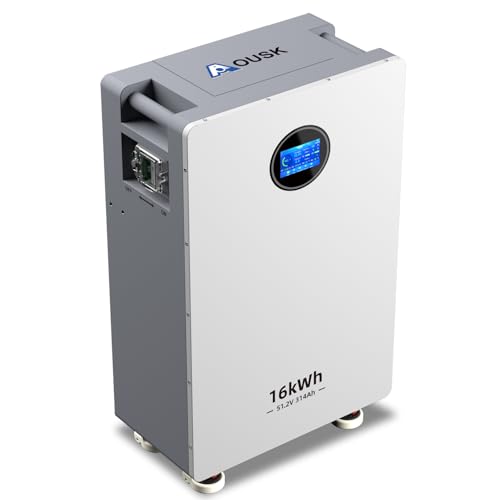
Best for: Home backup and off-grid solar systems requiring substantial energy storage. This 314Ah pack provides up to 16.07 kWh of capacity, enabling extended autonomy in backup or off-grid use. It uses a strong 200A BMS with six-layer protection and dual breakers for safety, and it supports real-time monitoring via a bright display or an app. The RS485/RS232 options allow integration with professional software for advanced system management.
Why selected: It emphasizes high durability, long cycle life (up to 8000 cycles at 80% DoD), and a scalable architecture suitable for whole-home storage. The combination of built-in breakers and multi-communication options makes it a flexible core for larger solar installations.
Caution: The heavier capacity unit may require appropriate mounting space and proper wiring planning, especially when paralleling multiple units for larger systems.
ECO-WORTHY Cubix100 48V 200Ah
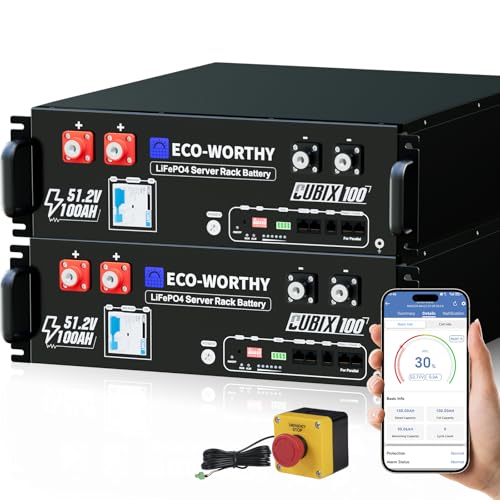
Best for: Space-efficient solar storage with strong safety certifications. This server-rack compatible battery includes UL9540 and UL1973 listings and can be expanded by paralleling up to 32 units for large capacity needs, potentially up to 163.8 kWh. It features Bluetooth and WiFi for monitoring via the ECO-WORTHY app and emphasizes closed-loop CAN/RS485 communication for smart inverter integration.
Why selected: Its rack-friendly form factor makes it ideal for homes with limited floor space or for professional installations in solar storage closets and small data centers. The addition of parallel expansion allows scalable growth as power needs rise.
Caution: Parallel expansion requires careful management of balancing across units; ensure proper wiring and safety protocols in your setup.
ECO-WORTHY Cubix100 48V 100Ah LiFePO4
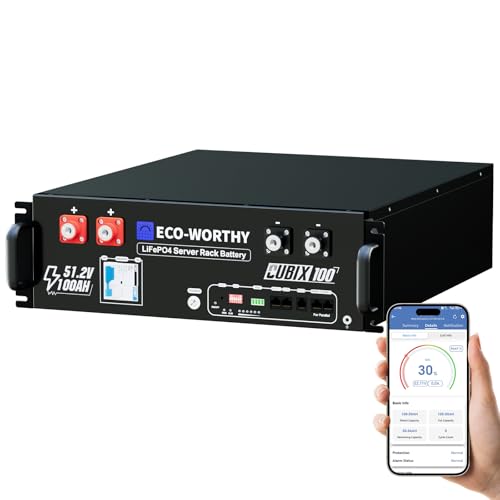
Best for: Compact server-rack style energy storage and moderate backup power. This 100Ah variant shares the same safety certifications as its larger sibling and supports parallel expansion up to 32 units. Bluetooth/WiFi monitoring plus RS485/RS232 connectivity makes it suitable for integrated solar setups and home backup networks.
Why selected: It provides a balance of compact size and scalable capacity, useful for users who want to start with a smaller pack but anticipate future growth in a solar or mixed-energy system.
Caution: As with the larger Cubix, parallel expansion requires careful system design to maintain even charging and safety across units.
DC HOUSE 48V 100Ah Pro Lithium Golf Cart Battery

Best for: Golf cart owners seeking a durable upgrade with strong protection and clear performance specs. This 48V LiFePO4 100Ah design includes a 200A BMS and a peak 670A capability, suitable for climbing and acceleration needs. It emphasizes a safer metal case and multiple BMS protections, including low/high temperature cutoffs and a one-key safety switch.
Why selected: The metal case and enhanced safety features aim to reduce swelling and extend life, while the high peak current supports robust performance in hilly or challenging terrains.
Caution: Proper fit is not guaranteed for all cart models due to varied battery compartment designs; verify compatibility before installation.
TEMGO 48V 100Ah LiFePO4 Golf Kit

Best for: Golf cart owners who want an all-in-one upgrade with charger, display, and app control. This TEMGO kit includes a 58.4V charger, a 2.8-inch LCD display, and Bluetooth connectivity, with a built-in 200A BMS to protect against common faults.
Why selected: The integrated package reduces compatibility concerns and provides real-time monitoring and safety features in a single purchase. It’s designed for straightforward installation and ongoing oversight via the app.
Caution: Check that the included charger is compatible with your cart’s charging system and wiring configuration to avoid bottlenecks or mismatches in charging rates.
Buying Guide
What to consider when selecting a 48V lithium solar battery system:
- Capacity and endurance: Choose total energy (kWh) and Ah ratings based on your typical daily load and desired autonomy. Higher Ah often means more long-term resilience for home backup or extended off-grid periods.
- Protection and safety: A strong BMS with overcharge/overdischarge, temperature, and short-circuit protections is essential, especially in multi-battery arrays or vehicle installations.
- Monitoring and connectivity: Real-time displays, mobile apps, and RS485/RS232/RS485 integration help you manage charging, health, and performance, particularly for remote installations.
- Expansion potential: If you expect your energy needs to grow, prioritize systems that allow paralleling multiple units with compatible communication protocols.
- Form factor and installation: Rack-compatible or compact packages suit limited spaces; ensure mounting and wiring compatibility with your setup (home closet, solar shed, or golf cart compartment).
- Cycle life and chemistry: LiFePO4 chemistry typically offers long cycle life and stability; compare cycle life claims to ensure long-term value against initial cost.
- Safety certifications: UL9540/UL1973 ratings and CEC compliance indicate alignment with recognized safety standards, especially for home energy storage.
FAQ
- What does 48V mean for a LiFePO4 battery system? — It indicates the nominal voltage of the cell chemistry and affects compatibility with inverters, chargers, and golf-cart controllers designed for 48V systems.
- Can multiple 48V packs be paralleled? — Yes, many models support parallel expansion, but ensure equalization and compatible BMS communication to prevent imbalances.
- Is LiFePO4 safer than lead-acid for solar storage? — Generally yes. LiFePO4 offers longer cycle life, stable chemistry, and reduced risk of gas buildup, with lower maintenance needs.
- Do I need a special charger for 48V LiFePO4? — Use chargers rated for LiFePO4 chemistry and matching system voltage. Some kits include chargers; others require a separate purchase.
- What’s the difference between a golf-cart battery and a solar storage battery? — Golf-cart batteries focus on high current delivery and rugged cycling, while solar storage batteries emphasize long energy storage, monitoring, and integration with home or grid-tied systems.
- How do I know if a battery fits my golf cart or home system? — Check the cart’s battery compartment size, mounting options, controller compatibility, and the battery’s physical dimensions and terminal configuration.