Best Lithium Race Car Battery Options for High-Performance Vehicles
If you’re upgrading a race car or a high-performance street vehicle, lithium batteries offer lighter weight, faster cranking, and longer life. This guide highlights five top lithium auto batteries, showing who they’re best for, why they stand out, and any trade-offs. It helps you compare size, CCA, capacity, and safety features so you can pick the right unit for your start/stop system, high-draw electronics, or race-day reliability. Suitable buyers include racing teams, performance enthusiasts, and owners seeking durable, maintenance-free power.
Product quick reference:
- Forgetyo GROUP 94R LiFePO4 12.8V 80Ah 1024Wh – Best for high current and start/stop vehicles requiring robust protection.
- TPE Car Start-Stop Lithium Battery GROUP 48 12V 60Ah – Best ready-to-use option with strong protection circuitry.
- Forgetyo GROUP 24 LiFePO4 12V 60Ah – Best balance of size, weight, and longevity for mid-size vehicles.
- Wuldnmar 12V Group 47 LiFePO4 Battery – Best for compact setups needing solid CCA and precise fit.
- EarthX ETX1200 LiFePO4 – Best lightweight option for experimental aircraft and race use with high reliability.
Forgetyo GROUP 94R LiFePO4 12.8V 80Ah 1024Wh Car Battery
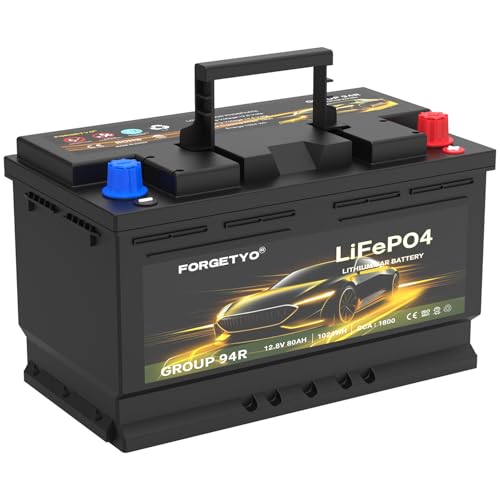
Best for: Vehicles with heavy electrical loads and start/stop functions that demand reliable power and strong safety protections. Why selected: It uses a LiFePO4 cell chemistry with a Battery Management System (BMS) and multiple protections (over/under temperature, over-discharge, over-charge, short circuit). The size and weight are appropriate for 94R group fits in performance cars that require high-current starts. Caution: Check your mounting dimensions and ensure adequate clearance for the 12.4 x 6.89 x 7.48 inch profile.
Key features: 12.8V, 80Ah, 1024Wh, 1800CCA; high cycling capability; designed for complex automotive electronics with high-power demands.
Limitation: Physically larger than some compact batteries; verify fit before purchase to avoid fitment issues in tight engine bays.
TPE Car Start-Stop Lithium Battery GROUP 48 12V 60Ah

Best for: Start/stop systems in mid-size cars that need quick installation and reliable BMS protection. Why selected: Ready-to-use lithium battery with no activation, maintenance, or added fluids; solid 12.8V output and 60 Ah capacity with 1100A CCA (up to 1300 CCA tested). The dimensions (10.8 x 6.9 x 7.5 in) fit many OEM compartments. Caution: Compare dimensions to your current battery, as slight variations can affect fitment in tight spaces.
Key features: 12.8V, 60Ah (max 60Ah), 1100A CCA, ready to install, intelligent protection against overcharge and overdischarge.
Forgetyo GROUP 24 LiFePO4 12V 60Ah Battery

Best for: Compact-to-mid-size vehicles that require a longer life and higher discharge capacity than traditional lead-acid. Why selected: LiFePO4 chemistry with a 60Ah rating and 1500CCA capacity, plus a recommendation that carbon- or lithium-specific charging methods be used for optimal life. Caution: While offering longer life, the 60Ah rating must align with the vehicle’s electrical demand; consider higher capacity if you run many electronic systems.
Key features: 12.8V, 60Ah, 1500CCA, longer service life (2–3x lead-acid), protective circuitry, dimension guidance on purchase.
12V BCI Group 47 LiFePO4 Battery – Wuldnmar
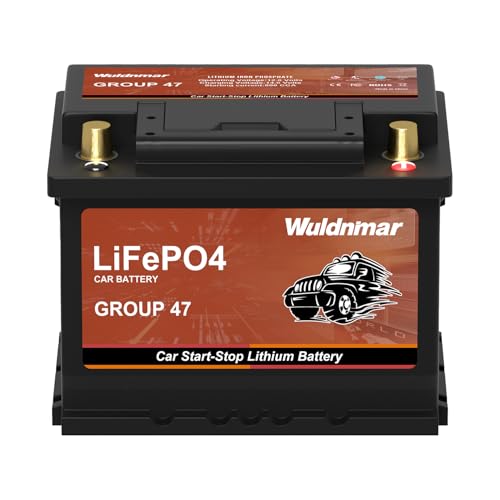
Best for: Race vehicles or compact cars needing dependable CCA with exact-fit dimensions. Why selected: 47 group size with 600 A CCA (up to 850 CCA tested) and LiFePO4 chemistry with a built-in BMS for safety. The unit is explicitly sized to fit common H5 terminals and mounting patterns. Caution: Check the old battery’s dimensions and terminal layout to ensure left/right polarity compatibility.
Key features: 9.60 x 6.92 x 7.75 inches, 600–850 CCA range, LiFePO4 with BMS protection, lighter weight than lead-acid equivalents.
EarthX ETX1200 Lithium LiFePo4 for Race Cars

Best for: Experimental aircraft and race cars needing a lightweight, high-reliability LiFePO4 option. Why selected: EarthX emphasizes a no-acid design, US assembly, and a 2-year full coverage warranty, which appeals to users seeking long-term simplicity and safety. Caution: This option may be larger than some ultra-compact race applications; verify fitment in tight installs.
Key features: No acid or lead; designed and assembled in the USA; 2-year warranty; LiFePO4 chemistry for stable power delivery.
Buying Guide
What matters most for a race car battery?
- Weight and size: Lighter batteries improve handling and acceleration, but must still fit the battery tray and connections.
- Cranking power: Cold-cranking amps (CCA) or peak current influence starting reliability under race conditions.
- Battery management system (BMS): Protects against overcharge, overdischarge, and thermal events; essential for high-load electronics.
- Cycle life: LiFePO4 generally delivers many more cycles than lead-acid, reducing replacement frequency.
- Charging requirements: Some lithium packs require specific chargers; verify compatibility with your charging system and alternator.
How to choose by vehicle type
- Start-stop engines: Prioritize high CCA and robust BMS protection; consider 60–80Ah ranges for strong cranking.
- High-draw electronics: Opt for higher capacity (Ah) and a battery designed for sustained power draw with stable voltage.
- Compact race cars: Look for a 47–48 group size with a tight fit and sufficient CCA for cold starts.
- Aircraft-style setups or extreme weight limits: Favor the lightest LiFePO4 options with proven reliability and a solid warranty.
Charging and maintenance considerations
- Use a charger compatible with LiFePO4 chemistry to preserve cycle life.
- Avoid full discharges; shallow cycles are better for longevity, especially in racing environments.
- Inspect connections for corrosion and ensure mounting hardware is secure to prevent vibration damage.
Summary table of selected products
| Product | Series / Size | Voltage / Ah | Best For | Notes |
|---|---|---|---|---|
| Forgetyo GROUP 94R LiFePO4 | Group 94R | 12.8V / 80Ah | High power, start/stop vehicles | 1800CCA, multiple protections |
| TPE GROUP 48 | Group 48 | 12.8V / 60Ah | Ready-to-use installation | 1100A CCA, solid protection circuit |
| Forgetyo GROUP 24 | Group 24 | 12.8V / 60Ah | Balanced size and life | 1500CCA, longer life |
| Wuldnmar Group 47 | Group 47 | 12.8V / 60Ah | Compact fit, solid CCA | 900–850 CCA range with BMS |
| EarthX ETX1200 | ETX1200 | LiFePO4 | Lightweight, high reliability | 2-year warranty |
Frequently asked questions
- Q: Are lithium race car batteries safer than lead-acid? A: Yes, LiFePO4 cells include protective electronics and are less prone to leaking or spilling, with lower heat generation when managed properly.
- Q: Do I need a special charger for LiFePO4 in a race car? A: Use a charger designed for LiFePO4 chemistry to protect capacity and life.
- Q: Will a lithium battery work with my existing alternator? A: In most cases yes, but verify the battery’s charging profile and ensure it doesn’t exceed your vehicle’s electrical system specifications.
- Q: How do I know if a battery will fit my car? A: Compare the group size, dimensions, and terminal layout with your current battery before purchasing.
- Q: Can lithium batteries be recharged quickly between races? A: Many LiFePO4 packs support fast recharging, but check the recommended charging rate and ensure your charger supports it.
- Q: What is the expected lifespan compared to lead-acid? A: LiFePO4 typically lasts 2–3 times longer in cycle life, with many cycles depending on use and charging practices.