Best Lithium Ion Solar Generators for Off-Grid Power and Camping
Answering the question “which lithium ion solar generator should I buy?” this guide highlights top picks, practical use cases, and clear buying considerations. It covers compact models ideal for camping, RV use, and home backup, with emphasis on portability, output, and battery chemistry. The featured products are suited for different buyers—from light hikers needing ultra-portable power to families needing sustained off-grid energy. A concise buyer’s table helps you compare at a glance and choose confidently.
| Product | Capacity | Weight | Best For |
|---|---|---|---|
| Jackery Solar Generator 300 | 300Wh | 7.5 lbs | Lightweight outdoor adventures |
| Generac 8025 GB1000 | 1086Wh | Heavy | Home backup and full-day campsites |
| EnginStar Portable Power Station | 296Wh | 6.5 lbs | Compact solo trips and CPAP use |
| MARBERO 237Wh | 237Wh | Light | Backyard and weekend trips |
| Apowking Portable Solar Generator 300W | 220Wh | 5 lbs | Budget-friendly backpack camping |
Jackery Solar Generator 300 With 40W Panel

The Jackery Explorer 300 pairs a 292Wh LiFePO4-based power station with a compact 40W solar panel. It weighs just 7.5 lbs and includes two AC outlets, a 100W USB-C PD port, two USB-A ports, and a 120W car port. Its 300W rated output (600W peak) supports laptops, drones, and cameras, while the LiFePO4 chemistry promises long life over thousands of cycles. Choose this for ultralight hikers, weekend campers, and travelers who want dependable power without bulk. A limitation is its modest total capacity, which may require solar charging during longer off-grid stays.
Generac 1086Wh Portable Power Station

The Generac GB1000 provides about 1086Wh of clean, emission-free power with fast charging options. It supports wall, solar, car, and generator inputs for versatile recharging, and its compact, durable design makes it suitable for both indoor and outdoor use. Best for home backups, RV trips, and extended camping where consistent energy is needed. A potential drawback is its higher weight, which reduces portability for solo hikers or tight-pack scenarios.
EnginStar Portable Power Station 300W
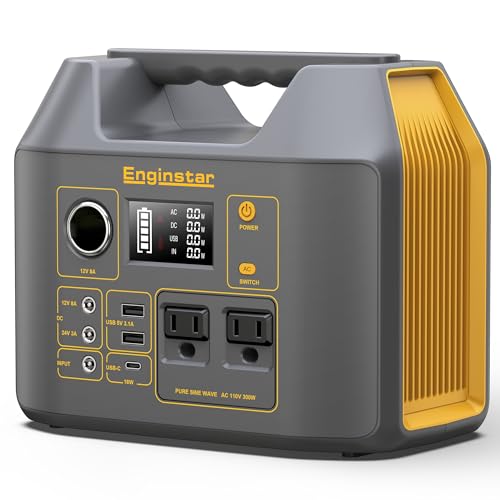
EnginStar offers a compact 296Wh unit with two 110V pure sine wave AC outlets, DC outputs, USB ports, and a USB-C fast-charge port. It weighs about 6.5 lbs and includes a readable LCD and built-in LED light. Best for small cottages or car trips where you need reliable, multi-port charging without carrying heavy gear. A limitation is the lower total energy capacity, which may require more frequent recharges on longer trips.
MARBERO 237Wh Solar Generator With Panel

The MARBERO M823 system includes a 237Wh Li-ion battery, 2 AC outlets (pure sine wave), multiple USB ports, and a foldable solar panel. It’s designed for small devices and off-grid camping, with LED flashlight modes for emergencies. It’s best for light travelers and overnight campers who need simple, all-in-one power on the go. A caveat is the limited peak output, which may not run high-watt devices simultaneously.
Apowking Portable Solar Generator 300W

Apowking presents a 220Wh solar generator with a 300W peak output and 40W solar panel included. It features seven outputs, including two AC outlets, USB-A and USB-C ports, and a DC car outlet. It’s positioned as a budget-friendly option for casual campers and emergency kits. Choose this if you want a compact, all-in-one kit at a lower price. A limitation is the smaller energy capacity which may require more frequent recharging on longer off-grid outings.
Buying Guide
- How to choose capacity: For weekend trips, 200–400Wh models are often sufficient; for full days away from power, 800–1200Wh or higher provides more flexibility.
- Output you need: Look for a mix of AC outlets, USB-C PD, USB-A, and car ports. If you use high-watt appliances, prioritize higher sustained output (rated watts) and surge capacity.
- Battery chemistry: LiFePO4-based packs tend to offer longer cycle life and stability. Verify cycle life expectations and real-world weight implications.
- Recharging options: Check solar panel compatibility, wall charging speed, and vehicle charging. Fast solar charging is a plus for longer trips.
- Portability vs. power: Weigh weight against capacity. Ultra-light options are ideal for backpacks, while higher-capacity units suit campers and homes.
- Build and safety: Look for BMS protection, over-discharge protection, and sturdy enclosures for outdoor use.
Frequently Asked Questions
- What is a lithium ion solar generator? A portable power station that stores energy in lithium-based batteries and recharges via solar panels or AC power for off-grid use.
- Do these devices run household appliances? Many models support small to medium devices; check continuous wattage and surge power for each appliance.
- Can I recharge with solar panels included? Some models include panels; others require separate purchases. Confirm panel compatibility and charge rates.
- Which capacity is best for CPAP machines? A device with 600–1000Wh typically covers multiple nights, depending on CPAP settings and usage.
- Are lithium ion generators safe for indoor use? Yes, many models are designed for indoor use with appropriate ventilation and the included safety features.
- What should I avoid when selecting a generator? Avoid models with insufficient port variety, low surge capacity, or poor build quality for your intended use.