Best Lithium Ion Battery for Solar: Top 5 Picks for Solar Power
Finding the right lithium ion battery for solar setups ensures reliable energy storage, extended cycle life, and safer operation. This guide highlights five prominent options designed to power outdoor lights, off-grid systems, and emergency solar arrays. Each pick balances capacity, durability, and compatibility to help you choose a solution that fits common solar applications in American households.
Overview of selected products: a quick reference to help compare core specs and potential uses at a glance. The table below lists each battery’s brand, typical application, capacity, and notable features.
| Product | Brand | Type | Capacity | Notable Features |
|---|---|---|---|---|
| QOJH 18650 Rechargeable Battery, 2 Pack | QOJH | 18650 Li-ion | 1800mAh each | Flat/ Button Top options; pre-charged; wide compatibility |
| NERMAK LiFePO4 12V 10Ah | NERMAK | LiFePO4 | 10Ah | Built-in BMS; long cycle life; safe storage |
| Hronn 18500 1400mAh | Hronn | 18500 Li-ion | 1400mAh | Low self-discharge; long life |
| KINREECELL LiFePO4 18500 1000mAh | KINREECELL | LiFePO4 | 1000mAh | 4 Pack; durable; suitable for outdoor lights |
| JESSPOW 18500 1600mAh | JESSPOW | 18500 Li-ion | 1600mAh | Button Top; high capacity for solar lights |
QOJH 18650 Rechargeable Battery, 2 Pack

QOJH’s 18650 rechargeable batteries are designed for a wide array of devices, including headlamps and solar lights. Each cell delivers up to 1800mAh capacity, with a compact 2.64 inch length and 0.7 inch diameter. The pack ships pre-charged and ready for use, making it a convenient plug-and-play option for outdoor solar lighting or portable electronics. Before purchasing, verify device compatibility with flat-top or button-top configurations and ensure the form factor matches your device’s battery bay.
Key usage notes: suitable for headlamps, flashlights, remote controls, mini fans, and solar-powered devices. The battery supports hundreds of recharge cycles, contributing to long-term cost savings. Potential users should confirm device compatibility and fitment to avoid misalignment with battery contacts or housing.
NERMAK LiFePO4 12V 10Ah Deep Cycle Battery
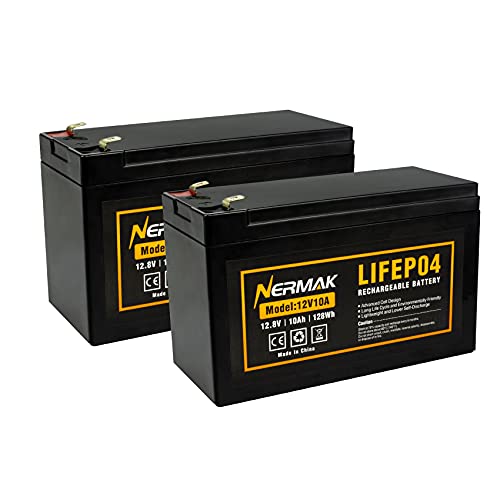
This 12V LiFePO4 battery from NERMAK is crafted for solar and off-grid setups, offering a robust 10Ah capacity with built-in BMS protection. Its safety features guard against overcharge, over-discharge, over-current, and short circuits while reducing self-discharge for storage stability. The battery’s long cycle life—well over 2,000 cycles—makes it a compelling option for solar-powered lighting, small RV systems, and backup power. When integrating, consider BMS compatibility with your charge controller and system voltage requirements.
Applications range from solar lighting and small RV power needs to backup power for electronics. While LiFePO4 chemistry provides excellent safety margins, ensure your equipment and wiring are rated for the voltage and current of this 12V model. Maintain proper venting and temperature considerations in outdoor installations.
Hronn 18500 1400mAh Li-Ion Battery
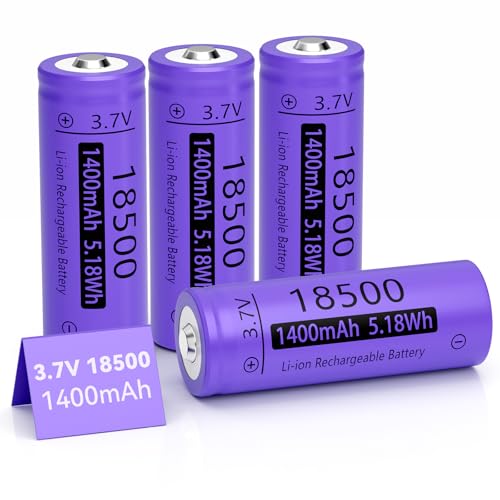
Hronn’s 18500 1400mAh rechargeable cells are tailored for outdoor solar lights and flashlights. The 18.5mm diameter and 50mm length fit devices designed for 18500 form factors, delivering reliable energy with low self-discharge. These cells emphasize longevity, offering up to about 1,000 charge-discharge cycles. They are a practical match for landscape lighting, solar garden lights, and portable lanterns that require consistent performance in variable weather conditions.
Consideration factors include compatibility with the device’s voltage, capacity needs, and the availability of spare cells for extended power needs. The product line emphasizes durability and reuse across outdoor environments, making them a standard choice for solar lighting installations needing dependable, repeatable power.
KINREECELL LiFePO4 18500 1000mAh Battery Pack

This Kinreecell 18500 LiFePO4 battery offers a compact 1000mAh capacity across a 18500 size, designed for outdoor solar lights and garden lighting. The 3.2V chemistry provides stable voltage, with a long cycle life and up to around 1,500 cycles. The battery’s design focuses on low self-discharge, helping maintain charge during periods of storage. It’s a strong option for solar lamp posts, path lights, and other landscape lighting systems where space is constrained but reliable power is needed.
Usage considerations include ensuring the device is rated for 3.2V LiFePO4 chemistry and confirming the fit of 18500 dimensions. For multi-battery installations, plan for consistent capacity across cells and use a compatible BMS to protect the pack in mixed-use environments.
JESSPOW 18500 1600mAh Battery Pack

JESSPOW’s 18500 button-top batteries provide 1600mAh at 3.7V, making them suitable for solar lights, garden lights, and security system panels. The button-top configuration can simplify installation in devices with top-contact terminals. These cells are intended for high-drain usage and deliver reliable energy for longer lighting runs. When selecting, verify the device’s compatibility with 18500 size and assess whether a higher-capacity option might reduce replacement frequency in demanding outdoor applications.
Consider the device’s voltage requirements, the presence of a protective circuit, and compatibility with any charging hardware. The button-top design can be advantageous in compact housings, but ensure good contact with battery terminals to avoid intermittent power delivery.
Buying Guide: Key Factors To Consider
- Chemistry: Li-ion (3.7V nominal) versus LiFePO4 (3.2V nominal) impacts voltage, cycle life, and safety. LiFePO4 generally offers longer life and safer discharge, while Li-ion variants can provide higher energy density.
- Form Factor: Confirm the exact size (e.g., 18650 vs 18500) and top configuration (flat vs button top). Mismatches can prevent devices from functioning or cause contact issues.
- Capacity and Cycle Life: Higher mAh means longer runtime per charge, but real-world performance depends on discharge rate and device load. Look for cycle counts (e.g., 1000–2000+ cycles) for long-term savings.
- Protection and Safety: Built-in BMS or protection circuits help prevent overcharge, short circuits, and deep discharge. This is essential for solar storage used in outdoor environments.
- Compatibility: Verify device compatibility with voltage, chemistry, and charging methods. Some solar lights and controllers expect specific chemistries and voltages.
- Storage and Maintenance: Consider self-discharge rates and storage duration. LiFePO4 cells typically store longer with less capacity loss over time.
- Cost of Ownership: While higher-capacity or safer chemistries may cost more upfront, they can reduce replacement frequency and maintenance in off-grid setups.
- Warranty and Support: Check manufacturer warranties and return policies, especially for batteries used in critical solar lighting or backup power.
Choosing the right battery depends on your solar system’s voltage, the load profile, and how often you can replace or recharge cells. For outdoor installations, prioritize safety features, weather resistance of the pack, and a robust BMS to protect against harsh conditions. If your setup includes multiple devices, a consistent chemistry across cells simplifies management and maintenance.