Best Lithium Deep Cycle Battery Chargers for 12v/24v Systems
Finding the right lithium deep cycle charger helps extend battery life and maintain peak performance for RVs, boats, off-grid setups, and solar installations. This guide reviews five top chargers that support LiFePO4 and other deep-cycle batteries, balancing fast charging, safety protections, and maintenance features. Each option is suitable for 12V or 24V systems, with smart charging, temperature compensation, and automatic shutoffs to prevent overcharging. Read on to compare capabilities, then use the Buying Guide to pick the best match for your needs.
| Product | Brand | Battery Type | Max Current | Notes |
|---|---|---|---|---|
| YONHAN 25A Battery Charger & Maintainer | YONHAN | LiFePO4, Lead-Acid, AGM, Gel | 25A (12V) / 15A (24V) | Five current levels, Booster mode |
| HTRC 20-Amp Smart Battery Charger | HTRC | LiFePO4, Lead-Acid, AGM/Gel | 12V 20A / 24V 10A | 7 protection levels, automatic detection |
| NOCO GENIUS1 | NOCO | Lead-Acid, LiFePO4 | 1A | Maintainer, desulfator, thermal sensor |
| LiTime LiFePO4 12V 20A Charger | LiTime | LiFePO4 | 20A | 0V wake-up, Anderson connector |
| lifepo4 Charger 16-Amp Fully-Automatic | Dght | LiFePO4, Lead-Acid | 16A | 10-stage charging, pulse repair |
The following sections highlight five carefully chosen models, detailing key features, compatibility, and practical considerations to help determine the best fit for your lithium deep-cycle needs.
YONHAN 25A Battery Charger & Maintainer

The YONHAN charger combines 12V and 24V charging with five current settings (2A, 8A, 20A, 25A, and Auto) to accommodate a wide range of batteries, including LiFePO4, AGM, GEL, and flooded lead-acid types. Its 5-level adjustable current helps tailor charging to the battery’s capacity, potentially extending life and reducing charging time. A Booster mode accelerates charging for 12V batteries when time is critical. The device operates from standard 100-240V input, simplifying use in homes, garages, or marinas. It supports charge and repair cycles across various deep-cycle configurations.
HTRC 20-Amp Smart Battery Charger
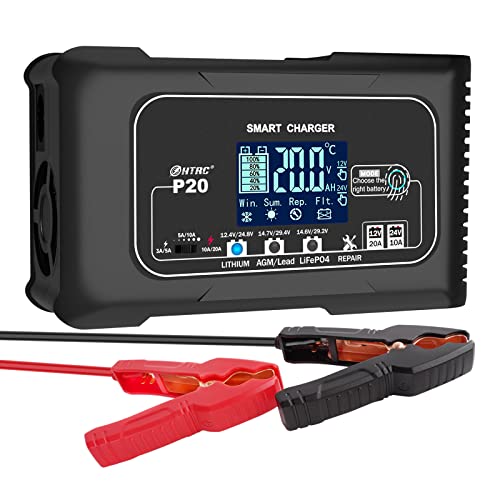
The HTRC charger detects 12V and 24V batteries automatically, with a 7-level protection and charging strategy designed to maximize life and safety. It delivers 12V charging at up to 20A and 24V charging at up to 10A, making it suitable for cars, motorcycles, boats, and golf carts with LiFePO4 or lead-acid chemistries. Features include temperature compensation, cooling, over-current and short-circuit protection, and a reliable 13-foot cable. The unit automatically switches to trickle charging when full, helping maintain battery health without user intervention.
NOCO GENIUS1: 1A Smart Charger

NOCO GENIUS1 is a compact, automated charger and maintainer for 6V and 12V lead-acid and LiFePO4 batteries. It combines a trickle charger, desulfator, and maintenance mode into a single unit, with an integrated thermal sensor that adjusts charging based on ambient temperature. This helps prevent overcharging in hot environments and undercharging in cold ones, supporting longer battery life with minimal oversight. It’s suitable for a range of batteries including flooded, AGM, and LiFePO4, and it provides precision charging with safety protections.
LiTime LiFePO4 12V 20A Charger

The LiTime charger is designed specifically for LiFePO4 12V systems, delivering 20A for fast charging up to 14.6V. It includes an 0V wake-up feature to revive deeply discharged LiFePO4 cells and maintains compatibility with off-grid and solar installations. The charger features an aluminum housing with a cooling fan and LED indicators for straightforward monitoring. An Anderson connector supports easy connections to large battery packs, and the unit meets FCC/CE/RoHS standards for safety and reliability.
lifepo4 Charger 16-Amp Fully-Automatic
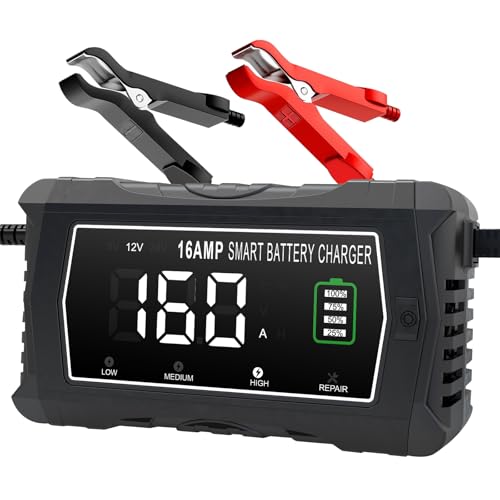
This 16A charger blends a 10-stage charging process with a 6V/12V/24V selection, covering LiFePO4 and lead-acid chemistries. It emphasizes safe, efficient charging with a dedicated trickle/float mode after full charge to preserve battery health during idle periods. The pulse repair function helps address sulfation and acid stratification to extend battery life. It is not a jump-starter, but an advanced charging solution for maintenance and restoration in automotive, marine, and deep-cycle applications.
Buying Guide: Key Purchase Considerations
When selecting a lithium deep-cycle charger, consider the following factors to ensure compatibility and reliability for your setup:
- Battery chemistry and voltage compatibility: Confirm support for LiFePO4 and other chemistries you use (lead-acid, AGM, Gel, VRLA). Ensure the charger matches 12V or 24V systems and can handle LiFePO4 charging profiles.
- Charge current and profile options: Higher amperage enables faster charging but may not suit small batteries. Look for chargers with adjustable current or intelligent auto-detect features to optimize charging for battery size and state of charge.
- Smart protections: Essential protections include over-current, over-voltage, short-circuit, reverse polarity, temperature compensation, and spark-free connections. These features protect both the charger and battery, especially in harsh environments.
- Maintenance and desulfation: Trickle or maintenance modes keep batteries topped off, while desulfation or pulse repair features can help revive aged or sulfated cells, extending life for deep-cycle systems.
- Temperature management: Temperature sensors and compensation prevent overheating and undercharging, preserving capacity and cycle life in varying climates.
- Build quality and connectors: Durable enclosures and reliable cables, along with convenient connectors (Anderson, 1-4 USB, or standard clamps), improve usability in RVs, boats, or off-grid cabins.
- Automatic operation vs. manual settings: Automatic charging reduces guesswork and protects against overcharging, while manual modes offer customization for specialty batteries or uneven usage patterns.
- Size, weight, and mounting: For mobile setups, consider compact units with secure mounting options to minimize space and vibration exposure.
Practical guidance: For large LiFePO4 banks or solar-based off-grid systems, prioritize chargers with higher amperage (20A+), robust protection, and 12V/24V versatility. For occasional maintenance or small battery banks, compact units with 1–2A to 6A may suffice. Always verify that the charger’s voltage and charge profile align with your battery’s BMS requirements to avoid bypassing protections or causing degradation.
Overall, choosing a charger with automatic detection, safe charging limits, and a proven track record helps ensure reliable performance across seasons and usage scenarios. The models reviewed here provide a mix of fast charging, smart maintenance, and battery-preserving features that suit most residential, marine, and automotive deep-cycle needs.