Best Level 2 Charger Outlet Options for Home EV Charging
Home charging is a cornerstone of convenient electric vehicle ownership. This guide highlights top Level 2 charger outlets that deliver faster charging, robust safety features, and easy installation for American households. Each product profile covers compatibility, power output, and ease of use so you can compare options at a glance. The following selections emphasize reliability, smart features, and practical cables for everyday charging at home, apartment complexes, or small businesses.
Summary of chosen products:
- AIMILER Level 2 EV Charger with 32A, 25ft Cable, 220-240V, J1772 Connector
- EMPORIA Level 2 EV Charger with 48A, 25ft Cable, WiFi Enabled
- ELEGRP Level 2 EV Charger 40A, 25ft Cable, J1772, NEMA 14-50
- bokman Portable Level 2 & Level 1 Charger, 16A, 20ft Cable
- EMPORIA Level 2 EV Charger (Another 48A option), 25ft Cable
Product Overview And Buying Context
Level 2 charging typically uses a 240V supply and NEMA 14-50 or similar outlets, delivering significantly higher power than a standard household outlet. When evaluating Level 2 charger outlets, consider amperage (which determines charging speed), connector compatibility (J1772 is standard in North America, with adapters available for Tesla), cable length, and whether the unit is hardwired or plug-in. Safety certifications, such as UL and SAE J1772, help ensure reliable operation and protection for both your EV and home circuits. The best choice depends on your vehicle, home electrical panel, and whether you prefer a plug-in or hardwired installation.
Overview Of Product Features And Compatibility
The following profiles cover five Level 2 charging options popular in American households. All offer J1772 connectors and are ETL- or UL-listed, with varying amperage, cable length, and installation flexibility. Each profile references the key features that influence charging speed, safety, and user experience.
AIMILER Level 2 Charger With 32A Power

The AIMILER unit ships with a 32A maximum output on a 40A circuit, enabling faster charging over standard outlets. It uses a 25ft cable and includes a J1772 connector, compatible with a wide range of North American EVs and PHEVs. The charger supports adjustable amperage via the control button and an accompanying app, enabling pre-setup charging and remote management. Note that some adapters and configurations depend on your home wiring, and Tesla vehicles may need a J1772-to-Tesla adapter for use with this unit. The device adheres to relevant SAE and UL safety criteria, offering robust protection and stable performance.
EMPORIA Level 2 EV Charger – 48A
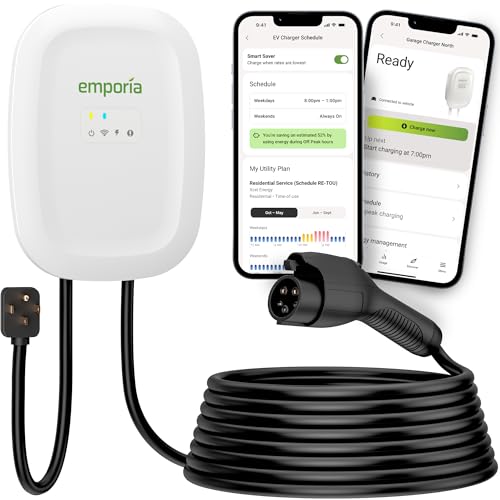
EMPORIA’s Level 2 charger provides up to 46 miles of daily driving support per hour of charging on a 48A hardwired configuration, or through a NEMA 14-50 outlet at 40A with a 25ft cable. It is UL listed and ENERGY STAR certified, aligning with NEC 625 and SAE J1772 standards. This model emphasizes installation flexibility, allowing easy plug-in use or hardwiring for higher amperage, making it suitable for homes planning future upgrades or more demanding EVs. WiFi-enabled features enable remote operation and monitoring through the EMPORIA ecosystem.
ELEGRP Level 2 Charger – 40A

ELEGRP’s 40A Level 2 charger delivers up to 9.6kW, with a 25ft J1772 cable and a NEMA 14-50 plug. It emphasizes quick, plug-and-play setup and includes LCR tech for improved conductivity and cooler operation. The unit is ETL certified and UL-listed across the charger components, reducing concerns about safety and reliability. A two-year warranty covers non-misuse issues, underscoring the brand’s commitment to customer support.
bokman Portable Level 2/Level 1 Charger – 16A

The bokman charger focuses on portability with a 20ft cable and a compact carrying bag. It supports Level 1 and Level 2 charging, offering adjustable current from 6A to 16A, and includes adapters for NEMA 5-15 and NEMA 6-20 outlets. The design emphasizes rugged durability with IP65 protection and multiple safety safeguards. It is well-suited for travelers, apartments, or backup charging where a full homeinstallation isn’t practical.
NEMA 14-30 Level 2 Charger – SEGUMA

SEGUMA offers a 24A Level 2 charger designed to plug into a NEMA 14-30 dryer outlet, a common 240V option in many homes. It provides adjustable current settings (10A/16A/20A/24A) to match circuits, along with a J1772 connector compatible with a broad range of non-Tesla EVs. Tesla owners may require adapters. This model emphasizes convenience by avoiding complex electrical work and leveraging existing laundry-room outlets for faster charging.
EVDANCE Level 2 Charger – 24A
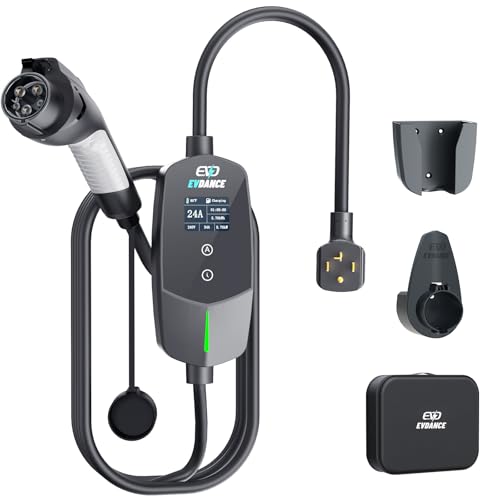
EVDANCE delivers 24A charging through a NEMA 14-30 outlet, with a 25ft reach and a J1772 connector. It emphasizes a plug-and-play approach without requiring garage rewiring, making it popular for home garages and laundry rooms. The unit supports speed control from 10A to 24A and offers smart features to monitor voltage, current, and energy usage. It is designed for non-Tesla EVs and works well for households seeking straightforward installation with solid safety protections.
ChargePoint HomeFlex Level 2 – Hardwired

ChargePoint’s HomeFlex stands out with a flexible approach to home charging. It can be hardwired or used with a NEMA 14-50 outlet, depending on your installation plan and electrical panel capacity. The unit integrates with the ChargePoint mobile app for charging control, reminders, and network access, plus access to ChargePoint’s extensive network of public charging stations. While WiFi helps with features and troubleshooting, the core charging performance remains strong at up to 40A through the network-ready charger. This option is ideal for users seeking a scalable, cloud-enabled charging ecosystem.
Buying Guide: Key Purchase Considerations
- Amperage and charging speed: Higher amperage (40A–48A) delivers faster charging but requires a capable circuit and, often, hardwiring. If your EV supports higher rates and you plan to park for longer sessions, prioritize 40–48A models.
- Plug-in vs. hardwired: Plug-in units offer flexibility and easier installation, while hardwired models can be more compact and may provide cleaner aesthetics and potentially improved reliability on longer-term installations.
- Cable length: Choose a length that fits your parking location. Longer cables increase flexibility but can add weight and cost.
- Connector compatibility: J1772 is standard for most North American EVs. Tesla owners may need adapters; consider models that advertise adapter compatibility or built-in support for Tesla via adapters if needed.
- Smart features and app support: WiFi-enabled chargers provide remote monitoring, scheduling, and usage data. Ensure your home network supports the device and that the app offers the features you require.
- Safety certifications: Look for UL or ETL listings, SAE J1772 compatibility, and other safety certifications to ensure compliance with electrical codes and safety standards.
- Installation considerations: If you lack electrical panel headroom, you may require panel upgrades or a dedicated circuit. Some brands emphasize professional installation; others offer plug-and-play setups for DIY enthusiasts.
- Cost of ownership: While not listing prices here, evaluate the total cost of ownership, including potential electrical work, warranty, and maintenance in addition to the initial price.
- Future-proofing: If you expect your EVs to demand higher charging in the future, prioritize higher amperage models and those with robust networking capabilities for ongoing software updates.