Best LED Signal Tower Lights for Industrial Warnings Andon Lights
Looking for reliable LED signal tower lights to improve visibility and safety in industrial settings? These 5 models are selected for different environments, from compact, USB-powered workstations to rugged, 24V industrial lines. They’re best for factories, CNC rooms, packaging lines, and maintenance stations where clear status signaling is essential. The top picks vary in power, mounting style, and buzzer capabilities to suit different budget and installation needs. Below is a quick buyer summary to help compare at a glance.
| Product | Power/Voltage | Layers | Key Feature |
|---|---|---|---|
| LUBAN 3-Layer With Buzzer | 12V–24V DC | 3 | Rotatable base; continuous/flashing modes |
| Baomain 24V DC With Buzzer | 24V DC | 1 | High-visibility red LED; dual visual+audio alert |
| shengbowi 4 Stack IP65 | Wide voltage range | 4 | IP65 waterproof; plug-and-play |
| LUBAN 3 Layer With Buzzer (12-24V) | 12V–24V DC | 3 | 360° visibility; prism-cut lenses |
| ANDONT 3-Stack USB | 5V USB | 3 | USB-powered; buzzer up to 85 dB |
LUBAN Led Signal Tower Stack Lights With Buzzer

This 3-layer stack light is designed for easy identification of machine status. It uses high-intensity LEDs with low power draw and a built-in 90 dB buzzer for audible alerts. The rotatable base supports versatile mounting. Best for small to mid-size production lines where both visual and audible cues are required on a single unit. Use this when you need a compact, reliable signaling solution with both steady and flashing modes. A caveat: without IP-rated housing, consider enclosure if exposed to harsh elements.
Baomain 24V DC Industrial Signal Tower Light With Buzzer
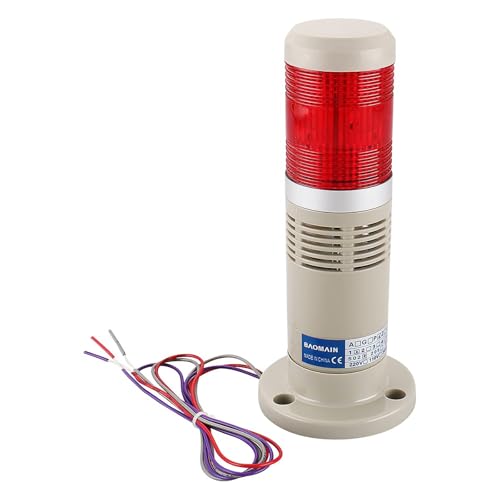
The 24V DC model emphasizes reliability in US industrial standards with dual signaling: bright red LED light plus a loud buzzer. It is well-suited for machinery and automated lines where constant visibility is essential, and the audible alert helps overcome factory ambient noise. Choose this if you primarily need robust visual signaling with an integrated audible cue, but expect installation in 24V systems only. For very compact or USB-powered setups, this may be less convenient than 5V or 12V options.
shengbowi LED Andon Tower Lights 4 Stack

This four-stack model emphasizes wide voltage compatibility and IP65-rated durability. Its plug-and-play design reduces setup time, and the multi-sided lens provides 360° visibility, making it a strong choice for semi-outdoor or challenging factory environments. Best for environments with occasional exposure to dust or splashes, but ensure you have appropriate mounting hardware and power supply compatibility for your facility.
LUBAN 12-24V LED Stack Tower Lights (3 Layer)

This 3-layer tower features high-brightness LEDs with a long life expectancy and prism-cut lenses for even light distribution and a wide 360° viewing angle. It offers continuous or flashing modes per tier, enabling flexible signaling at 12–24V. Best for general factory signaling where a compact, versatile unit with long life is prioritized. A potential limitation is if you require integrated audible alerts; this model focuses on visual signaling.
ANDONT 3-Stack USB LED Andon Tower Signal Light

This USB-powered option is ideal for workstations, labs, or small assembly lines where USB power is readily available. It features three stack LEDs (red/yellow/green) plus a buzzer up to 85 dB. Best for temporary setups or places with limited electrical infrastructure. It may be less suitable for heavy industrial environments without reliable USB power sources or longer-term power management considerations.
Buying Guide
- Power and voltage: Match the light to your facility’s power distribution. 24V models are common in heavy industry; USB-powered units suit desks and labs; 12–24V options provide flexibility for mixed environments.
- Visibility and coverage: Lenses that offer 360° visibility and prism-cut designs improve signal reach. Consider IP ratings (IP65 or higher) if exposure to dust or water is expected.
- Signaling modes: Decide between steady, flashing, or both. Some models offer multi-layer modes per tier; others rely on integrated buzzers for audio alerts.
- Mounting and durability: Rotatable bases and mounting brackets simplify installation on CNC machines or control consoles. Look for rugged housings if the unit operates near machinery or in harsh conditions.
- Audible alert: Buzzer presence can significantly improve noticeability in loud factories. Check decibel levels and how the buzzer scales with light.
- Power source compatibility: USB-powered units are easy to deploy in office or lab spaces but may require hubs or adapters in factories. Ensure compatibility with existing controls and safety protocols.
Frequently Asked Questions
- What is an LED signal tower light used for?
They provide clear status signaling for machines, workstations, and production lines through layered LED lights and sometimes audible alerts.
- Do all models include buzzers?
No. Some models offer visual signaling only, while others include integrated buzzers for audible alerts. Check product features for confirmation.
- Which voltage should I choose for a factory floor?
24V DC is common for industrial equipment, but 12–24V options offer flexibility. Choose based on your existing power infrastructure.
- Is IP65 enough for harsh environments?
IP65 provides protection from water jets and dust; for harsher environments, look for higher IP ratings or additional enclosure recommendations.
- Can I mix visual and audio signals across units?
Yes, but ensure compatibility with your control systems and safety requirements. Some setups use visual signaling on one unit and audio alerts on another for redundancy.
- What installation considerations should I plan?
Consider mounting space, accessibility for maintenance, power availability, and whether you need rotatable bases for flexible placement.