Best Inverter Battery Connection Cables for Safe, Reliable Power
Choosing the right inverter battery connection cables is essential for safe power transfer, corrosion resistance, and long-term performance in cars, trucks, RVs, solar setups, and marine applications. The following review highlights five top-rated options that balance durability, flexibility, and ease of use. Whether you need 2 AWG or 4 AWG cables, these sets offer sturdy lugs, tinned copper where noted, and solid insulation for harsh environments.
Summary of Selected Products
| Product | Wire Size | Length | Key Advantage |
|---|---|---|---|
| Cartman 4AWG 18-Inch Cable Set | 4 AWG | 18″ | Corrosion-resistant lugs, robust stamping, good current handling |
| Nilight 6 AWG 20 Inch Cables | 6 AWG | 20″ | Tin-plated terminals, weatherproof insulation |
| Linkstyle 6PCS 4 AWG 12″ Cables | 4 AWG | 12″ | Multiple cables, tin-plated lugs, versatile for arrays |
| A ABIGAIL 2 AWG Cable Set | 2 AWG | 2 ft | Pure copper, tinned lugs, durable PVC insulation |
| SNLLMZI 14AWG SAE Extension | 14 AWG | 3.3 ft | Weatherproof SAE connectors, flexible, multiple lengths |
Cartman 4AWG 18-Inch Battery Cables Set
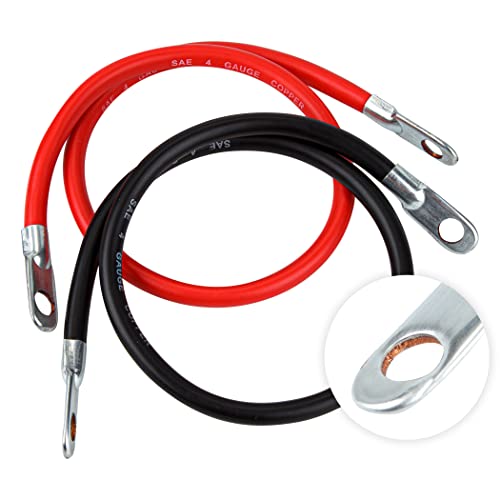
The Cartman set uses a 4 AWG copper core with zinc-plated 95% copper lugs designed to resist corrosion and oxidation, making it suitable for automotive, RV, and solar installations. The 18-inch length offers a compact option for tight engine bays and inverter setups. A stronger stamping process improves current flow and reduces resistance, which can help maintain voltage under load. The cables are built to fit 3/8″ studs, aligning with common battery terminals. This combination of robust lugs and solid copper wiring helps sustain reliable power delivery in demanding environments.
Features include a SAE-approved 4 GAUGE copper conductor and zinc-plated lugs to resist corrosion. The kit emphasizes a stamping improvement designed to lower resistance and enhance current transfer. Its compact 18-inch length makes it a practical choice for portable inverter configurations, emergency kits, or solar battery banks where space is a concern. Users should ensure compatible terminal sizes and secure connections to minimize heat buildup during high-demand use.
Nilight 6 AWG 20 Inch Battery Cables
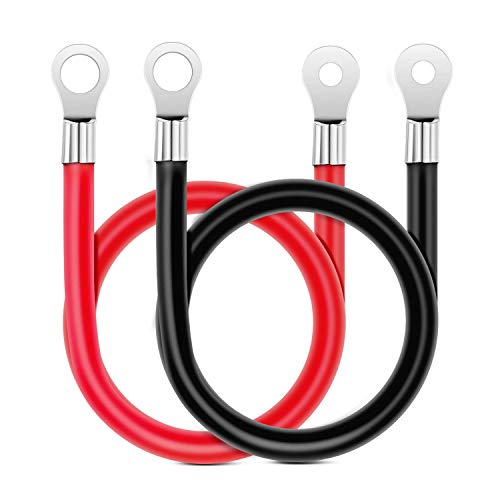
Nilight’s 6 AWG cables come in a 20-inch pair with red positive and black negative leads and 3/8″ year-end lugs. Tin-plated terminals offer improved stability, wear resistance, and oxidation resistance, enhancing conductivity over time. The PVC insulated jacket adds flexibility while resisting abrasion, water, and heat—traits valuable for automotive, marine, and solar installations. With a maximum operating current around 60A, these cables are well-suited for medium-duty inverter connections and battery banks where reliable power transfer is essential.
The design emphasizes durability and convenience, including weather-ready insulation for outdoor or rugged environments. The tin-plated copper ends are prepped for easy crimping and a secure fit on battery posts. For users planning longer runs or higher loads, this 6 AWG option provides a balance of flexibility and amperage capacity, reducing voltage drop while remaining manageable in tight spaces like under-road vehicle compartments or RV bays.
CUZEC 14FT/4.27m 14 AWG Extension Cord

The CUZEC extension cord offers a longer reach for higher-power inverter setups, with 14 AWG copper conductors and battery clamp clips. It includes red (positive) and black (negative) leads and is designed to power 12V and 24V appliances directly, providing a practical bridge between the vehicle battery and inverter. The kit includes an external 20A fuse for short-circuit protection, plus a spare fuse for added reliability. This setup is especially useful when the inverter is located away from the battery or when you need to run power to accessories in a cabin, trailer, or workshop setup.
Clips attach directly to the car battery, protecting the cigarette lighter path and reducing strain on lighter sockets. The fuse protection helps guard devices against surge currents and potential damage, while the 4.27-meter length supports flexible routing around engine bays, cargo areas, or cabins. Suitable for high-power appliances, the CUZEC cord offers an economical, straightforward solution for extended inverter connections without sacrificing safety.
AugustknowU 50AMP Battery Inverter Cables

The AugustknowU set provides dual 2-piece cables designed for direct battery connections. With a focus on higher amperage handling, these cables are intended for robust inverter installations where secure, low-resistance power transfer is critical. The direct battery connection reduces power loss and protects the vehicle’s electrical system from voltage fluctuations. Red and black clips clearly indicate polarity, minimizing misconnection risk during setup.
Durability is highlighted by reliable construction and a straightforward design intended for repeated connections. The dual-piece configuration enables flexible routing, especially in larger vehicles or remote solar arrays where shorter jumpers would be insufficient. The included fuse protection enhances safety by limiting surge current. This set is suitable for users who need dependable performance for power-intensive appliances, RV systems, or marine applications where a solid power backbone is essential.
SNLLMZI SAE Extension Cable

The SNLLMZI SAE extension offers 14 AWG copper conductors with weatherproof connectors, designed for solar panels, car battery chargers, and power inverters. Available in multiple lengths (including 3.3 ft), these extension cables help tailor a power solution to fit an exact vehicle or rig layout. The heavy-duty copper core promises solid conductivity, while the PVC jacket provides abrasion resistance and environmental protection for outdoor use in RVs, boats, or trucks.
Key features include waterproof and dustproof seals for the SAE connectors, ensuring reliable connections in rain, snow, or off-road conditions. The range of available lengths supports precise routing and clean cable management, reducing clutter in engine bays or battery compartments. This option is ideal for setups where specific distances are required to connect a solar panel or inverter without compromising safety or performance.
Linkstyle 6 PCS 4 AWG 12″ Cables

This Linkstyle bundle includes six 4 AWG cables, each 12 inches long, enabling parallel or series connections across battery banks and inverter setups. Tin-plated copper terminals on 3/8″ lugs increase durability, corrosion resistance, and longevity in harsh environments. The flexible PVC insulation offers wear resistance, water resistance, and flame retardancy, making the cables suitable for automotive, solar, ATV, RV, and marine applications.
With multiple cables in one package, this kit supports scalable configurations, whether you’re building a compact system or expanding an existing setup. The 12-inch length provides flexibility for tight engine compartments or compact battery trays. Overall, it’s a practical choice for users needing reliable, easy-to-install connections across several battery cells or accessories, with corrosion-resistant terminals to extend service life.
Linkstyle 6PCS 2 AWG Cables

The Linkstyle 6-piece 2 AWG cable set comprises longer 6-inch (15 cm) cables suitable for parallel or series connections in larger battery banks. The 2 AWG size provides higher current capacity for power-hungry devices, while nickel-plated copper terminals improve durability and conductivity. The PVC insulation is designed to withstand harsh environments, offering protection against abrasion and moisture, which is important for outdoor installations or marine use.
Pre-terminated 3/8″ lugs allow quick installation in inverters and battery banks, making these cables a reliable option for both professionals and DIY enthusiasts. The kit’s balance of amperage capacity, durability, and ease of use makes it suitable for RVs, boats, or solar-powered setups where consistent power delivery is essential for inverter performance and device safety.
Buying Guide: Key Purchase Considerations And Comparisons
When selecting inverter battery cables, consider amperage rating, conductor size, and insulation quality relative to your setup. Larger gauges (e.g., 4 AWG or 2 AWG) support higher current with lower voltage drop, which is crucial for powerful inverters and long cable runs. Look for tin-plated copper terminals, which resist corrosion and improve long-term conductivity, especially in automotive and marine environments.
Terminal compatibility is another critical factor. Ensure lugs fit your battery posts (commonly 3/8″ studs) and that the connector type (SAE, 3/8″ lug, etc.) matches your inverter and battery setup. PVC insulation adds flexibility and moisture resistance, aiding in installation across vehicle compartments, outdoor rigs, and solar arrays. Flame retardant and heat-insulating properties further enhance safety under high-current operation.
Length and routing are practical considerations. Shorter cables reduce resistance and voltage drop but may require more precise routing, while longer cables offer flexibility at the expense of small increases in resistance. For setups with distant batteries or solar panels, longer runs (like 14 ft or more) are helpful; for tight engine bays, shorter lengths (6–12 inches) can be easier to manage.
Durability features to evaluate include corrosion resistance (tin-plating, zinc-plating), insulation flexibility in cold or hot weather, and weatherproofing for outdoor installations. If you expect frequent disconnections or need to reconfigure your system often, consider modular cable sets with multiple identical cables to simplify future expansion. Finally, verify any included fuses or protective devices, which can prevent damage during short circuits or surge events, preserving both equipment and safety.